
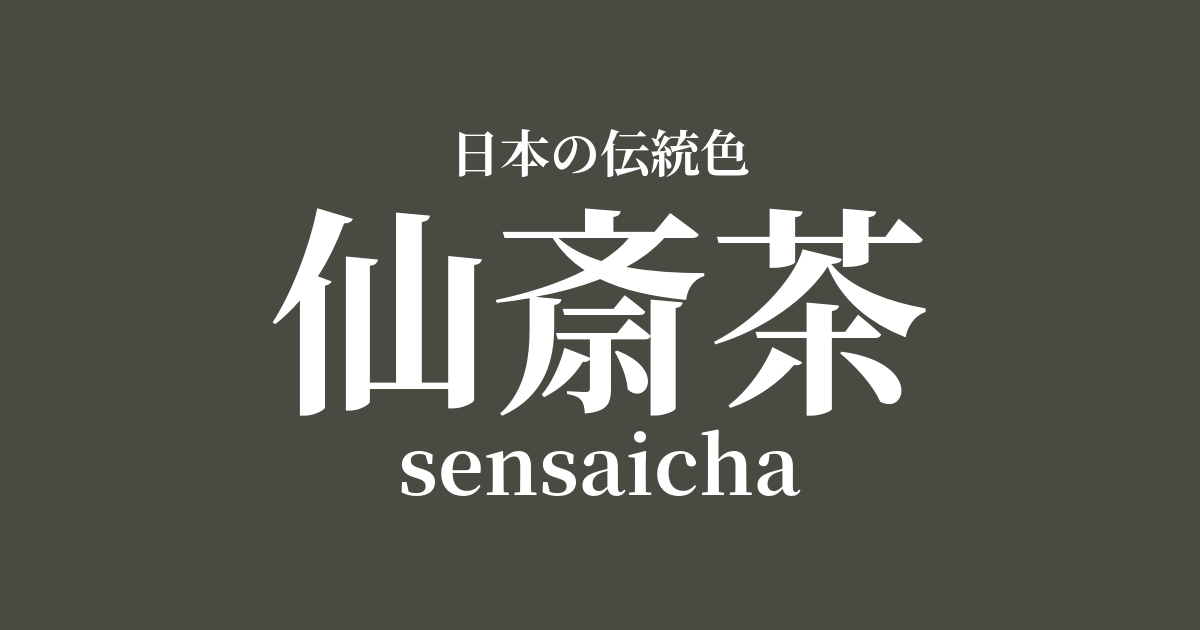
| Japanese color name | Sensai Tea |
|---|---|
| reading | sensaicha |
| HEX | #474B42 |
| RGB | 71, 75, 66 |
What is Sensai Tea? Origin and Etymology
Sensai-cha is a color that was favored by the popular Kabuki actor of the mid-Edo period, Iwai Hanshiro V (1747-1800). Since Hanshiro had the haiku name "Sensai," this greenish-dark brown color that he used came to be called "Sensai-cha." During the Edo period, many color names were created that were named after popular actors, such as Rokō-cha and Rikan-cha, and Sensai-cha is one of them.
This shows that actors were fashion leaders of the time and had a significant influence on ordinary people.
Historical background of Sensai Tea
Sensai tea is believed to have become popular during the Bunka-Bunsei period (1804-1830) in the mid-Edo period. During this time, townspeople culture flourished, and refined aesthetics such as "chic" and "sophistication" were highly valued. Due to the frequent sumptuary laws issued by the shogunate, commoners were restricted from wearing bright colors, so they began to find subtle differences in shades of muted colors such as brown and gray to enjoy fashion.
A wide variety of browns and grays emerged, so much so that it was called "48 shades of brown and 100 shades of gray," and Sensai-cha was one of the colors that symbolized this trend. The refined hue hidden within its dark and subdued colors was widely accepted as a color that embodied the sophisticated aesthetic sense of the people of Edo.
Related literature, waka poetry, and seasonal words
Sensaicha was a popular color in the late Edo period, and therefore does not directly appear in classical literature or waka poetry from the Heian or Kamakura periods. However, this color can be found in materials that convey Edo culture, such as sharebon (humorous novels), kibyoshi (illustrated novels), and ukiyo-e (woodblock prints) that depict the customs of the time. In particular, in actor portraits of the fifth generation Iwai Hanshiro, Sensaicha is sometimes used for the costumes of the female roles he excelled at.
These works provide valuable clues to understanding how Sensai tea was actually used and loved by people.
Color scheme preview
This is to check the readability of the text when this color is used as the background.
Sensai Tea Color Scheme Proposal
Aphrodisiac tea (#6A5D4A)
The green of Sensaicha is complemented by the yellowish-brown of Kobicha, another tea favored during the Edo period. Both are subdued and calming colors, creating a sophisticated and refined color scheme that embodies the "chic" of Edo.
Polishing powder color (#F4DDA5)
By combining the dark, deep Sensai tea with the bright, soft Tonoko color, a modern contrast is created. The colors complement each other, resulting in a color scheme that is not too heavy, but rather elegant and bright.
Suou (#9E3D3F)
The greenish Sensai tea and the deep reddish sappanwood are close to complementary colors, and they have the effect of making each other appear more vibrant. It is a classic yet powerful and striking color combination that catches the eye.
Practical Scenes
In the world of kimono, Sensaicha is a color that expresses the refined elegance of Edo, and is used in kimono and obi sashes favored by connoisseurs. It is particularly suitable for men's haori jackets and kimonos, creating a calm and mature style. It is common to enjoy its subtle hue in simple patterns such as solid colors, stripes, and small patterns.
In interior design, using it for wallpaper, curtains, and furniture upholstery can create a dignified and calming space. It is particularly suitable for Japanese modern styles and quiet, focused spaces such as studies. It also pairs well with natural materials such as light-colored wood and bamboo.
In web design, using this color in large areas such as backgrounds and footers can convey a sense of luxury and reliability. It is suitable for websites dealing with traditional crafts or content with historical themes. Combining it with light beige or white creates a chic impression while ensuring visibility.