
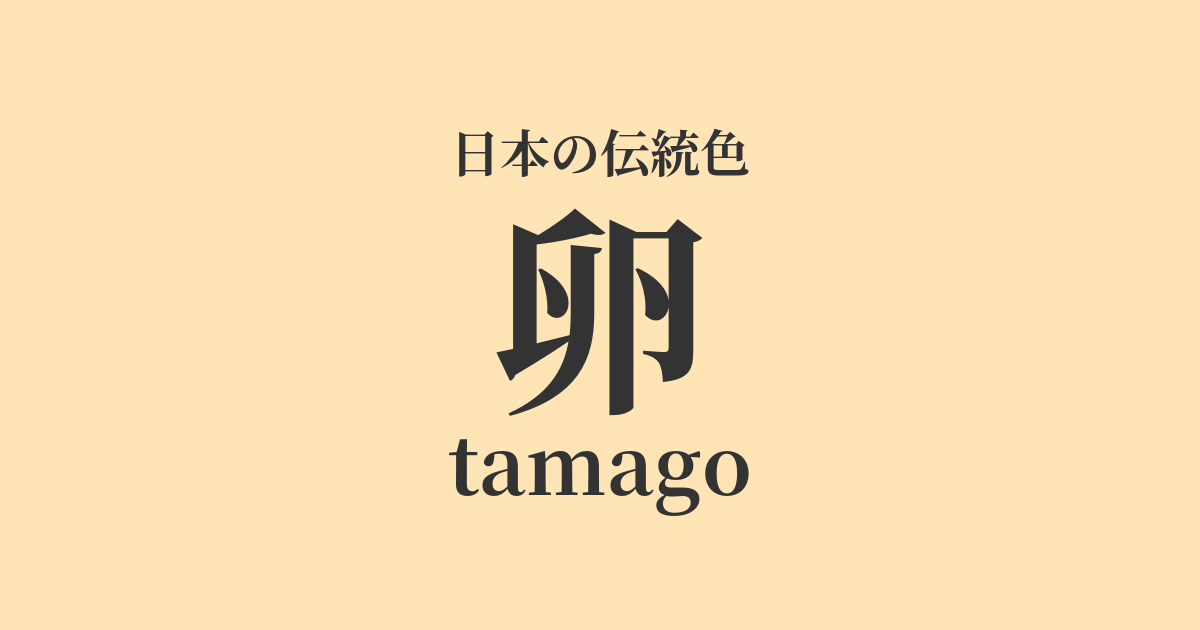
| Japanese color name | 卵 |
|---|---|
| reading | tamago |
| HEX | #FFE4B5 |
| RGB | 255, 228, 181 |
What is an egg? Origin and etymology
Tamago-iro (egg color), as the name suggests, is a bright, vivid yellow derived from the yolk of a chicken egg. This color name is believed to have become commonly used during the Edo period, making it a relatively new traditional color. Similar shades existed before then, but it is thought that the specific name "tamago-iro" came into use around the time when chicken eggs began to become popular among ordinary people as a food.
It features warm and inviting colors that symbolize the beginning of life.
The color "egg yolk color" is often confused with "chicken egg color," but the two have different origins. Torinoko-iro refers to a very pale cream color like the "shell" of a chicken egg, while egg yolk color refers to the bright yellow of the "yolk." Torinoko-iro is an old color name that has existed since the Heian period, while egg yolk color was born in the vibrant culture of Edo and was accepted by people as a more concrete and easy-to-understand name.
The emergence of this color can be seen as reflecting changes in people's lifestyles and color sensibilities at that time.
Historical background of eggs
The popularity of eggshell yellow became particularly noticeable from the mid-Edo period onward. Frequent sumptuary laws restricted the colors of clothing worn by commoners, prohibiting the use of expensive and flashy dyes such as red and purple. As a reaction to this, people began to find subtle beauty and sophistication in relatively inexpensive and gentle colors such as brown, gray, and eggshell yellow. Eggshell yellow, being neither too plain nor too flashy, became widely loved among commoners as an exquisite color.
In particular, Kabuki actors had a significant influence, and the colors favored by these fashion leaders of the time became extremely popular among the common people. Eggshell yellow was one such color, and it was widely used in kimonos, obi sashes, and accessories. Edo period ukiyo-e prints and genre paintings depict town girls and actors wearing eggshell yellow clothing, offering a glimpse into the fashion of the time. This color is one of the colors that symbolizes the bright yet modest sense of color that arose from the townspeople's culture of Edo.
Related literature, waka poetry, and seasonal words
The color "egg yolk yellow" is a color name that became established during the Edo period, so it does not directly appear in classical literature or waka poetry from the Heian or Kamakura periods. However, yellow, reminiscent of egg yolk yellow, such as the color of rapeseed blossoms that herald the arrival of spring, or the color of newly hatched chicks, has been celebrated in poetry since ancient times. These colors have been depicted as symbols of vitality and hope, and have played a role in evoking warm images in people's hearts.
In modern Japanese literature, egg-colored kimonos and accessories sometimes appear when describing the customs of the Edo and Meiji periods. For example, descriptions found in the works of Natsume Soseki indicate that this color was deeply rooted in the lives of people at that time. In the world of haiku, Masaoka Shiki wrote, "The moon hangs in an egg-colored haze over the withered field," describing the moonlight floating in the desolate winter landscape as egg-colored, creating a unique and evocative atmosphere.
The moon hangs over the withered field, its color like an eggshell.
Color scheme preview
This is to check the readability of the text when this color is used as the background.
Egg color scheme suggestions
Nightingale (#95945C)
The bright eggshell color and the subdued olive green complement each other, creating a natural and calming impression reminiscent of springtime fields and mountains. This color scheme emphasizes a Japanese aesthetic while also creating a modern atmosphere. It can also be seen as a traditional kimono combination.
Light blue (#00A3AF)
The combination of the warm color eggshell yellow and the cool color light blue creates a refreshing and youthful impression. Although they are close to complementary colors, both have soft tones, resulting in a harmonious color scheme that makes each color appear vibrant.
Dark brown (#654321)
The light and bright impression of eggshell yellow is balanced by the richness of dark brown. The clear contrast creates a sophisticated and stable color scheme. It is a calm combination that evokes images of autumn harvests and warm indoor spaces.
Practical Scenes
In the world of traditional Japanese clothing, eggshell yellow is widely used in kimonos, obi sashes, and accessories such as obiage (sash ties). It is particularly popular for spring attire and is said to have the effect of brightening the complexion. It is often incorporated into everyday kimonos such as komon and tsumugi, creating a friendly and gentle atmosphere. It is also easy to combine with other colors, making it a valuable color for expanding the range of coordination options.
Incorporating eggshell yellow into interior design can bring warmth and brightness to the entire space. It's particularly effective when used in fabrics such as wallpaper, curtains, and cushions. It pairs exceptionally well with natural wooden furniture and houseplants, making it suitable for Scandinavian and Japanese modern interiors. It's a color that helps create a calming and relaxing atmosphere.
In web and graphic design, eggshell yellow is an effective color for conveying friendliness, reassurance, and enjoyment. Using it as an accent color for buttons and icons, or as a light background color, can create a positive and warm impression on users. It is particularly well-suited for branding in the food industry and for children's services.