
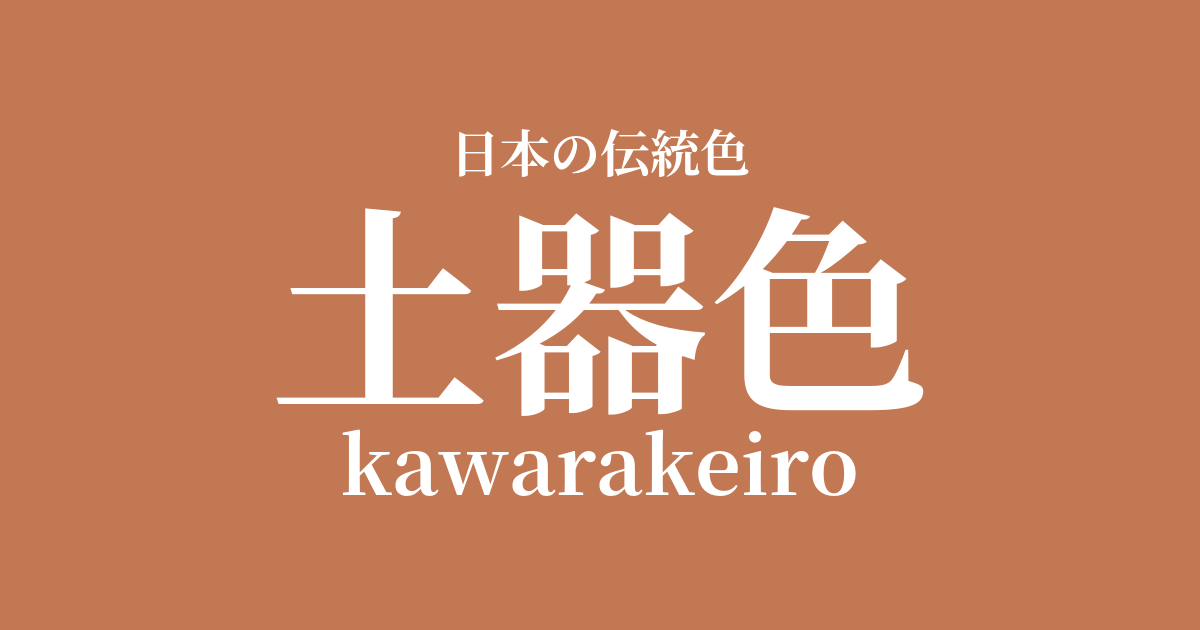
| Japanese color name | pottery color |
|---|---|
| reading | kawarakeiro |
| HEX | #C37854 |
| RGB | 195, 120, 84 |
What is "earthenware color"? Origin and etymology
Earthenware color, as the name suggests, refers to the reddish-brown color found on the surface of unglazed earthenware, or "kawarake," fired at low temperatures. This color is a natural hue created by the oxidation of iron contained in the clay during the firing process. As seen in Jomon and Yayoi pottery, which have existed since Japan's prehistoric period, it is a color that has been a part of Japanese life for a very long time.
It has become established as a color name that evokes the simplicity, warmth, and primitive strength inherent in natural soil itself.
The word "kawarake," from which the term originates, originally referred to disposable cups and plates used in Shinto rituals and banquets. These simple vessels, made by simply kneading and firing clay, were treated as something pure, but also symbolized transience. The color of earthenware is thought to be linked not only to the material texture of such vessels, but also to the Japanese view of nature and aesthetic sensibilities. It is the color of the earth, a color rooted in daily life, and has been cherished by people for a long time.
Historical background of pottery colors
The history of pottery itself is ancient, dating back to prehistoric times, so pottery colors are colors that Japanese people have seen since ancient times. However, the term "pottery color" as a color name is relatively recent, believed to have been established sometime after the mid-Edo period. During this time, subdued colors such as brown and gray became very popular among common people, resulting in such a wide variety of shades that it was called "forty-eight shades of brown and one hundred shades of gray." It is thought that pottery color came to be recognized as one of the many shades of brown within this trend.
During the Edo period, earthenware-colored clothing was primarily used for the clothing of common people. Its widespread popularity stemmed from the fact that it didn't require expensive dyes, as it could be produced using dyes derived from readily available plants and soil. The frequent issuance of sumptuary laws prohibiting extravagance also contributed to the preference for these subdued, understated colors. As a simple and practical color, it became deeply ingrained in the lives of people at that time.
Related literature, waka poetry, and seasonal words
It is difficult to pinpoint any famous waka poems or literary works in which the color name "doki-iro" (earthenware color) directly appears. However, its etymology, "kawarake" (earthenware), has frequently appeared in waka poems and stories since ancient times. For example, it has been described as a vessel for sharing sake at banquets, or as a sacred tool in Shinto rituals. These descriptions suggest that earthenware was closely intertwined with the lives and culture of people at that time.
Furthermore, the simple texture and colors of earthenware resonate with the later aesthetic of "wabi-sabi." In the world of the tea ceremony in particular, earthenware tea utensils with an unpretentious, natural texture were highly valued. The colors of earthenware can be interpreted as one of the colors that embody this traditional Japanese aesthetic. Even without direct mention, the cultural background behind it is deeply connected to the world of literature.
Color scheme preview
This is to check the readability of the text when this color is used as the background.
Suggested color scheme for pottery
Indigo (#274054)
The earthy warmth of the earthenware color and the deep blue of the indigo, reminiscent of the sky or sea, create a beautiful contrast. This combination of colors, found in nature, enhances each other, resulting in a harmonious color scheme that conveys both calmness and strength.
Moss color (#69821B)
Earthenware green and moss green are both earth tones that evoke nature and are highly compatible. The combination of dry soil and moist moss, reminiscent of Japan's quintessential landscape, gives a calm and peaceful impression. It is well suited to expressing a Japanese aesthetic.
Off-white (#FBFBF4)
The soft, natural off-white color highlights the rustic warmth of the earthenware color. The contrast isn't too strong, creating a gentle and natural atmosphere. It's a sophisticated color scheme suitable for minimalist yet warm spaces and designs.
Practical Scenes
In traditional Japanese clothing, earthenware green pairs well with natural fabrics such as silk pongee, cotton, and linen. Incorporating it into kimonos and obi sashes, especially in autumn, creates a warm and calming look. Combining it with other earth tones, deep greens, or indigo blues allows for a tasteful and sophisticated coordination.
In interior design, using it in fabrics such as wallpaper, curtains, and sofas brings warmth and a sense of comfort to a space. It pairs exceptionally well with wooden furniture and houseplants, and is effective as an accent color that adds depth to natural and Japanese modern styles.
In web and graphic design, using this color as a background or key color can create an organic and trustworthy impression. It is particularly suitable for themes related to traditional crafts, natural foods, and outdoor activities. Combining it with white or off-white creates a warm design while ensuring readability.