
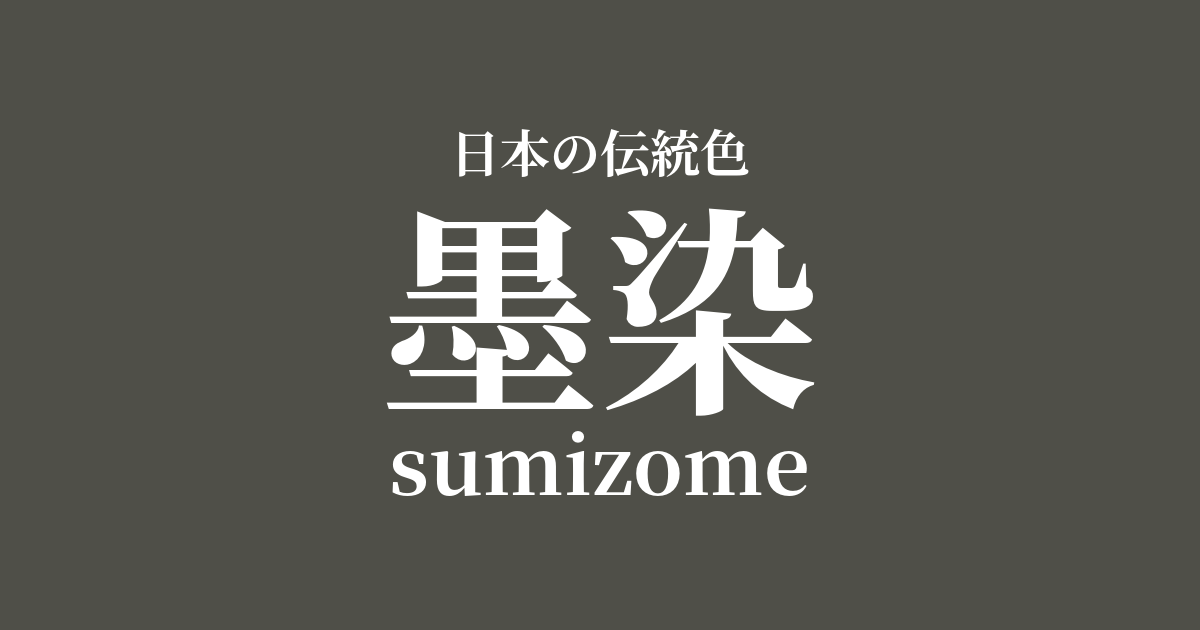
| Japanese color name | Sumizome |
|---|---|
| reading | sumizome |
| HEX | 1TP5 T4F4F48 |
| RGB | 79, 79, 72 |
What is "Sumizome"? Origin and Etymology
Sumizome, as the name suggests, refers to a dark gray color that resembles the color achieved by dyeing with ink. However, it was rare to actually dye cloth with ink; this color was mainly achieved using plant dyes. For example, a blackish-gray color similar to ink was obtained by dyeing with water containing a high amount of iron (iron mordant) using the pericarp of beech family plants such as acorns (Tsurubami) or the palm tree (Binrouji). This technique is characterized by its deep penetration into the cloth and the creation of a subdued color.
The term "sumi-zome" (ink dyeing) is not merely a color name; it is thought to be deeply connected to the idea in ink painting that "ink has five colors." This is an aesthetic sense that allows for the creation of diverse gradations such as burnt, dark, heavy, light, and clear from a single block of ink, and sumi-zome was also seen as a deep color that is not pure black, but has a slight hint of color. Its etymology is said to be rooted in both the dyeing technique and the cultural and spiritual imagery associated with ink.
Historical background of ink dyeing
The color of sumi-zome (ink-dyed) was already established in the Heian period as the color of monks' robes and mourning clothes worn when a close relative died. This was because it reflected the Buddhist teaching of avoiding ostentation and emphasizing simplicity, and because it was socially recognized as a color that expressed grief. It is said that because it was difficult to produce a perfect black with the dyeing techniques of the time, colors close to black, such as sumi-zome, were widely used.
From the Kamakura period onward, as the samurai class rose to power, ink-dyed fabric became a favored color symbolizing the samurai spirit of simplicity and strength. Furthermore, during the Edo period, it came to be used as an everyday color for clothing among commoners. In particular, when sumptuary laws restricted the use of bright colors, subdued shades like ink-dyed fabric were sometimes appreciated as a sign of sophistication.
Related literature, waka poetry, and seasonal words
In classical Japanese literature, black dye is often depicted as a symbol of sadness and mourning. In "The Tale of Genji," characters repeatedly wear black-dyed garments when mourning, adding a profound shadow to the story. The scene in which Hikaru Genji sees people mourning the deceased Prince Hitachi and feels the impermanence of the world is particularly symbolic.
Furthermore, it was depicted as the color of the robes of monks who had renounced worldly life, and was used as a color that symbolized separation from the secular world and devotion to Buddhism. In a waka poem by the Heian period poet Saigyo Hoshi, there is a poem describing tears falling on his own ink-dyed robe, where religious spirituality and deep personal emotion are intertwined. In this way, ink has played an important role in literary works, hinting at the psychology and fate of the characters.
The tears on my ink-dyed sleeves are the color of my overwhelming emotions.
Color scheme preview
This is to check the readability of the text when this color is used as the background.
Sumi-dye color scheme proposal
White training (#FEFEFE)
The solemnity of the ink and the purity of the white paint are contrasting yet harmonious, creating a serene and refined impression reminiscent of an ink painting. The combination of achromatic colors is well-suited to minimalist and modern spaces and designs.
Plum blossom color (#F2A0A1)
The addition of a bright, soft reddish hue of plum blossom color to the dark, somber ink creates a sense of vitality and subtle warmth. It features a poetic and beautiful contrast reminiscent of plum blossoms blooming in a winter landscape.
Golden brown (#C48843)
The subdued tones of the ink-dyed fabric, combined with the elegant shimmer and depth of the golden brown, create a dignified and substantial atmosphere. This combination of colors enhances each other, making it ideal for traditional crafts and designs that value formality.
Practical Scenes
In the world of kimono, sumi-zome (ink-dyed) is traditionally known as a color worn for mourning and memorial services. Its solemn hue is considered appropriate for remembering the deceased and expressing condolences. On the other hand, in modern times, its subdued color is appreciated as stylish, and it is sometimes used in everyday kimono such as komon, tsumugi, and obi, creating a refined look.
Incorporating sumi-dye (ink dye) into interior design can bring tranquility and depth to a space. Using it on a wall, sofa, or curtains creates a dignified and calming atmosphere. Combining it with white, off-white, or light wood tones results in a beautifully contrasting, modern Japanese space.
In web and graphic design, using sumi ink as a background color enhances other elements and creates a sense of sophistication and reliability. It is particularly well-suited to minimalist designs and websites showcasing traditional culture. As a text color, it doesn't create a strong contrast against a white background, making it a highly readable and eye-friendly color.