
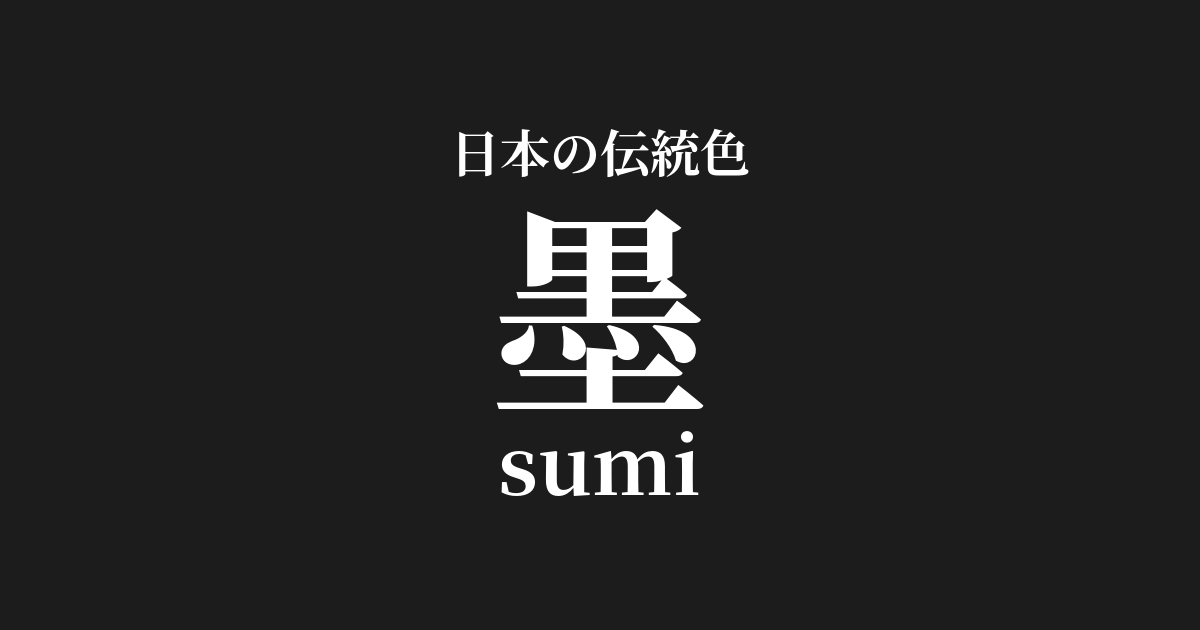
| Japanese color name | 墨 |
|---|---|
| reading | sumi |
| HEX | #1C1C1C |
| RGB | 28, 28, 28 |
What is ink? Origin and etymology
Ink color refers to the color of ink used in calligraphy and ink painting. It is made by kneading soot obtained from burning pine wood ("shōen") or soot obtained from burning vegetable oil ("yuen") with animal glue made from animal hides and bones. Grinding this mixture with water on an inkstone produces the black liquid used in calligraphy and painting.
Rather than simply being black, ink comes in a variety of shades depending on the raw materials and manufacturing methods, such as bluish "blue ink" and brownish "brown ink." The nuances of these shades are expressed as "there are five colors in ink," creating an infinite range of tones.
Historical background of ink
The method of making ink was established in ancient China and is believed to have been introduced to Japan during the Asuka period along with Buddhism. During the Nara period, the demand for ink increased due to the flourishing practice of copying Buddhist scriptures, and ink production began in earnest. In the Heian period, it is said that Kukai brought back the latest ink-making technology from Tang China, laying the foundation for Japanese ink production. In the Muromachi period, with the spread of Zen Buddhist culture, ink painting developed, and ink rose in status from a tool for writing to an important art material for artistic expression.
During the Edo period, Nara flourished as a major center for ink production, and that tradition has been passed down to the present day.
Related literature, waka poetry, and seasonal words
Ink, with its serene and spiritual atmosphere, has been treated as an important motif in many literary works. In particular, in the world of ink painting, which is deeply intertwined with Zen philosophy, an aesthetic of expressing all things solely through the shades of ink has been pursued. In the world of Japanese poetry, the phrase "ink-dyed sleeves" is frequently used as a metaphor to express sadness or a state of mind detached from the secular world, referring to the color of a monk's robe. Furthermore, in haiku, "grinding ink" is a seasonal word for winter, evoking a scene of concentrating one's mind in a quiet winter room.
On the ink-dyed sleeves, the dew that settles there seems to flow like tears.
Color scheme preview
This is to check the readability of the text when this color is used as the background.
Sumi ink color scheme proposal
White training (#FCFAF2)
Ink and white are the most basic combinations used in ink painting and calligraphy. Their contrasting brightness enhances each other, creating a serene and refined impression. It can be said to be a minimalist yet powerful color scheme that forms the core of Japanese design.
Scarlet (#D3381C)
By combining the powerful black of ink with a vibrant and passionate crimson, a strong impact and sense of tension are created. This color scheme, reminiscent of the vermilion seals and signatures found in calligraphy and painting, emphasizes the Japanese theme and effectively draws the eye.
Rikyu Rat (#888E7E)
The combination of ink black and Rikyu gray, a greenish-gray, is a calm combination of colors that are close to achromatic. This achromatic color scheme, with its varying shades, expresses the world of wabi-sabi, giving an impression of refinement, elegance, and thoughtfulness.
Practical Scenes
In the world of kimono, ink black is primarily known as the color of the ink-dyed robes worn by Buddhist monks, symbolizing formality and spirituality. It is also used in men's kimonos and haori jackets, creating a stylish and serene atmosphere. In modern fashion, its deep black gives a fashionable and sophisticated impression and is incorporated into various styles.
In interior design, using ink black as an accent color on walls or furniture brings a sense of gravitas and tranquility to a space. Combining it with white or wood tones can create a modern, minimalist Japanese-style space. It's a particularly suitable color for places where one wants to spend time quietly, such as a study or bedroom.
In web and graphic design, black ink is extremely effective as a background or text color. It offers high readability and enhances other chromatic colors, making it suitable for conveying reliability and sophistication. It pairs particularly well with minimalist designs that utilize white space.