
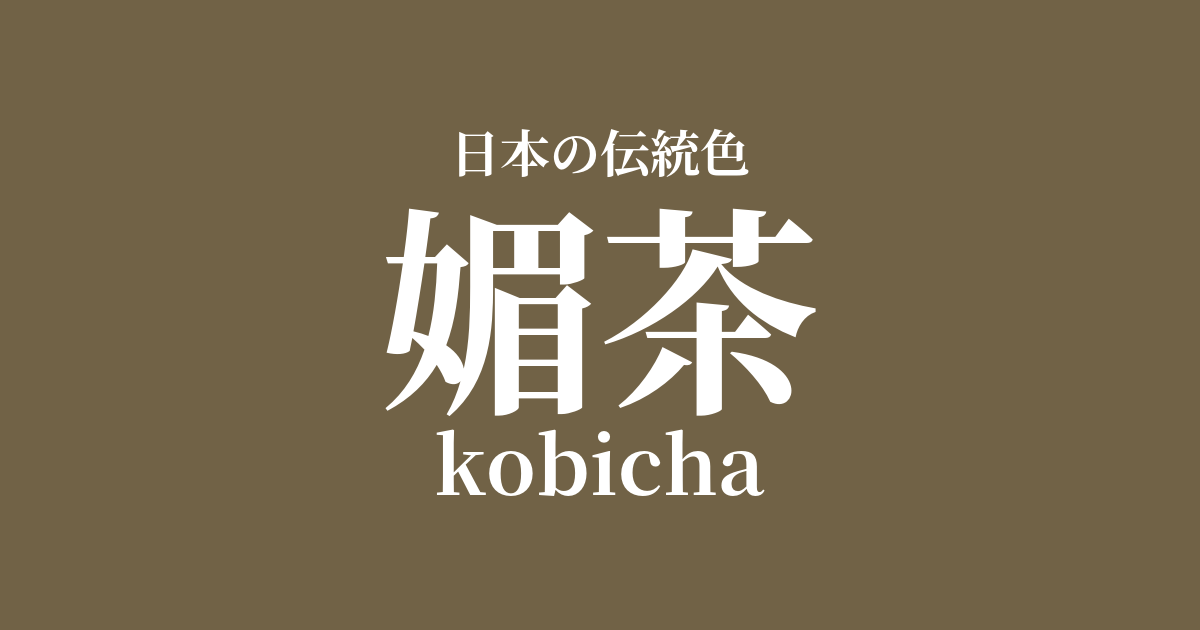
| Japanese color name | Aphrodisiac tea |
|---|---|
| reading | kobicha |
| HEX | #716246 |
| RGB | 113, 98, 70 |
What is "Kobicha"? Origin and etymology
The most widely accepted origin of the name "kobicha" (meaning "flirty tea") is that it derives from the color of kelp. It is said that "konbucha" (kelp tea) underwent a phonetic change to "kobicha," and the kanji character "kobi" (meaning "flirty" or "flirty") was then assigned to it. Kelp was also attracting attention as a dye due to its muted color, and this is believed to be the origin of the name. Due to the unique sound and meaning of the color name, it was particularly favored in the refined culture of the Edo period.
On the other hand, there is a theory that the color was named after the kanji character "媚" (kobi), which means "to flatter" or "seductive," suggesting it was a color associated with sensuality. This interpretation is often linked to the pleasure quarters of the Edo period. However, in reality, it was a color favored by connoisseurs and stylish people regardless of gender, and its complex and deep hue is said to have captivated people's hearts.
Historical background of quasi-tea
The popularity of "Kobicha" (a type of brownish-gray) rose during the mid-Edo period, particularly from the Genroku era to the Bunka and Bunsei eras. With the shogunate's sumptuary laws restricting bright colors, common people began to find and enjoy subtle differences in shades of brown and gray. Kobiccha became immensely popular as one of the trendy colors known as "Shijūhacchahyakunezumi" (forty-eight browns and one hundred grays).
In particular, the Kabuki actor Ichikawa Danjuro I favored this color and used it in his stage costumes, which led to it also being known by the nickname "Danjuro-cha" (Danjuro's tea). As a result, this tea color transcended being merely a trendy color and established itself as a symbol of Edo's "chic" aesthetic. Its understated yet alluring hue resonated with the aesthetic sensibilities of the people at the time.
Related literature, waka poetry, and seasonal words
The popularity of "kobuchi" (a type of brownish-green tea) can be seen in Edo period literature and ukiyo-e prints. In humorous novels and sentimental novels, it was depicted as the color of the stylish clothing worn by the characters, functioning as a prop to express their refined taste. It is particularly common in works from the period when Edo townspeople culture flourished.
Furthermore, many kimonos in the "kobuchi-cha" (a shade of dark brown) color appear in ukiyo-e prints of beautiful women and actors by artists such as Kitagawa Utamaro and Torii Kiyonaga. These visual materials indicate that kobuchi-cha was loved by a wide range of people, regardless of gender or social status. Through these colors, we can catch a glimpse of the lives and aesthetic sensibilities of the people of that time.
Color scheme preview
This is to check the readability of the text when this color is used as the background.
Color scheme proposal for Kobicha
Rukocha (#887938)
Similarly, brown tones were popular during the Edo period. Using similar colors creates a unified and calm impression. The variations in shade and subtle differences in hue create a sophisticated and refined depth, making it suitable for Japanese designs.
Indigo (#264067)
By combining the muted brown of Kobuchi with a deep indigo, the two colors complement each other. This creates a sophisticated and intellectually powerful impression, resulting in a modern and refined look. It's an effective key color for men's fashion and web design.
Color produced (#FBFBF4)
The earthy warmth of the brown tea color harmonizes with the natural, soft atmosphere of the off-white color, resulting in a natural and reassuring color scheme. It is suitable for creating a comfortable and tranquil space in interior and lifestyle designs.
Practical Scenes
In traditional Japanese clothing, "kobuchi" (a type of dark brown) is a classic color, especially used for everyday kimonos, obi sashes, and haori jackets made of materials like tsumugi silk and cotton. Its subdued hue makes it easy to wear regardless of age, and it allows for a modern expression of Edo-period "chic" style.
In interior design, incorporating Kobuchi (a type of brown tea) into wallpaper, curtains, and furniture can create a warm and calming atmosphere. It pairs well with wooden furniture and houseplants, adding depth to Japanese modern and natural-style spaces.
In web and graphic design, using it as a background or accent color can convey a sense of luxury, tradition, and trustworthiness. It is particularly effective on websites showcasing historical brands or traditional crafts.