
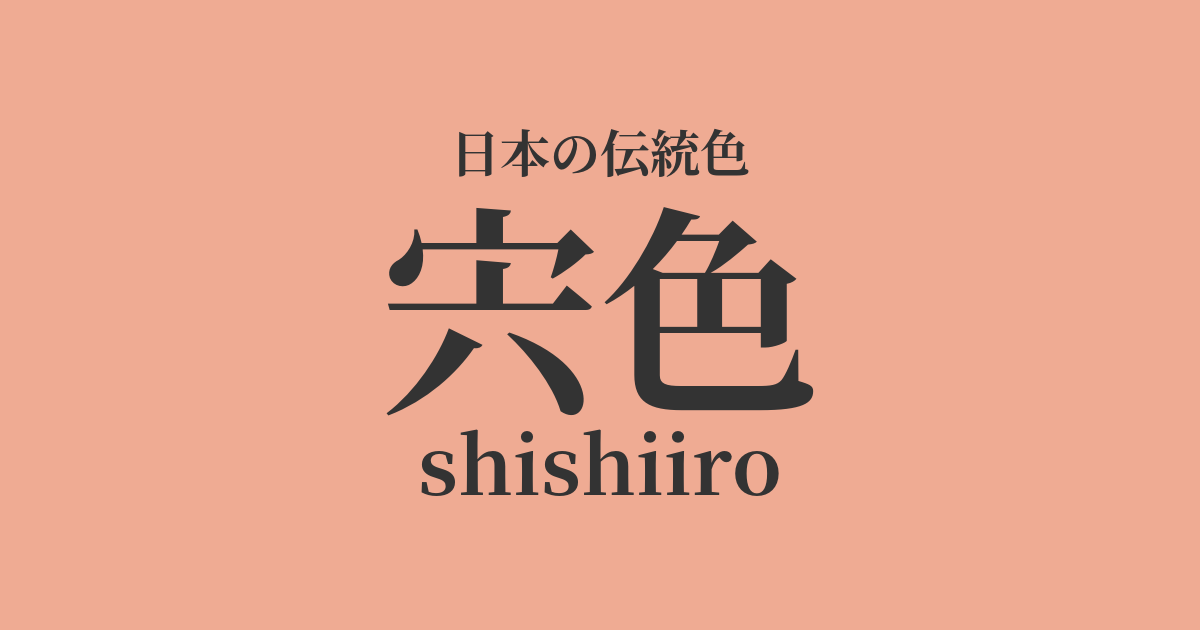
| Japanese color name | Shishiiro |
|---|---|
| reading | shishiiro |
| HEX | #EFAB93 |
| RGB | 239, 171, 147 |
- What is Shishiiro? Origin and etymology
- The historical background of Shishiiro
- Related literature, waka poetry, and seasonal words
- Color scheme preview
- A proposed color scheme in Shishi (a type of reddish-brown color).
- Practical Scenes
- FAQ
- Japanese colors similar to Shishi-iro (a type of reddish-brown color)
What is Shishiiro? Origin and etymology
The "shishi" in "shishiiro" (宍色) is an archaic word meaning the meat of animals such as deer and wild boar, and as the name suggests, it derives from the color of animal meat. It is a color name that refers to a reddish-orange or yellowish-brown. In the past, it was also called "nikuiiro" (肉色) and was used to describe the color of human skin. As the color of life that exists in nature, it is considered one of the colors that has been deeply rooted in the lives of Japanese people since ancient times, and its hue evokes a sense of warmth and vitality.
The historical background of Shishiiro
The name "shishiiro" (宍色) is an old color name that can be found in Heian period literature. For example, the Heian period dictionary "Wamyō Ruijushō" contains a description of "shishi," indicating that it was recognized as the color of meat from ancient times. In the Edo period, it became a widely known color among common people and was used in clothing and accessories. In particular, because it is close to the color of human skin, it was highly valued in situations where the human body was to be represented, such as in makeup and doll coloring.
Related literature, waka poetry, and seasonal words
The color "shishiiro" (宍色) is sometimes used in literary works to describe skin tone or the physical body. For example, in classical literature, there are instances where the word "shishiiro" was used to describe the beauty of a character's skin. Although not a direct seasonal word, it is a color that evokes autumn and winter, the hunting seasons. Furthermore, due to its warm hue, it is sometimes interpreted as a color that symbolizes human emotions and the workings of life.
Color scheme preview
This is to check the readability of the text when this color is used as the background.
A proposed color scheme in Shishi (a type of reddish-brown color).
Nightingale (#918D40)
The warm, skin-tone color of the reddish-brown and the subdued green of the nightingale create a color scheme that evokes the vitality of nature. The combination of earth tones creates a harmonious blend of calm and tranquility.
Dark brown (#654321)
The bright reddish-brown is toned down by the deep dark brown, creating an elegant and sophisticated impression. The clear difference in brightness allows each color to enhance the other. This color scheme achieves both warmth and a sense of gravitas.
White indigo (#C1E4E9)
Combining the warm color of reddish-brown with the cool color of light blue creates a refreshing and light impression. Although they are close to complementary colors, both are light tones, resulting in a soft and gentle contrast. It's a clean and sophisticated color scheme.
Practical Scenes
Shishi-iro (a shade of reddish-brown) is often used in kimonos and Japanese accessories due to its warmth and pleasant feel against the skin. In particular, incorporating it into accessories such as obiage (sash ties) and obijime (sash cords) adds a soft and gentle accent to the entire outfit. It is also a popular color for juban (undergarments).
In interior design, incorporating it into fabrics such as wallpaper, curtains, and cushions brings warmth and tranquility to a space. It also pairs well with wooden furniture, making it suitable for creating a natural and comfortable atmosphere.
In web and graphic design, using these colors as background or accent colors can create a friendly and approachable impression. This is particularly effective in designs related to health, beauty, and lifestyle.