
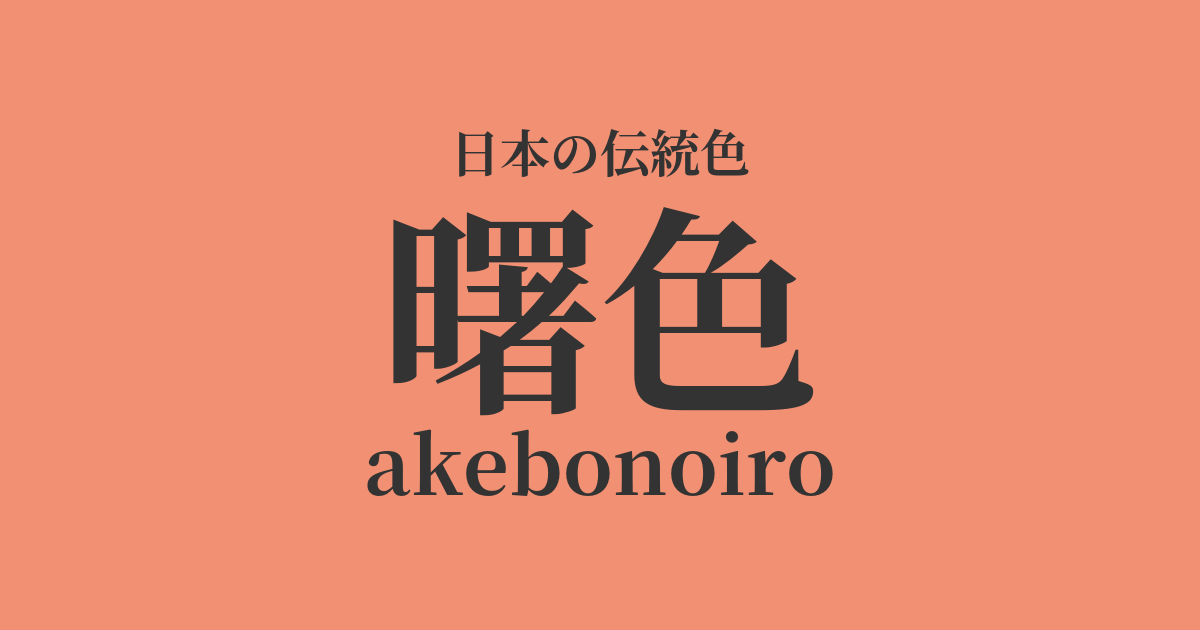
| Japanese color name | dawn color |
|---|---|
| reading | akebonoiro |
| HEX | #F19072 |
| RGB | 241, 144, 114 |
What is "Akebono-iro" (dawn color)? Origin and etymology.
Akebono-iro refers to the color of the eastern sky just before dawn breaks and the sun rises. As the name suggests, it is a color name derived from "akebono," the scene of dawn. It captures the natural phenomenon in which sunlight is scattered by water vapor and dust in the atmosphere from below the horizon, causing the sky to be tinged with an orange-pink hue. This mystical and gentle shade of light has long resonated deeply with the sensibilities of the Japanese people and has been the subject of much literature and art.
These color names can be described as poetic, capturing a beautiful moment in nature.
Historical background of the dawn
The color "Akebono-iro" (dawn color) is said to have originated in the Heian period and was deeply loved by the aristocracy of the time. During this era, it was considered a sign of cultural refinement to delicately capture the changing seasons of nature and reflect them in color names and designs. In particular, Sei Shonagon's statement in "The Pillow Book" that "Spring is best at dawn" solidified the aesthetic appreciation of Akebono and established the cultural value of this color. It is said that the subtle hues of this color were achieved using plant dyes such as safflower and madder.
Related literature, waka poetry, and seasonal words
The most famous literary work that discusses the color of dawn is Sei Shōnagon's "The Pillow Book." The opening lines, "In spring, it is the dawn. The mountain peaks gradually turn white, a faint light appears, and thin clouds with a purple tint trail across the sky," are known to form the core of the Japanese aesthetic sense. Through this description, the color of dawn came to be strongly associated not merely with a color, but with scenes and emotions such as the arrival of spring, new beginnings, and hope.
Furthermore, many waka poems depict scenes of dawn, and the color of dawn is recognized as a color that richly colors the emotions underlying the poem.
As I saw the dawn rising over the eastern fields, I turned around and saw the moon setting.
Color scheme preview
This is to check the readability of the text when this color is used as the background.
A color scheme proposal in the shade of dawn.
Indigo (#243A6C)
The beautiful color scheme contrasts the deep indigo sky before dawn with the light of the rising sun. It expresses the dramatic transition from the quiet night to the active morning, creating a combination that evokes a sense of calm and hope.
Light blue (#C3D825)
This color scheme, combining the image of a spring dawn with the colors of newly sprouted grass, evokes a sense of vitality and new beginnings. It gives a refreshing and bright impression, making it perfect for expressing the feeling of spring.
White training (#FFFFFF)
The combination with white evokes the clouds drifting across the dawn sky and the gradually filling light. It enhances the warmth of the dawn color while giving the overall impression of purity and elegance. This color scheme achieves both cleanliness and gentleness.
Practical Scenes
In the world of kimono, the color of dawn is used in formal kimono such as visiting kimono, furisode (long-sleeved kimono), and obi (sash), and is particularly popular as a color to adorn spring attire. Because it gives a gentle and elegant impression, it looks great in celebratory occasions such as festivals and tea ceremonies. Incorporating it into accessories can add a soft accent to the entire outfit.
In interior design, incorporating it into fabrics such as wallpaper, curtains, and cushions brings warmth and comfort to a space. It is especially suitable for spaces where you want to relax, such as bedrooms and living rooms, and is expected to create a calm and pleasant atmosphere.
In web design and graphic design, it is effective when you want to express gentleness and approachability. By using it as an accent color for products and services aimed at women, or for content themed around new beginnings, you can build a positive and soft brand image.