
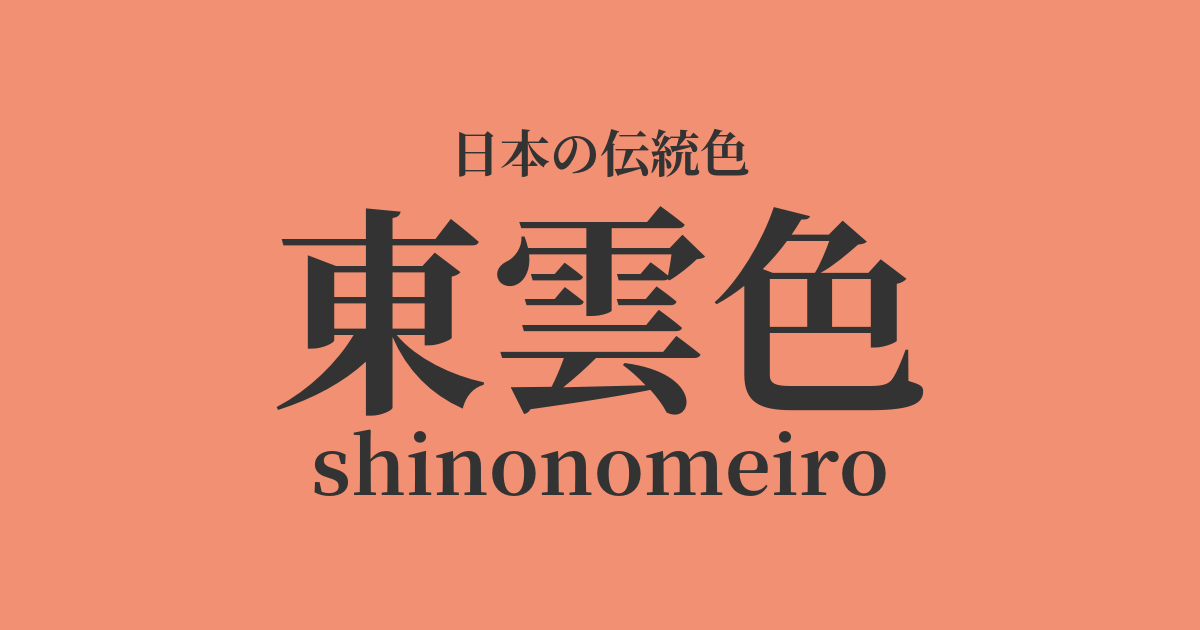
| Japanese color name | Shinonome color |
|---|---|
| reading | shinonomeiro |
| HEX | #F19072 |
| RGB | 241, 144, 114 |
What is Shinonome-iro? Origin and etymology
Shinonome-iro refers to the reddish-orange color of the eastern sky as it begins to lighten before dawn, illuminated by the sunlight. The origin of "Shinonome" is said to be the old Japanese word "shinonome," which originally referred to the morning light filtering through a coarsely woven bamboo fence or window, and from there came to refer to dawn itself.
This poetic imagery was incorporated into the color name, and while it is a similar shade to Akebono-iro (dawn color), Shinonome-iro is characterized by a warmer, more orange tone.
This color symbolizes the delicate Japanese aesthetic sense, capturing the beautiful fleeting hues of nature. It represents the hopeful moment when the darkness of night ends and a new day begins, and along with the sound of its name, it gives a calm and positive impression. In the world of dyeing, it is thought to have been dyed using a combination of madder, safflower, and Japanese knotweed, but a specific dyeing method has not been established.
The historical background of the dawn-colored sky
The color name "Shinonome-iro" (dawn color) is believed to have become commonly used relatively recently, sometime after the mid-Edo period. During the Edo period, dyeing techniques advanced significantly, creating a wide variety of intermediate colors that had not existed before. Along with this, many elegant color names derived from natural landscapes and seasonal events were born, and it is thought that Shinonome-iro became popular as one of them.
In particular, during the Kasei period, when townspeople's culture flourished, these delicate colors were favored within an aesthetic sensibility that valued sophistication and refinement. Used in the dyeing of kimonos, obi sashes, and small accessories, the stylish feeling of wearing the color of the dawn sky is said to have captured the hearts of the common people of Edo. However, since it did not require expensive dyes, it is possible that it became widely popular as a relatively easily obtainable color.
Related literature, waka poetry, and seasonal words
While there aren't many literary works that directly use the color name "Shinonome-iro" (dawn color), the word "Shinonome" itself has long been used in waka poetry and stories to describe the scene of dawn. In many classical works of literature, such as the Manyoshu, Kokin Wakashu, and The Tale of Genji, the appearance of the sky as dawn begins is described as "shinonome." This word has played an important role not so much as the color itself, but as a word that symbolizes time, scenery, and the emotions that accompany it.
For example, the scene depicted in the famous passage from Sei Shonagon's "The Pillow Book"—"In spring, it is the dawn. The mountain peaks gradually turn white, a faint light appears, and thin clouds with a purple tint trail across the sky"—is very similar to the world of dawn. In the world of haiku, "dawn" is sometimes treated as a seasonal word for spring, and is used in poetry to symbolize the beginning of a new season and hope.
The color of the dawn sky, as it begins to lighten, seems to be layered with delicate shades of crimson.
Color scheme preview
This is to check the readability of the text when this color is used as the background.
A proposed color scheme in the shade of dawn.
Lapis Lazuli (#1F4788)
While the dawn-green color symbolizes the light of dawn, the lapis lazuli color represents the deep sky where the darkness of night still lingers. Combining these two colors allows us to express the beautiful gradation of the sky as it transitions from night to morning, creating an impressive color scheme that evokes both tranquility and hope.
Dark brown (#6F4B3E)
The warm, dawn-like color and the deep, dark brown complement each other well, creating a warm and calming harmony. Reminiscent of the colors of pillars and furniture in traditional Japanese houses, it evokes a nostalgic and comforting atmosphere. This combination is well-suited for Japanese clothing and interior design.
Young bamboo green (#78B474)
The reddish-orange dawn color and the vibrant green of young bamboo green are almost complementary colors that vividly enhance each other. They evoke a fresh and lively impression, like young bamboo illuminated by the spring morning sun. This color scheme is ideal for bright and positive designs.
Practical Scenes
In the world of traditional Japanese clothing, the Shinonome color is used as an accent for formal kimonos such as visiting kimonos, casual kimonos, obiage (sash ties), and obijime (sash cords). It brightens the face and gives a warm and gentle impression, making it particularly popular for spring attire. Depending on how it is combined with other colors, it can express a wide range of looks, from youthful to elegant and sophisticated.
In interior design, incorporating Shinonome-colored fabrics such as wallpaper, curtains, and cushions brings a warm and gentle atmosphere to the entire room. It pairs particularly well with wooden furniture, adding a soft accent to natural or Japanese modern spaces.
In web and graphic design, it is an effective key color for brands that want to convey friendliness and warmth. Using it in important elements such as buttons and headings can attract user attention while maintaining a soft, non-intimidating impression. It is suitable for themes related to food, childcare, and lifestyle.