
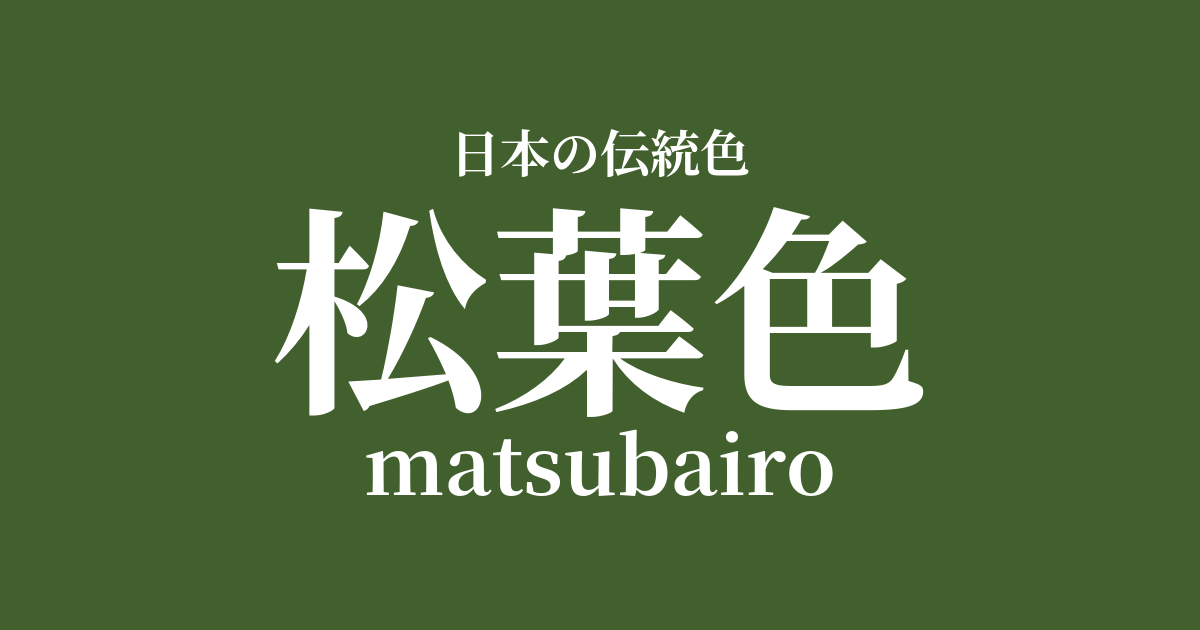
| Japanese color name | Pine green |
|---|---|
| reading | matsubairo |
| HEX | #42602D |
| RGB | 66, 96, 45 |
What is pine needle green? Origin and etymology.
As the name suggests, "pine needle green" refers to a deep, slightly dark green color reminiscent of pine needles. Pine trees are evergreens that retain their lush green leaves throughout the year and are also known as "evergreen trees." Because of their unchanging appearance, they have been revered since ancient times as a symbol of longevity, prosperity, and integrity, and as a sacred tree. This auspicious image is reflected in the color name, and it is thought that it embodies people's wish to benefit from the powerful vitality of the pine tree.
The etymology is extremely direct, derived from the color of pine needles. In Japanese color culture, color names are often taken from familiar plants, and pine needle green is a prime example. It not only describes a visual hue, but also embodies the cultural background of the word "pine," namely meanings of longevity, nobility, and celebration. Therefore, pine needle green is not just a simple green, but has been passed down with special value as an auspicious color.
The historical background of pine green
The color of pine trees was also favored in the aristocratic society of the Heian period, and can be seen in literary works and paintings. While the color name "pine needle color" is thought to have appeared clearly from the medieval period onward, the color combination of "matsugasane" (pine layering), which expressed the green of pine trees, existed from the Heian period. This combination involved using light green on the outside and purple on the inside to represent the overlapping green of pine trees, and there were various combinations depending on the season and purpose.
During the Edo period, pine needle green became widely popular, from samurai to commoners. In particular, it was favored as an auspicious color and used for celebratory clothing and furnishings. In the world of Kabuki, there was a color called "Ohakocha" (eighteenth tea), named after the Ichikawa Danjuro family's signature "Kabuki Eighteen Plays," which is said to have been a greenish color similar to pine needle green. In this way, pine needle green became deeply rooted in Japanese culture.
Related literature, waka poetry, and seasonal words
Pine trees are an extremely important subject in the world of Japanese poetry, and have been frequently featured as a symbol of "evergreen." The green of the pine tree is often cited when wishing for unchanging hearts, eternal love, and longevity. For example, the *Kokin Wakashū* (Collection of Ancient and Modern Japanese Poems) contains a poem that says even evergreen pines become even more vibrant in spring, expressing the rich vitality of the pine tree. The color name "pine needle green" takes on a deeper emotional resonance due to this literary background.
Furthermore, in the Noh play "Takasago," the "Takasago Pine" is sung about as a symbol of marital harmony and longevity. This story celebrates eternal bonds and prosperity through the figure of an elderly couple who are spirits of the Aioi Pine. The green of the old pine tree (matsubame) depicted in the stage background visually symbolizes the theme of the play and strongly emphasizes the auspicious meaning of the pine needle color. As a seasonal word, it is deeply associated with words celebrating the New Year, such as "kadomatsu" (New Year's pine decorations) and "matsu no uchi" (the period of New Year's celebrations).
Even the evergreen pine trees, now that spring has arrived, are a deeper shade of green.
Color scheme preview
This is to check the readability of the text when this color is used as the background.
Pine green color scheme proposal
Golden (#E6B422)
Pine and gold have long been used as an auspicious combination in Noh stage backdrops ("matsu-bame") and sliding screen paintings. They give a luxurious and dignified impression, making them suitable for traditional Japanese designs and celebratory occasions. It is a venerable color scheme where each color enhances the others.
Kutsuha color (#915E33)
The deep green of pine needles and the brownish, withered leaf color are both earth tones found in nature. They create a calm, deep, gentle, and harmonious color scheme. The result is a quiet and tasteful combination reminiscent of an autumn forest.
White training (#FCFAF2)
Combining a deep pine green with a pure white creates a strong contrast, highlighting each color. It conveys a sense of cleanliness and elegance, giving a modern and sophisticated impression. This color scheme is effective for Japanese modern designs or when emphasizing a clean image.
Practical Scenes
In the world of kimono, pine green is highly valued as a color that combines calmness and elegance. It is used in formal kimono such as visiting kimono, formal kimono, and obi sashes, and is especially often depicted with auspicious motifs such as pine trees, cranes, and turtles. It is also a favorite color for men's kimono and haori jackets, creating a stylish and dignified look. It is a versatile color that can be used for a wide range of occasions, from celebratory events to everyday wear.
In interior design, using it as an accent color brings depth and tranquility to a space. It is particularly effective when incorporated into one wall of wallpaper, cushions, or rugs. It pairs exceptionally well with natural materials such as wooden furniture and washi paper lighting, and harmonizes not only with Japanese-style rooms but also with Scandinavian and modern living rooms.
In web and graphic design, gold is a suitable color for conveying trustworthiness, stability, and tradition. It is effective as a key color for the websites of long-established companies or brands that deal in natural products. When combined with white or beige tones, readability is enhanced, and gold accents can create a sense of luxury.