
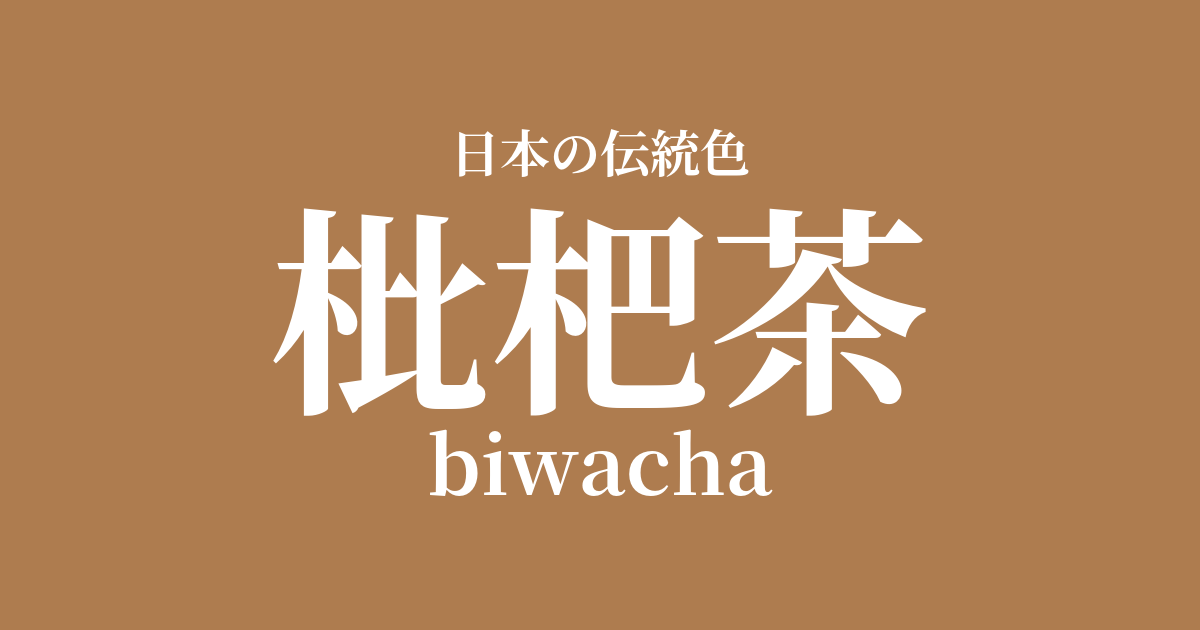
| Japanese color name | loquat tea |
|---|---|
| reading | biwacha |
| HEX | #AE7C4F |
| RGB | 174, 124, 79 |
What is loquat tea? Origin and etymology
The name "biwa-cha" (loquat tea) comes from its reddish-yellowish-brown color, resembling the color achieved by dyeing with a decoction of loquat leaves. However, it is believed that this color was not actually produced solely from loquat leaves, but rather by combining it with other plant dyes. For example, it is thought that this complex and deep hue was created by dyeing the fabric yellow with Japanese knotweed and then adding redness with sappanwood.
The inclusion of "cha" (brown) in color names stems from the Edo period, when brown tones were extremely popular. A wide variety of browns and grays were enjoyed by ordinary people, so much so that it was referred to as "48 shades of brown and 100 shades of gray." Biwacha (loquat tea) was one of these popular colors, and it's believed that its beautiful name and its origin from a familiar plant contributed to its popularity and widespread adoption.
Historical background of loquat tea
The color name "biwacha" (loquat tea) only began to appear in historical documents from the mid-Edo period onward. At that time, the shogunate frequently issued sumptuary laws, which also restricted the colors of clothing worn by commoners. As a result, bright, primary colors were forbidden, and instead, subdued and calm colors such as brown and gray became extremely popular as symbols of "chic" or "sophisticated" style.
Biwacha (loquat tea) is one of the colors that emerged against the backdrop of such trends, and it was widely used by people of all genders, from commoners to the samurai class. In particular, "Danjuro-cha," which was said to be a favorite of the Kabuki actor Ichikawa Danjuro, is a color in this family, and it had a great influence on the fashion of the common people through actor portraits and other media. Biwacha can be said to be a color that symbolizes the refined sense of color that was born from the townspeople's culture of Edo.
Related literature, waka poetry, and seasonal words
There are not many existing waka or haiku that directly mention the color name "biwacha" (loquat tea). However, "biwa" (loquat), from which this color is derived, has appeared in many literary works since ancient times as a seasonal word for summer. For example, Matsuo Basho's haiku includes the line, "Among the summer trees, loquat blossoms," which depicts a vibrant scene of early summer.
The deep green of loquat leaves and the warm orange of ripe fruit depicted in these literary works vividly evoke the color of loquat tea. Furthermore, in Edo period literary works such as sharebon and ukiyo-zoshi, characters wearing loquat-colored kimonos sometimes appear, representing the fashionable customs of the time, providing valuable clues to understanding the color culture of Edo.
Color scheme preview
This is to check the readability of the text when this color is used as the background.
Loquat tea color scheme proposal
Soot bamboo color (#6E5545)
Like loquat tea, this brown color was popular during the Edo period. The subdued and calm tone of sooty bamboo green complements the reddish hue of loquat tea, giving the overall impression of refined elegance. It is a suitable color scheme for emphasizing a Japanese aesthetic.
鶸Menghuang (#8F9924)
The combination with the bright yellowish-green of Hiwa-moegi, reminiscent of young loquat leaves, creates a natural and vibrant impression. The warmth of Biwa-cha and the freshness of Hiwa-moegi complement each other, resulting in a friendly and cheerful color scheme.
Bellflower color (#5A4498)
The yellowish-brown of loquat tea and the bluish-purple of bellflower are close to complementary colors, and they have the effect of making each other's colors appear more vibrant. This combination gives a noble and elegant impression, and because it can create a traditional yet modern atmosphere, it is suitable for a unique color scheme.
Practical Scenes
In the world of traditional Japanese clothing, loquat tea is used for kimonos, obi sashes, and haori jackets, creating a sophisticated look that is both calm and warm. It is especially favored as a color that suits autumn, the season of colorful leaves, and when combined with other shades of brown or green, it allows for a coordinated look that is full of seasonal charm.
In interior design, incorporating earth tones into fabrics such as wallpaper, curtains, and cushions brings warmth and tranquility to a space. They pair exceptionally well with wooden furniture and tatami mats, making them suitable as earth tones for creating Japanese modern or natural-style spaces.
In the fields of web design and graphic design, this color is effective in conveying images of trust, tradition, and nature. When used as a background color, it creates a calm atmosphere, while when used as an accent color, it gives a warm impression.