
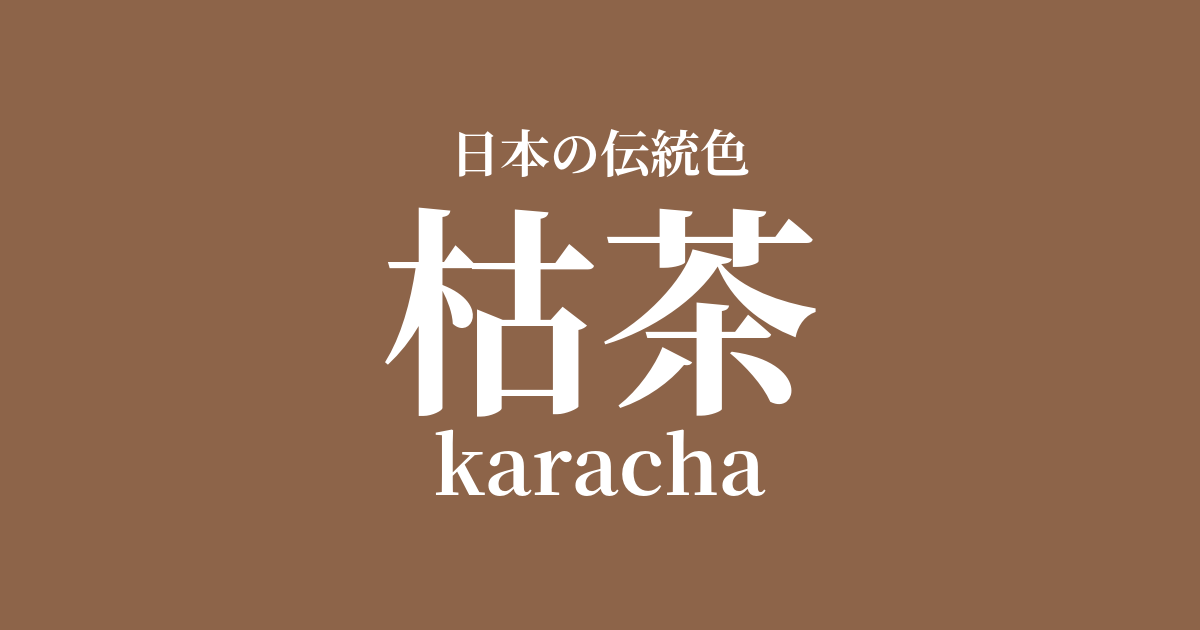
| Japanese color name | dry tea |
|---|---|
| reading | karacha |
| HEX | #8D6449 |
| RGB | 141, 100, 73 |
What is dried tea? Origin and etymology
Karecha, as its name suggests, is a reddish-brown color derived from the color of "withered plants and trees." Although it is a color name in the brown family, it is said to have been named based on the visual impression of the color rather than being dyed with tea leaves. It is a similar shade to "kuchiba-iro," which refers to the color of fallen leaves in autumn, but while kuchiba-iro includes a wide range of shades such as red and yellow, karecha is generally a more subdued, specific shade of brown.
This color is counted as one of the "Forty-Eight Browns and One Hundred Grays," a trend of diverse shades of brown and gray that emerged from the mid-Edo period onward. While extravagant colors were restricted by the shogunate's sumptuary laws, common people found subtle differences in hue within subdued colors and enjoyed them as a form of "chic" or "refined elegance." Karecha (dry brown) is one of the sophisticated colors that arose from this cultural background.
Historical background of dried tea
The term "karecha" (dry brown) became widely known during the mid-Edo period. Repeated sumptuary laws imposed strict restrictions on the colors of clothing that commoners could wear. Because the use of flashy purple, red, and gold and silver threads was forbidden, people focused on how to enjoy fashion within the permitted range of colors such as brown, gray, and indigo.
As a result, various variations of brown alone were created, such as "Rokōcha" and "Danjūrōcha." Karecha (dried tea) was one of them, and it is said that its subdued and calming hue, inspired by colors found in nature, matched the "chic" aesthetic sense of the Edo townspeople and was widely accepted. This trend in color symbolizes Japan's unique color culture, which is nurtured precisely within limitations.
Related literature, waka poetry, and seasonal words
Although the color name "karecha" (withered tea) is rarely used directly in waka or haiku, the imagery associated with this color resonates throughout many literary works. For example, the winter seasonal words "kareno" (withered field) and "kuchiba" (decaying leaves) have long been used to express feelings of loneliness and the pathos of things. Matsuo Basho's haiku, "Sick on a journey, my dreams wander across the withered fields," juxtaposes the withered winter landscape with the traveler's inner landscape, evoking the worldview associated with the color karecha.
Furthermore, in Edo period humorous novels and ukiyo-zoshi, the color of a character's clothing often symbolized their personality or social status. It is said that muted brown colors, such as withered tea, were sometimes depicted as the attire of "connoisseurs" who disliked ostentation and valued inner richness, or as the clothing of calm, elderly characters.
Color scheme preview
This is to check the readability of the text when this color is used as the background.
Color scheme proposal for withered tea
Soot bamboo color (#6F514C)
Like aged tea, this brown shade was popular during the Edo period. Susutake-iro (smoked bamboo color) is a reddish-dark brown, reminiscent of bamboo smoked by a hearth. When combined with aged tea, it creates a deep, unified, and calm impression, making it suitable for creating a traditional Japanese atmosphere.
White training (#EFEFEF)
Shironeri is a color close to pure white with a lustrous sheen, like refined silk. Adding the clean and bright color of Shironeri to the subdued and calm hue of Karecha creates an elegant contrast. The colors complement each other, resulting in a sophisticated and clean color scheme.
Uguischa (#715C1F)
Uguisu-cha is a color created by mixing brown with a dark yellowish-green, reminiscent of a nightingale's feathers. By combining the withered color of this tea with the color of a nightingale waiting for spring, it is possible to express a natural scene like the transition from winter to early spring. Earth tones go well together, giving a calm and profound impression.
Practical Scenes
In the world of kimono, withered brown is a particularly favored color for autumn and winter attire. Incorporating it into obi sashes, haori jackets, and accessories can express a sense of the season and create a calm, mature atmosphere. Combining it with colors such as deep green, mustard yellow, and golden brown allows for a stylish and sophisticated look.
In interior design, withered tea creates a warm and calming atmosphere. Incorporating it into a wall, rug, cushions, or other fabrics can give a room a sense of tranquility and sophistication. It pairs particularly well with wooden furniture and houseplants, harmonizing with both natural, modern, and traditional Japanese spaces.
In web and graphic design, aged brown is effective in conveying a sense of reliability, tradition, and organic imagery. Using it as a background or accent color can create a sophisticated and professional feel. Combining it with white or off-white results in a clean and easy-to-read design.