
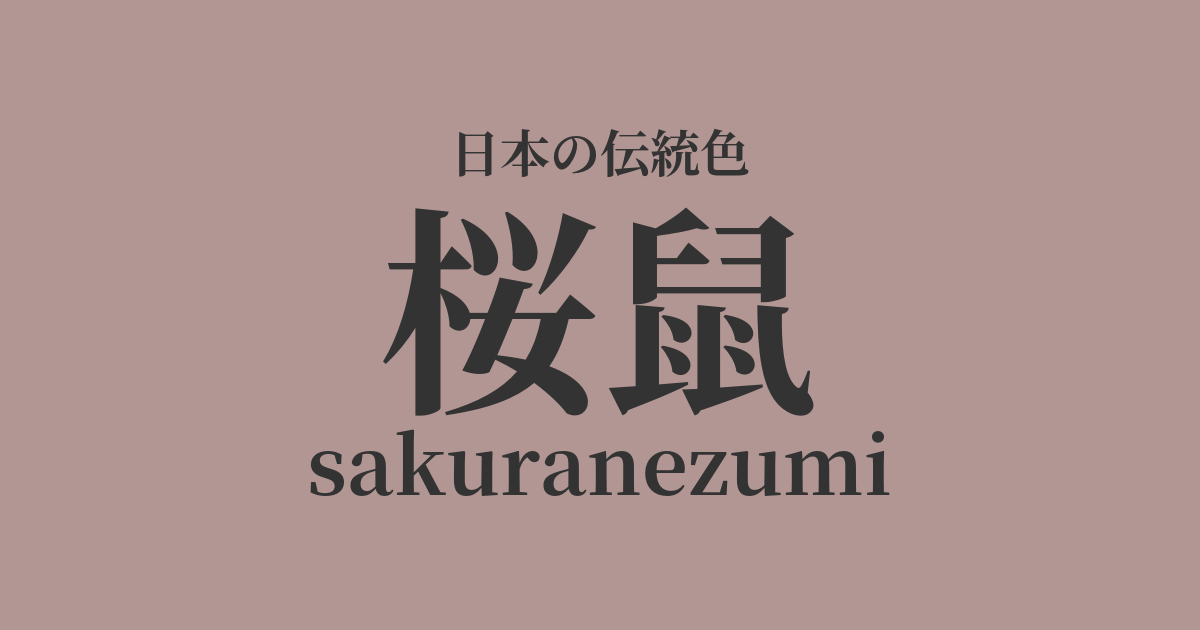
| Japanese color name | Cherry Blossom Mouse |
|---|---|
| reading | sakuranezumi |
| HEX | #B19693 |
| RGB | 177, 150, 147 |
What is a Sakura Nezumi? Origin and Etymology
Sakura-nezumi, as the name suggests, is a color name that combines "sakura-iro" (cherry blossom pink) and "nezumi-iro" (mouse gray), referring to a light gray with a slight reddish tint. It is said that the origin of this color lies in the mid-Edo period, when the shogunate's sumptuary laws prohibited common people from using extravagant colors. People enjoyed the subtle differences in shades within the limited color palette, giving rise to a wide variety of fashionable colors known as "forty-eight shades of brown and one hundred shades of gray."
Sakura-nezumi (cherry blossom gray) is one of these "hundred grays," and it was loved as a color that symbolized the "chic" aesthetic sense of the Edo people, possessing a delicate and elegant reddish hue like a cherry blossom and a calm, subdued gray.
The name originates from its pale pinkish-gray hue, reminiscent of cherry blossom petals. It is said that during the dyeing process, a small amount of expensive safflower was used as an underdye, and then the gray color was applied over it. The ingenuity of the people of Edo, who pursued maximum fashion within the limits of dyes permitted under the restrictions, gave rise to this delicate and beautiful color name and shade.
Historical background of Sakura Nezumi
The cherry blossom gray color became popular from the mid to late Edo period. Due to repeated sumptuary laws, commoners were officially restricted from wearing brightly colored clothing. Against this social backdrop, people began to find endless color possibilities in subdued shades such as brown and gray, which were not subject to these restrictions.
So many different shades of gray were created that they were called "hundreds of gray," each given an elegant name. Sakura-nezumi (cherry blossom gray) was one of them, and it is said that it became very popular among the common people of Edo after being favored by Kabuki actor Ichikawa Danjuro and others. It was more than just a trend in color; it embodied the spirit of "iki" (sophistication and refinement) of Edo culture, which pursued refined beauty within constraints.
Related literature, waka poetry, and seasonal words
While the color name "Sakura-nezumi" (cherry blossom gray) doesn't appear directly in many classical literary works, the imagery it evokes has been depicted in numerous waka poems and stories. For example, it's a color well-suited to expressing fleeting yet beautiful scenes such as mountain cherry blossoms shrouded in spring mist, or the sight of falling cherry blossoms staining the ground a pale pink.
In modern and contemporary literary works, particularly novels depicting the customs of the Edo period, the color of a character's clothing is sometimes referred to as "sakura-nezumi no kosode" (a type of kimono). This indicates that sakura-nezumi was widely recognized as a color symbolizing the refined aesthetic of Edo, even into later generations. Although it is not a seasonal word, it is used to express the gentle and slightly melancholic atmosphere of spring.
Color scheme preview
This is to check the readability of the text when this color is used as the background.
Cherry Blossom Gray Color Scheme Proposal
White training (#F3F3F3)
The delicate reddish hue and elegance of cherry blossom gray are enhanced by the purity of white. This color combination exudes cleanliness and grace, evoking the gentle light of spring. It is a sophisticated combination that gives a refined impression when used in layering kimonos or in Japanese-style designs.
Blue Rat (#6C7C7D)
This combination uses shades of the same gray family. The reddish cherry blossom gray and the bluish indigo gray complement each other's colors. This creates a complex yet understated color scheme, giving an intelligent and refined impression that is well-suited to expressing the "chic" of Edo.
White tea (#8C8862)
The combination of the reddish hues of cherry blossom gray and the yellowish-greenish brown of yellow-green tea creates a natural harmony reminiscent of the budding of early spring and cherry blossoms. While it's a combination of earth tones, the color scheme also has a certain elegance.
Practical Scenes
In the world of traditional Japanese clothing, cherry blossom gray is a beloved color regardless of gender or age. In particular, incorporating it into small-patterned kimonos, solid-colored kimonos, and accessories such as obiage (sash ties) and obijime (sash cords) creates an elegant, understated, yet stylish look. It is considered ideal for springtime attire and gives a soft impression.
In interior design, using it in fabrics such as wallpaper, curtains, and cushions brings a calm and peaceful atmosphere to a space. It goes well with a Japanese modern style and is also very compatible with light wood, bamboo, and other grayish tones.
In web and graphic design, using it as a background or accent color can create a gentle and sophisticated impression. It is particularly effective for websites dealing with products and services aimed at women, or those dealing with traditional themes, helping to convey a sense of luxury and trustworthiness.