
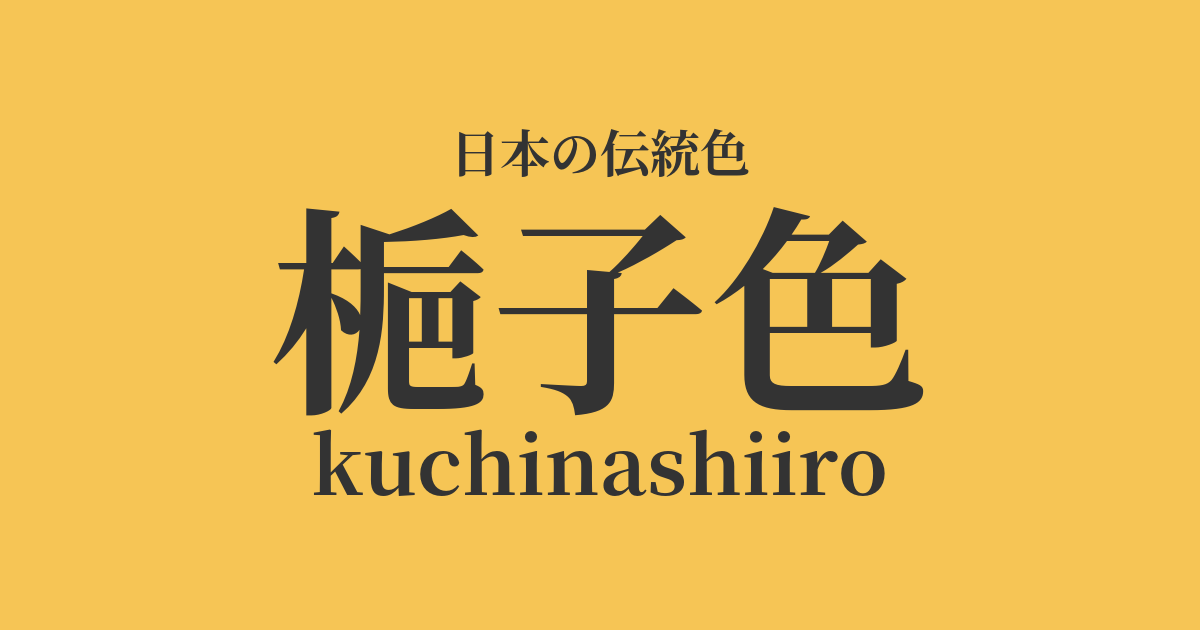
| Japanese color name | Beige color |
|---|---|
| reading | kuchinashiiro |
| HEX | #F6C555 |
| RGB | 246, 197, 85 |
What is gardenia color? Origin and etymology
Gardenia yellow refers to a deep, reddish-yellow color dyed with a pigment extracted from the fruit of the gardenia, an evergreen shrub belonging to the Rubiaceae family. The fruit of the gardenia has been valued as a dye since ancient times and is known for its vibrant color. There are several theories about the origin of the name, but the most famous is that it was named "kuchinashi" (mouthless) because the fruit does not split open (does not open its mouth) even when ripe.
Another theory suggests that the name "kuchinawanashi" (meaning "no snake's mouth") originated from the fact that the shape of the calyx at the tip of the fruit resembles a snake's mouth.
Historical background of the gardenia color
The dyeing of fabrics with gardenia has a long history, and linen cloth dyed with gardenia remains among the treasures of the Shōsōin from the Nara period. This suggests that it was already established as an important yellow dye at that time. In the Heian period, its vivid yellow was considered a noble color, and it is said that it was used as a substitute for kōrozen, the color of the emperor's robe, because it resembled kōrozen.
The Engishiki, compiled in the mid-Heian period, contains detailed descriptions of the procedures and materials used for gardenia dyeing. This is evidence that gardenia was strictly controlled as an official dye. In the Edo period, gardenia dyeing became more widespread among ordinary people, and its beautiful yellow color was used in everyday products such as kimonos, curtains, and furoshiki (wrapping cloths).
Related literature, waka poetry, and seasonal words
The color gardenia yellow can also be found in Heian period literature. In "The Pillow Book," it is listed as an example of "noble things" and described as "light fabrics dyed with gardenia," praising the elegance of light silk fabrics dyed in gardenia yellow. In the "Suetsumuhana" chapter of "The Tale of Genji," the color of the clothing that Hikaru Genji presented is described as "very vivid, like gardenia," indicating that it was a favored color in the aristocratic society of the time.
The name "Kuchinashi" (gardenia), which sounds like the Japanese word for "mouthless," has been used as a subject for waka poetry expressing unspoken feelings. The flower is a seasonal word for summer, and its sweet fragrance and pure white petals have been loved by many poets. Not only the color of the fruit used as a dye, but the flower and its name itself have been deeply intertwined with Japanese culture since ancient times.
Who is the owner of this garment the color of the yellow rose? No one answers, only the gardenia remains.
Color scheme preview
This is to check the readability of the text when this color is used as the background.
Gardenia color scheme proposal
Light green (#ADDE79)
This vibrant color scheme evokes the image of young leaves and ripe fruit in nature. The colors complement each other, creating a bright yet calming impression. It's suitable for Japanese-style designs and natural themes.
Lapis Lazuli (#1F4788)
Because they are close to complementary colors, they create a strong contrast. The vibrancy of the gardenia color stands out, giving a modern and sophisticated impression. It is a highly visible and effective combination as an accent color.
Dark brown (#664434)
Using similar earth tones creates a unified, calm, and warm impression. This natural and reassuring color scheme, reminiscent of autumn harvests and the earth, is easy to incorporate into interior design and fashion.
Practical Scenes
In the world of kimono, gardenia yellow is used in formal kimono such as visiting kimono, casual kimono, and obi sashes, creating a vibrant and cheerful atmosphere. It is especially often incorporated into spring and autumn outfits, and it shows a variety of expressions when combined with other colors. Even just adding it as an accessory such as an obiage (sash scarf) or obijime (sash cord) can be an effective accent to the entire outfit.
In interior design, using this color in fabrics such as cushion covers, curtains, and rugs brings warmth and brightness to a space. It pairs exceptionally well with wooden furniture, creating a natural and cozy atmosphere. It's also popular as an accent wall, where just one wall is painted in this color.
In web and graphic design, this color is effective when you want to convey friendliness and vitality. Using it as the main color for food-related or children's service websites, or as an accent color for attention-grabbing buttons and banners, will leave a positive impression on users.