
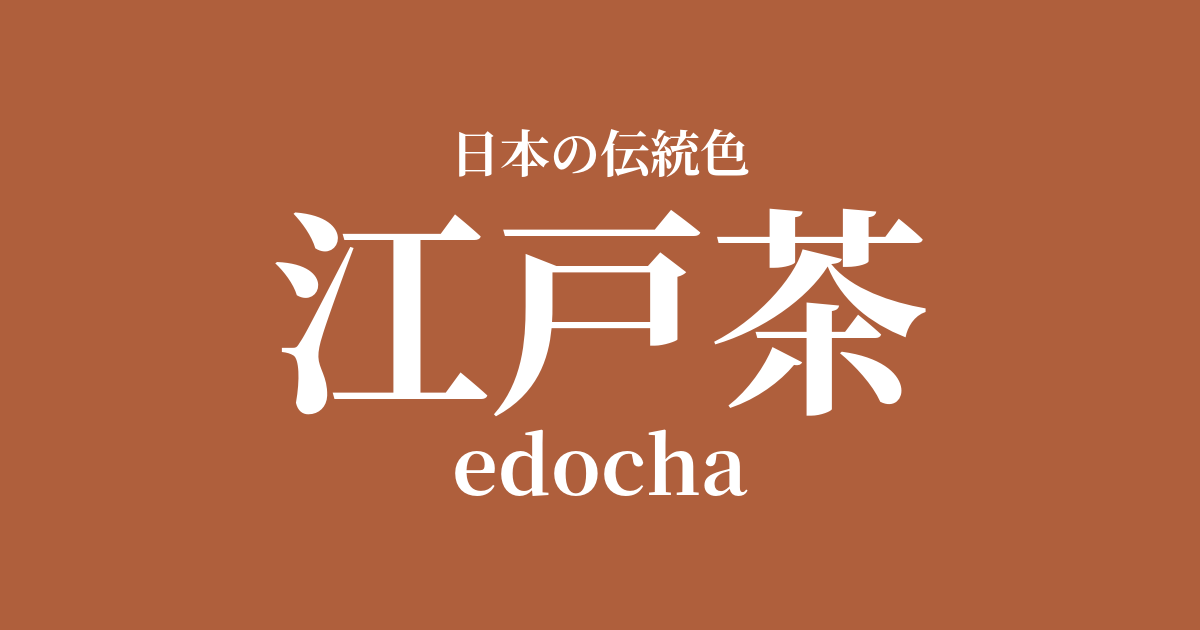
| Japanese color name | Edo Tea |
|---|---|
| reading | Edocha |
| HEX | #AF5F3C |
| RGB | 175, 95, 60 |
What is Edo Tea? Origin and Etymology
Edo tea is a reddish-brown color that was popular in the mid-Edo period. As its name suggests, it originated in Edo and became widely cherished as a symbol of popular culture. It is said that this color became explosively popular after the first Ichikawa Danjuro, a popular Kabuki actor at the time, used it in his stage costumes. For this reason, it is also known by the alternative name "Danjuro tea."
The dye used is primarily the bark of the Japanese bayberry tree, and it is believed that this unique reddish-brown color was achieved by using small amounts of alum and iron as mordants.
Historical background of Edo tea
During the Edo period, the shogunate frequently issued sumptuary laws against commoners, prohibiting the wearing of brightly colored clothing. As a result, people began to appreciate subtle differences in shades of brown and gray, a palette known as "Shijūhacchahyakunezumi" (forty-eight shades of brown and one hundred shades of gray), and enjoyed refined fashion. Edo-cha (Edo brown) is one of the colors that emerged during this trend.
In particular, its association with Kabuki, a leading source of cutting-edge trends at the time, meant that Edo tea became not just a simple shade of brown, but a color that symbolized the stylish and sophisticated temperament of the Edoites.
Related literature, waka poetry, and seasonal words
Edo tea, due to its popularity, frequently appears in literary works and ukiyo-e prints depicting the customs of the Edo period. In particular, in Ihara Saikaku's ukiyo-zoshi and Shikitei Sanba's humorous books, brown tones are often depicted as the stylish attire of Edo townspeople. While it is difficult to identify waka poems that specifically mention Edo tea, brown tones are often associated with autumn scenery and the aesthetic of wabi-sabi.
Although it doesn't directly exist as a seasonal word, this color is sometimes used as a background in haiku poetry because it evokes the image of autumn leaves and withered leaves.
Color scheme preview
This is to check the readability of the text when this color is used as the background.
Edo Tea Color Scheme Proposal
Indigo (#274A78)
The warmth of Edo tea and the calmness of indigo blue complement each other, creating a color scheme that evokes the sophistication of Edo. This traditional combination, also seen in Kabuki costumes and shop curtains, achieves a balance of calmness and strength.
Grayish white (#E6E6E6)
The reddish hue of Edo tea is gently complemented by the bright, soft grayish-white tones. This creates a modern and sophisticated impression, making it a color scheme that can be easily incorporated not only into traditional Japanese designs but also into contemporary interiors and fashion.
Uguischa (#715C1F)
While belonging to the same tea family as Edo tea, combining it with the greenish-tinged uguisu tea creates a natural, deep harmony of earthy colors. It evokes the autumn foliage and the earth, creating a calm and reassuring atmosphere.
Practical Scenes
Edo tea, with its calming hue, is still used in various situations today. In kimonos and obi sashes, it gives a classic yet stylish impression and is particularly favored for autumn attire. In interior design, incorporating it into wallpaper, curtains, and furniture can create a warm and dignified Japanese modern space. In web design and graphics, using it as an accent color can convey a traditional and trustworthy image.