
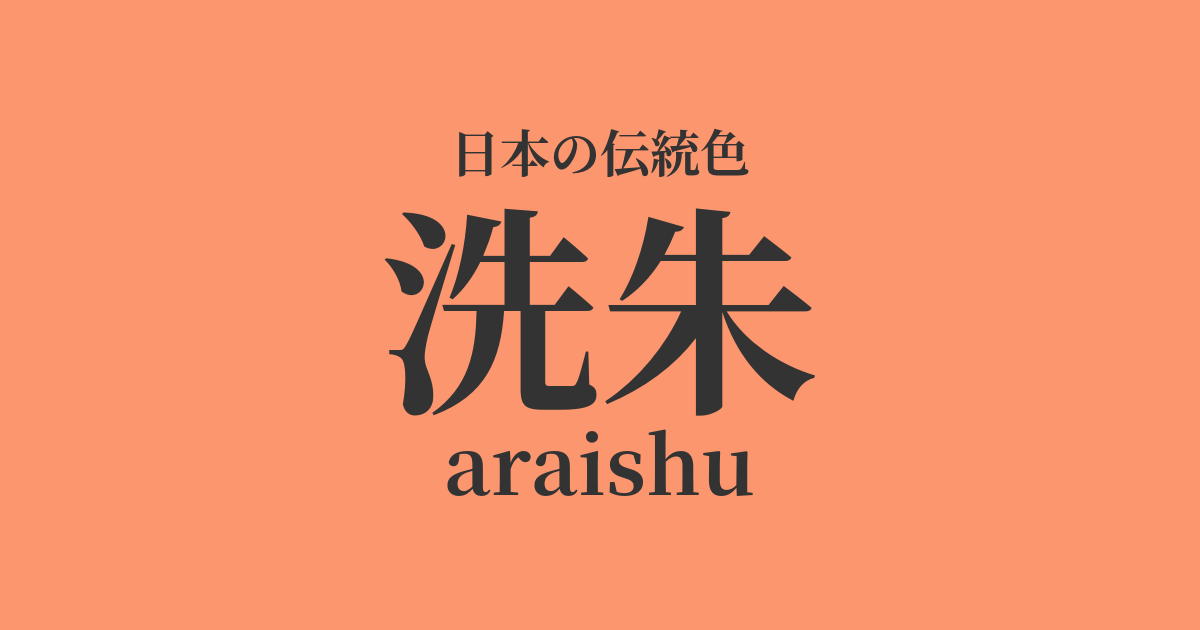
| Japanese color name | Washed in red |
|---|---|
| reading | araishu |
| HEX | #FB966E |
| RGB | 251, 150, 110 |
What is "Senshu"? Origin and etymology
The origin of the term "senshu" (洗朱) comes from its visual impression, which is "a color like vermilion has been washed away." It refers to a yellowish-red color that is a paler, lighter version of a vibrant vermilion. In traditional Japanese color terminology, the word "arai" (洗) is sometimes used as a prefix to indicate that the original color has been made paler and softer.
For example, the color name "araigaki" (washed persimmon) has a similar origin, and it can be said that it reflects the Japanese aesthetic sense of adding delicate nuances rather than using the primary color as is.
Historical background of the use of vermilion
"Senshu" (洗朱) is considered one of the colors that was popular during the Edo period. This color name was particularly highly valued in the world of lacquerware, and it is said that it sometimes referred to a color achieved by applying a translucent lacquer over vermilion lacquer, allowing the underlying vermilion to show through over time. In textiles, this elegant hue was also achieved by dyeing with safflower or sappanwood and then adjusting the color to be lighter.
The color scheme, which combined vibrancy and tranquility, resonated with the refined sensibilities of the people of that time and was widely used in kimonos, accessories, and furnishings.
Related literature, waka poetry, and seasonal words
It is difficult to pinpoint any famous waka poems or literary works that directly mention the color name "senshu" (洗朱). However, its gentle and elegant hue resonates with the worldview of classical literature. In Heian period literature such as "The Tale of Genji," pale reddish colors such as "usukurenai" (薄紅) and "koubaiiro" (紅梅色) are frequently described as the colors of clothing worn by noble women. Senshu has a similar impression to these colors and can be interpreted as a color that symbolizes elegance and grace.
Although it is not designated as a seasonal word, it has soft colors that evoke the sunlight of spring or the beginning of autumn.
Color scheme preview
This is to check the readability of the text when this color is used as the background.
Vermilion color scheme proposal
鶸Menghuang (#8D9949)
The youthful green of the yellow-green harmonizes with the warmth of the vermilion, creating a bright and gentle impression reminiscent of the arrival of spring. The colors complement each other, resulting in a natural and elegant color scheme.
Dark brown (#664434)
The rich, deep brown tones complement the lightness of the vermilion, creating an overall sense of stability and luxury. The resulting color scheme evokes traditional lacquerware and Japanese furniture, creating a dignified and refined atmosphere.
White indigo (#C1D8E0)
The cool and clear impression of the light blue contrasts with the warm color of the vermilion, creating a refreshing and sophisticated space. It is suitable for modern Japanese aesthetics and designs where cleanliness is required.
Practical Scenes
In the world of traditional Japanese clothing, vermilion is used for formal kimonos such as visiting kimonos, casual kimonos, and accessories like obiage (kimono sashes), adding an elegant and gentle touch to the outfit. It is especially well-suited to the early spring season and is a color that can also be expected to brighten the complexion.
In interior design, incorporating it as an accent color in wallpaper, cushions, and curtains brings warmth and sophistication to a space. It also pairs very well with natural base colors such as wood, white, and gray.
In the fields of web design and graphic design, it is suitable when you want to express friendliness or elegance. It functions as both a main color and an accent color, and has the effect of giving users a sense of security and a calm impression.