
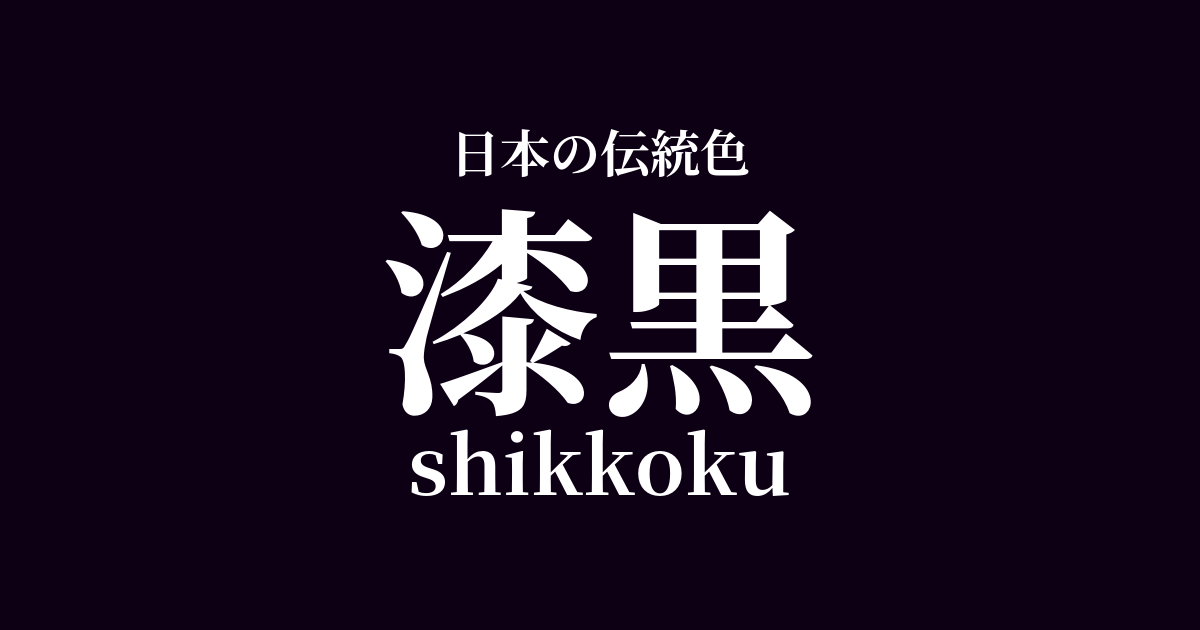
| Japanese color name | Jet black |
|---|---|
| reading | shikkoku |
| HEX | #0D0015 |
| RGB | 13, 0, 21 |
What is jet black? Origin and etymology
Jet black, as the name suggests, is a color name derived from the "black" of "urushi" (lacquer). It refers to a deep, lustrous black that has a wet-looking sheen, created by applying multiple layers of urushi paint. It stands apart from ordinary black, and its most distinctive features are its captivating depth and moist luster.
This unique texture is formed during the hardening process when urushiol, the main component of lacquer, combines with moisture in the air, and has become established as one of the colors that symbolizes Japanese aesthetics.
A historical background of pitch black
Japanese lacquer culture is very old, with lacquered ornaments being discovered at Jomon period archaeological sites. Since ancient times, jet black has been treated as a sacred color or a color symbolizing authority. During the Heian period, it was widely used in the furnishings and ox-drawn carriages of the aristocracy, as well as in the architecture of temples and shrines, and was an indispensable color for creating elegant and majestic spaces.
From the Kamakura period onward, with the rise of the samurai class, jet black came to be widely used in armor and sword scabbards. In addition to the practical benefit of increased strength and durability through lacquer coating, jet black armor and helmets also served to convey the dignity and presence of the samurai on the battlefield. During the Edo period, lacquerware such as maki-e and raden spread among the common people, and jet black, as the perfect background color to complement the ornate gold and silver decorations, greatly contributed to the development of Japanese craftsmanship.
Related literature, waka poetry, and seasonal words
Jet black is often used in literature to symbolize the darkness of night, profound sorrow, or mystical beauty. The phrase "pitch black darkness" has become an established idiom to describe complete darkness without any light. In classical literature such as "The Tale of Genji," jet black is used to describe the clothing and furnishings of characters, conveying to the reader the high status of the characters or the grandeur of the scenes.
In particular, the expression "jet-black hair," which praises a woman's long, lustrous black hair, strongly reflects traditional Japanese aesthetics.
Color scheme preview
This is to check the readability of the text when this color is used as the background.
Jet black color scheme proposal
Golden (#E6B422)
This is the most traditional and luxurious combination, reminiscent of the maki-e (gold lacquer) technique used in lacquerware. The jet black enhances the brilliance of the gold to the fullest, creating a dignified and majestic impression. It is a classic color scheme used in celebratory occasions and formal settings.
Scarlet (#D3381C)
The color scheme, with its deep, dignified black and vibrant crimson, creates a strong contrast. This combination, often seen in armor and shrine architecture, evokes a sense of strength, passion, and solemn beauty. It has a very powerful visual impact.
White training (#FEFDF9)
A monochrome combination that gives a modern and sophisticated impression. The deep black and the pure white complement each other, expressing a serene world reminiscent of ink painting. It is a color scheme that is simple yet has a strong presence.
Practical Scenes
In the world of kimono, jet black is considered the most prestigious color. It is the base color used in formal attire such as men's crested haori and hakama, and women's black tomesode, symbolizing dignity and refinement. Its elegance is further enhanced when paired with gold or silver obi belts or white accessories.
In interior design, using jet black as an accent color brings a sense of weight and luxury to a space. Incorporating it into one wall, high-end furniture, or fixtures tightens the overall space and creates a calm atmosphere. It also pairs well with white, wood grain, and metal materials.
In web and graphic design, jet black is a highly effective background color. It makes content and other colors stand out, creating a sense of luxury and professionalism on luxury brand and art-related websites. Using white or gold for text enhances readability and creates an elegant impression.