
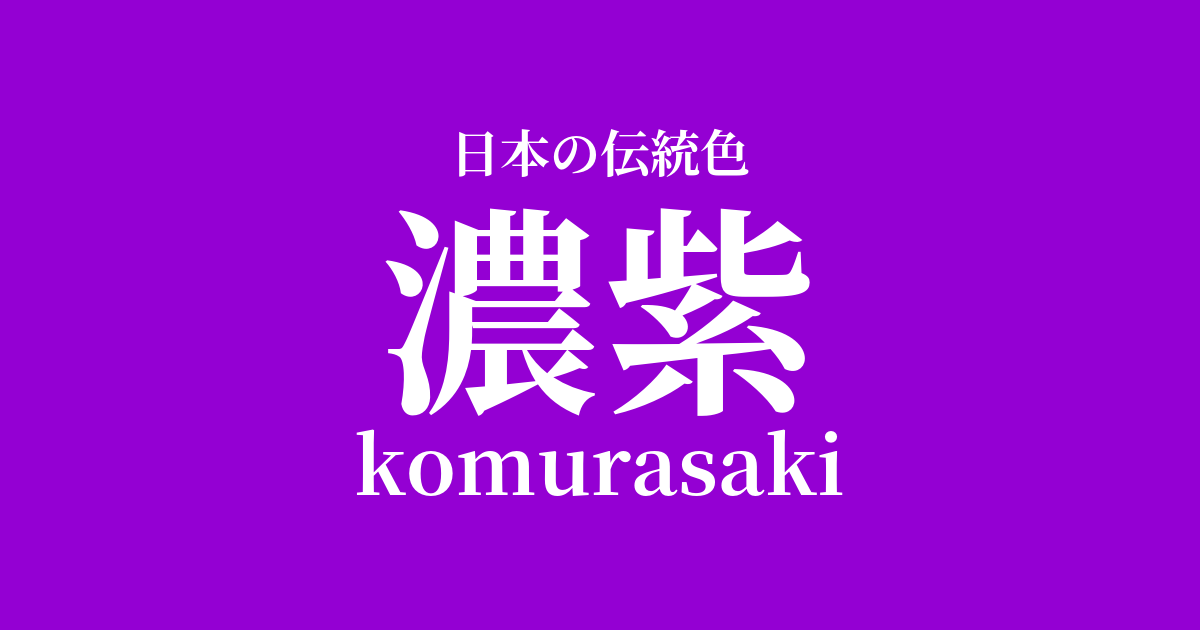
| Japanese color name | dark purple |
|---|---|
| reading | Komurasaki |
| HEX | #9400D3 |
| RGB | 148, 0, 211 |
What is "dark purple"? Origin and etymology.
Komurasaki, as the name suggests, is a color name meaning "deep purple." In ancient times, the root of the purple gromwell plant, called "shikon," was used as a purple dye. By repeatedly dyeing cloth with this shikon, a deep and vivid purple color was produced. This particularly deep purple, achieved through this laborious dyeing process, was called "komurasaki" and was highly valued as a rare color.
That particular shade was perceived as more than just a variation in color intensity; it held a special meaning.
The historical background of dark purple
The history of dark purple can be traced back to the "Twelve Levels of Court Rank" established by Prince Shōtoku during the Asuka period. In this system, established in 603, dark purple was designated as the color of the crown worn by the highest rank, "Daitoku." As a result, purple became a "forbidden color," permitted only to the emperor, members of the imperial family, and the highest-ranking officials, and became a symbol of authority and nobility. This system played a crucial role in visualizing social order through the hierarchical arrangement of colors.
Even during the Heian period, deep purple continued to maintain its status as a noble color. Sei Shonagon's "The Pillow Book" states, "Everything that is purple is wonderful," indicating that purple was highly praised as a special color. In this era, gromwell, the dye used for purple, was extremely valuable, and achieving a deep color required advanced techniques and a large amount of dye, thus increasing its value even further.
As time progressed, during the Edo period, purple became fashionable among the common people, but it was in brighter, more vibrant shades such as "Edo purple" and "Kyoto purple." On the other hand, dark purple maintained its traditional formality and continued to be used in the formal attire of samurai and the robes of high-ranking Buddhist priests. As a color symbolizing traditional authority, it remained distinct from fashionable colors.
Related literature, waka poetry, and seasonal words
In classical Japanese literature, purple frequently appears as a color with special significance. The heroine of "The Tale of Genji," Lady Murasaki, as her name suggests, is the ideal woman for the protagonist, Hikaru Genji, and is depicted as a symbol of nobility and beauty. Throughout the story, purple is an important element in expressing the social status, feelings, and aesthetic sensibilities of the characters.
Numerous poems about purple gromwell and the color purple can be found in the Manyoshu and Kokin Wakashu anthologies. For example, in the poem "As I walk through the crimson-dyed purple fields and marked fields, does the field guardian not see you waving your sleeves?" (by Princess Nukata), a field where purple gromwell grows is depicted as the setting for a love story. Thus, purple has been used not only to symbolize nobility but also as a color that represents passionate love.
Because of a single purple flower, I look upon all the grasses of Musashino with a sense of pity.
Color scheme preview
This is to check the readability of the text when this color is used as the background.
A dark purple color scheme proposal
Golden (#E6B422)
Deep purple and gold have long been a combination symbolizing nobility and luxury. This traditional color scheme, seen in Buddhist art and the attire of high-ranking figures, conveys a dignified and majestic impression. The two colors complement each other, achieving a balance of gravitas and splendor.
White (#FFFFFF)
This combination features a deep, rich purple hue highlighted by pure white. The strong contrast further enhances the nobility and mystery inherent in purple. It exudes cleanliness and elegance, creating a sophisticated impression even in modern designs.
Light green (#A9D159)
The combination of light green, a yellow close to the complementary color of deep purple, has the effect of making both colors appear more vibrant. The youthful impression of light green harmonizes with the calm elegance of deep purple, creating a refined yet fresh impression. This is a classic color scheme also seen in the layered color combinations of the Heian period.
Practical Scenes
In the world of kimono, deep purple is highly valued as a color of high status. It is often used in formal kimono such as tomesode, houmongi, and fukuro obi, adding depth and elegance to attire for celebratory occasions and formal events. It also pairs exceptionally well with gold and silver embroidery, further enhancing the gorgeous and opulent patterns.
Incorporating deep purple into interior design can bring a sense of calm and sophistication to a space. Effective uses include an accent wall painted in deep purple, or using it in fabrics such as cushions and rugs. By carefully selecting lighting, the depth and mystique of the color can be enhanced, creating a refined and elegant atmosphere.