
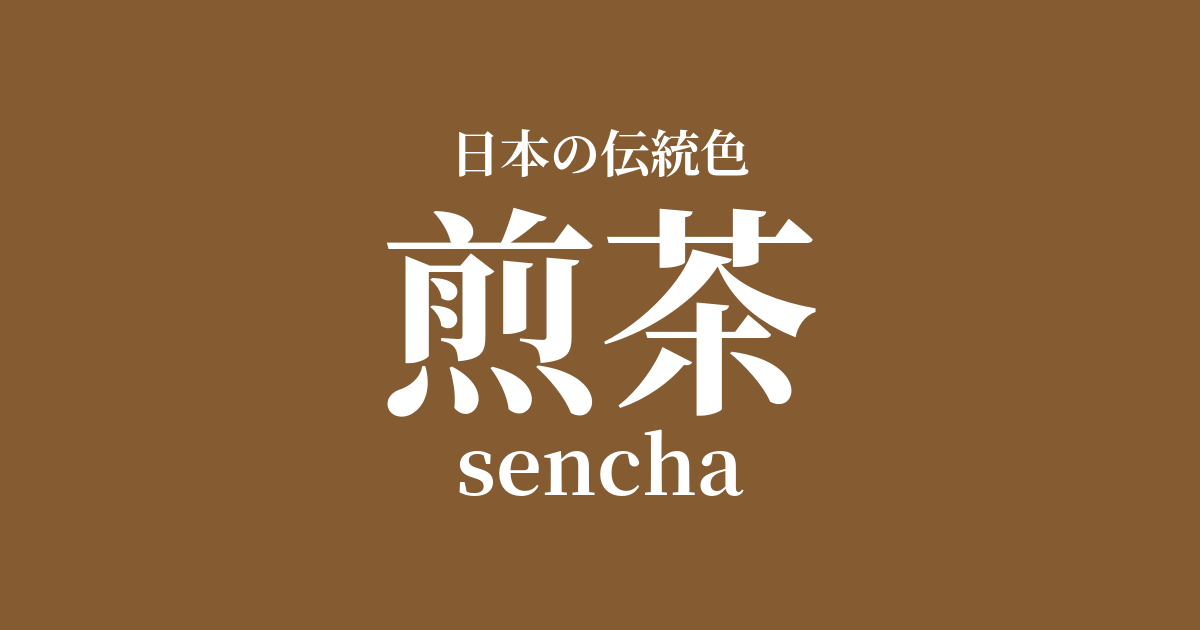
| Japanese color name | Sencha (green tea) |
|---|---|
| reading | sencha |
| HEX | #855B32 |
| RGB | 133, 91, 50 |
What is Sencha? Origin and Etymology
Sencha, as the name suggests, is a color name derived from "sencha," a type of green tea. However, it refers to the color of the dried tea leaves themselves, not the color of brewed tea. It is a slightly dark, subdued yellowish-brown, characterized by a calm and deep hue. It is believed that this color name originated in the Edo period when the culture of drinking sencha spread among the common people.
It is said that the method for producing sencha (green tea) was established in the mid-Edo period by Nagatani Soen of Yamashiro Province (present-day Kyoto Prefecture). This method led to the widespread distribution of high-quality sencha, which became deeply rooted in the lives of ordinary people. Due to this cultural background, the color of the sencha tea leaves, which were familiar to people, became established as a color name and came to be used as a dye color.
Historical background of sencha
Sencha brown was one of the colors that was popular from the mid to late Edo period. The shogunate at the time frequently issued sumptuary laws to curb the extravagance of the common people and restricted brightly colored clothing. As a result, people began to find enjoyment in subtle differences in shades of brown and gray, and a wide variety of fashionable colors, known as "forty-eight shades of brown and one hundred shades of gray," was born.
Sencha (green tea) was also counted as one of the "48 shades of brown and 10 shades of gray," and was favored by the townspeople of Edo as a sophisticated color. In particular, brown tones were extremely popular as colors favored by Kabuki actors and as fashionable colors for kimonos. Sencha was deeply ingrained in the culture of the time as a color that symbolized the refined aesthetic sense of Edo.
Related literature, waka poetry, and seasonal words
Currently, no famous waka or haiku poems have been found that directly incorporate the color name "sencha-cha" (a shade of brown). However, in literary works from the Edo period, such as Ihara Saikaku's ukiyo-zoshi and Shikitei Sanba's kokkeibon, the lives and customs of ordinary people at the time are vividly depicted, and shades of brown, like sencha-cha, frequently appear as the colors of the kimonos worn by the characters.
Furthermore, sencha itself was beloved by literati and artists, and served as the subject of many Chinese poems, calligraphy, and paintings. In particular, the existence of Baisao, who popularized the sencha tea ceremony, greatly contributed to the development of sencha culture. It is possible that this cultural spread indirectly influenced the establishment and acceptance of the color name "sencha-colored."
Color scheme preview
This is to check the readability of the text when this color is used as the background.
Color scheme suggestions for sencha (green tea)
White tea (#C39149)
Combining it with a lighter white tea, which belongs to the same tea family as sencha, creates a natural gradation. While maintaining a sense of unity, the variations in shade create depth, resulting in a color scheme that gives an elegant and calm impression.
Blue dull (#6B7B86)
The combination of deep brown and muted blue has a near-complementary color relationship, where each color enhances the other. It maintains a calm, traditional Japanese atmosphere while creating an intelligent and sophisticated impression. This color scheme successfully blends tradition and modernity.
Mustard color (#D1A552)
Combining a calm, mellow sencha brown with a bright, vibrant mustard yellow adds warmth and elegance to the overall look. The rich, deep color scheme evokes images of autumn trees and harvest, creating a visually striking accent.
Practical Scenes
In the world of kimono, sencha (green tea color) is widely used as a base color for obi (sashes), komon (small-patterned kimono), and tsumugi (pongee silk kimono). Its subdued hue makes it easy to wear regardless of age and harmonizes well with other colors and patterns. It is particularly well-suited to autumn attire and is a color well-suited for expressing the feeling of the season.
In interior design, incorporating sencha (green tea) into wallpaper, curtains, and furniture brings warmth and tranquility to a space. It pairs exceptionally well with natural materials such as wood and earthen walls, adding depth and character to Japanese modern and natural-style spaces.
In web and graphic design, using it as a background or accent color can create a sense of reliability and a traditional image. It is suitable for established websites and content dealing with historical themes. To ensure readability, it is often combined with off-white or white.