
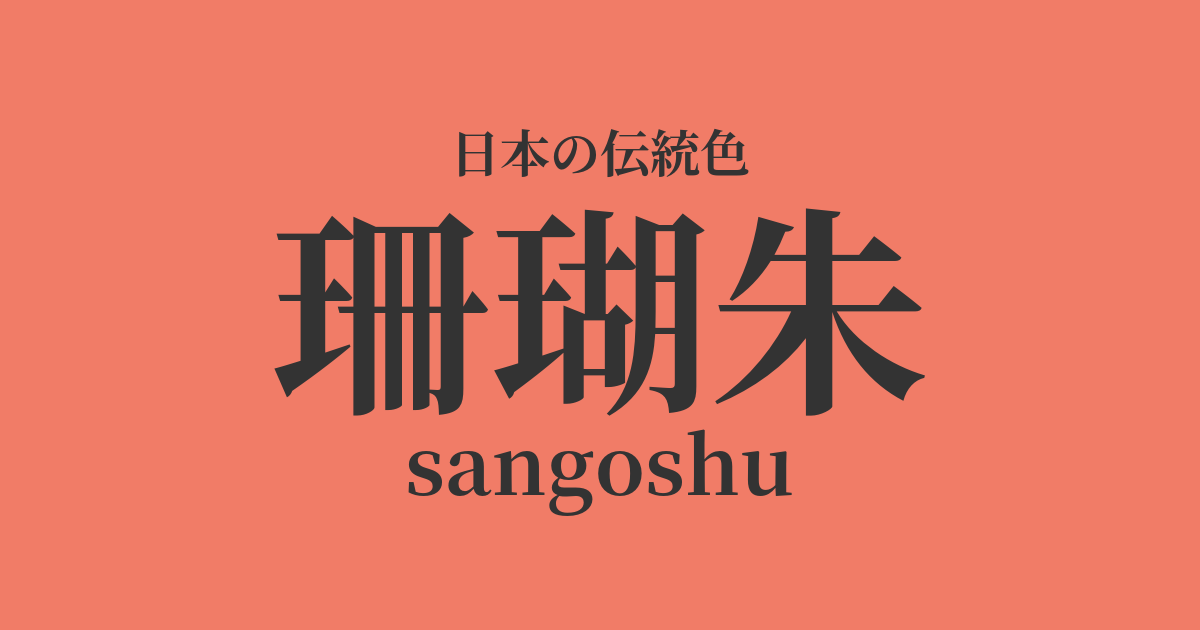
| Japanese color name | coral vermilion |
|---|---|
| reading | sangoshu |
| HEX | #F17C67 |
| RGB | 241, 124, 103 |
What is coral vermilion? Origin and etymology
Coral vermilion, as its name suggests, is a traditional Japanese color derived from the color of "coral," which is known for its use in jewelry. In particular, it refers to a bright, vivid red color with a slightly yellowish tint, even within the red coral family. Coral has been considered a precious commodity since ancient times, and its vibrant, beautiful color has captivated many people. While "vermilion" originally refers to a red pigment made from mercury sulfide, in this case it is used metaphorically to mean "a vermilion color like coral."
This color name can be said to express the natural beauty and splendor of natural gemstones.
Historical background of coral vermilion
In Japan, the use of coral as an ornament on a large scale is relatively recent, dating back to the Edo period. Particularly from the mid to late Edo period, as townspeople culture reached its peak, coral became widely used in accessories such as hairpins, obi clasps, and netsuke. Along with this, the color names "coral color" and "coral vermilion" became popular among the common people and were among the fashionable colors of the time.
This color can also be seen in the kimonos and accessories of women depicted in ukiyo-e prints, and it has become established as a color that symbolizes the stylish and vibrant aesthetic of Edo.
Related literature, waka poetry, and seasonal words
Coral has long been treated as a valuable imported item, and in literary works, it sometimes appears as a prop symbolizing wealth, power, or exoticism. In Heian classical literature such as "The Tale of Genji," the word "coral" itself does not appear directly, but the beauty of the treasure is depicted as a similar "jewel." In modern literature, the color of coral is effectively used to color the clothing of the characters and the scenery, for example, in Natsume Soseki's "The Poppy."
As a seasonal word, "coral" is sometimes considered a spring seasonal word, which is thought to originate from the time of year when coral is harvested.
Coral beads in my hair, spring rain
Color scheme preview
This is to check the readability of the text when this color is used as the background.
Coral vermilion color scheme proposal
鶸Menghuang (#8D9945)
The warm color of coral vermilion and the calm green of yellow-green complement each other, creating a color scheme that is close to complementary. It evokes the vitality of nature, like flowers and fruits, and gives a classic yet fresh impression. It is suitable for Japanese clothing and Japanese-style designs.
White indigo (#C1E4E9)
The combination of vibrant coral crimson and soft, refreshing white-blue creates a modern and refreshing impression. This color scheme, reminiscent of tropical seas and coral reefs, is effective when you want to express lightness and brightness. It suits youthful designs.
Blue iron (#293047)
The deep, calming indigo iron color complements the vibrant and splendor of the coral red, creating a striking combination. The strong contrast brings out the best in each color. It's ideal for creating a sophisticated, urban impression or a dignified atmosphere.
Practical Scenes
In the world of traditional Japanese clothing, coral red is often used for accessories such as obiage (sash ties), obijime (sash cords), and han-eri (collar inserts). Adding it as an accent color adds vibrancy and youthfulness to the overall coordination. It is a particularly favored color for formal occasions, such as when wearing a furisode (long-sleeved kimono) or houmongi (formal visiting kimono).
In interior design, incorporating it as an accent in cushion covers, rugs, or art panels brings warmth and vibrancy to a space. When paired with natural spaces based on white, beige, or wood tones, the beauty of coral red stands out even more.
In web and graphic design, its bright and positive impression makes it effective for buttons, banners, and headlines that you want to attract attention. Because of its high saturation, it's better used as an accent rather than in large areas, and combining it with white or gray creates a sophisticated look.