
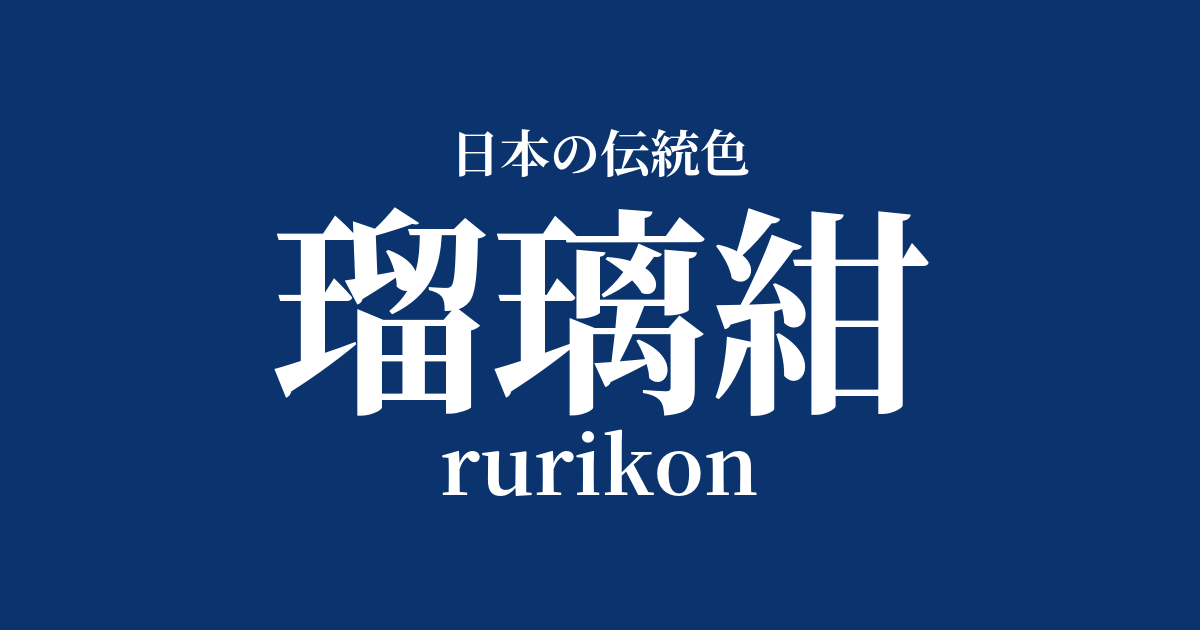
| Japanese color name | Lapis Lazuli |
|---|---|
| reading | rurikon |
| HEX | #0B346E |
| RGB | 11, 52, 110 |
What is Rurikon? Origin and etymology
Rurikon is a color name derived from the gemstone "ruri." Ruri is a precious gemstone counted as one of the seven treasures in Buddhism, and is now known as lapis lazuli. Its deep, vivid blue-violet color is the origin of this color's name. "Kon" refers to the darkest shade of indigo dye, and Rurikon has the meaning of "an elegant navy blue like lapis lazuli." It has been treated as a sacred and noble color since ancient times, and due to its beauty and rarity, it has been used on special occasions.
The historical background of lapis lazuli
The history of lapis lazuli is long, and since ornaments using lapis lazuli can be found among the treasures of the Shōsōin, it is thought that the beauty of this color was already known in the Nara period. In the Heian period, it was used in the clothing and furnishings of people of high status, and due to its rarity, it was also considered a symbol of authority. In the Edo period, indigo dyeing spread among the common people, but deep and vivid colors like lapis lazuli remained treated as special colors.
Even in modern times, its elegant colors continue to be loved by many people.
Related literature, waka poetry, and seasonal words
Lapis lazuli, along with the lapis lazuli from which its name derives, frequently appears in literary works. In classical literature such as "The Tale of Genji," lapis lazuli-colored ornaments and landscapes are sometimes depicted to express the nobility or mystical beauty of the characters. Furthermore, "lapis lazuli" is also used as a seasonal word for autumn, evoking the clear autumn sky and the deep sea.
Its deep blue color is said to have inspired many poets and writers, evoking a sense of tranquility, solemnity, and a somewhat mystical atmosphere.
Tiny chrysanthemums like stars on a lapis lazuli background.
Color scheme preview
This is to check the readability of the text when this color is used as the background.
A proposed color scheme of lapis lazuli blue.
White training (#F3F3F3)
By combining a deep lapis lazuli blue with a pure, slightly yellowish off-white, the colors complement each other. This creates a sense of cleanliness and elegance, resulting in a dignified color scheme suitable for formal designs and Japanese modern spaces.
Golden (#E6B422)
The combination of lapis lazuli blue and gold is a traditional and luxurious color scheme that has been seen in Buddhist implements and decorative items since ancient times. The deep blue of lapis lazuli blue further enhances the brilliance of gold, creating a solemn and magnificent impression. It is ideal for special celebrations or when you want to create a sense of luxury.
Moss color (#69821B)
The combination of a deep lapis lazuli blue, reminiscent of the ocean's blue, and a deep green like moss growing on ancient rocks evokes a quiet and profound natural scene. This calm and stable color scheme is suitable for interiors such as studies or spaces where relaxation is desired.
Practical Scenes
Lapis lazuli, with its noble and subdued hue, is often used in formal occasions. In particular, when incorporating lapis lazuli into the obi or accessories of highly formal kimonos such as tomesode and houmongi, it can tighten the overall impression and give it a sense of dignity. Furthermore, its deep hue gives the viewer an impression of trustworthiness and intelligence, making it a favored color for suits and ties in business settings.
In interior design, incorporating lapis lazuli blue into accent walls, sofas, and cushions brings depth and tranquility to a space. When added to a space based on white or wood tones, it creates a sophisticated Japanese modern atmosphere. Using it in a bedroom is also believed to have a calming effect and promote restful sleep.
In web and graphic design, lapis lazuli can be used as both a main color and an accent color. When used as a corporate color, it can convey trustworthiness and expertise. Furthermore, combining it with gold or silver easily creates a sophisticated and luxurious design.