
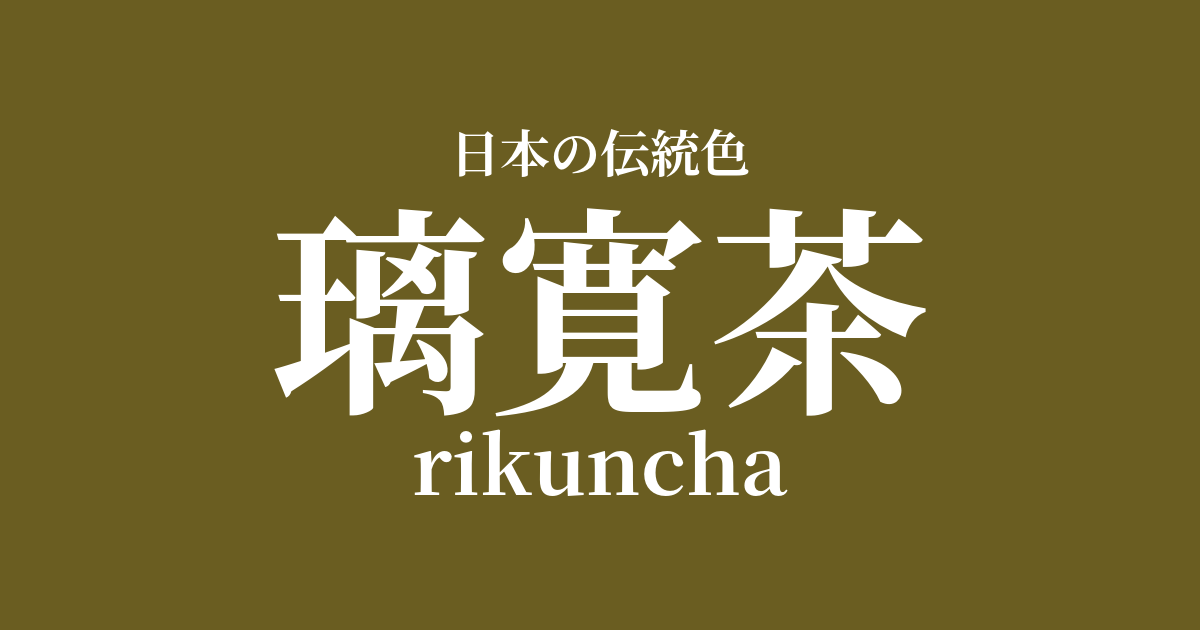
| Japanese color name | Rikan Tea |
|---|---|
| reading | rikuncha |
| HEX | #6A5D21 |
| RGB | 106, 93, 33 |
What is Rikan Tea? Origin and Etymology
Rikancha is a color name derived from the first Arashi Rikan, a Kabuki actor who was active in the late Edo period. Rikan captivated audiences in Edo and the Kansai region with his theatrical style and dapper appearance, and was a fashion leader of his time. It is said that the greenish-brown color he favored for his stage costumes and everyday clothes became known as "Rikancha" and spread among the common people, becoming a fashionable color. Color names named after actors symbolize the sophistication of Edo culture.
Historical background of Rikan tea
Rikan tea is believed to have become popular during the late Edo period, around the Bunka-Bunsei era (1804-1830). During this time, townspeople's culture was at its peak, and Kabuki was the greatest form of entertainment for the common people. Colors favored by popular actors, such as Ichikawa Danjuro's "Danjuro tea" and Segawa Rokō's "Rokō tea," quickly became popular as "actor colors," and Rikan tea is considered one of them.
The shogunate at the time frequently issued sumptuary laws, restricting the use of flashy colors and patterns in the clothing of commoners. As a result, people found subtle differences in shades of brown and gray, which were not subject to these restrictions, and enjoyed them as a form of "chic" or "elegance." Subtle yet distinctive colors like Rikancha can be said to have been fashionable colors that arose from this Edo aesthetic.
Related literature, waka poetry, and seasonal words
Rikancha was a popular color in the late Edo period, and therefore does not directly appear in classical literature or waka poetry from the Heian or Kamakura periods. However, the color name and shade can sometimes be seen in humorous novels and sentimental novels depicting the customs of the Kasei period, when this color was popular, or in ukiyo-e prints depicting Kabuki actors. Through these works, we can catch a glimpse of how people of that time perceived and enjoyed Rikancha.
In particular, it is believed that its elegant image became established through its depiction as the color of Kabuki actors' costumes.
Color scheme preview
This is to check the readability of the text when this color is used as the background.
Color scheme proposal for Rikancha
White tea (#BC9F7C)
The astringency of Rikancha tea and the soft brightness of white tea complement each other, creating a calm, dignified, and refined Japanese atmosphere. It's a color scheme that gives a traditional yet modern impression.
Dark brown (#654321)
The combination of the green hue of Rikancha tea and the deeper dark brown tea creates a sense of weight and stability, giving a very calm impression. The color scheme evokes masculine strength and the profoundness of nature.
Suou (#9E3D3D)
The greenish Rikan tea and the reddish sappanwood enhance each other's colors, creating a striking combination that adds vibrancy to the subdued tones. It evokes a sophisticated and elegant atmosphere reminiscent of Edo-period Kabuki culture.
Practical Scenes
In the world of kimono, Rikancha is a color often used, especially for men's haori jackets, kimono fabrics, and obi sashes. Its subdued and calm hue is suitable for creating a sophisticated and refined look. For women's kimono, using it as an accent on the obi or obi-jime (sash cord) creates a chic and refined appearance. Combining it with other shades of brown or green allows for a more nuanced and sophisticated coordination.
In interior design, Rikancha harmonizes well with Japanese modern and natural-style spaces. When used over large areas such as wallpaper and curtains, it can create a calm and dignified atmosphere. Furthermore, incorporating it as an accent color in cushions and accessories adds depth and individuality to the space. It also pairs exceptionally well with natural materials such as wood, earthen walls, and Japanese paper.
In web and graphic design, Rikancha is an effective color when you want to convey a sense of luxury, tradition, and reliability. Using it as a main color creates a calm impression, making it suitable for websites of long-established businesses or pages showcasing traditional crafts. Combining it with white or off-white results in an elegant design while maintaining readability.