
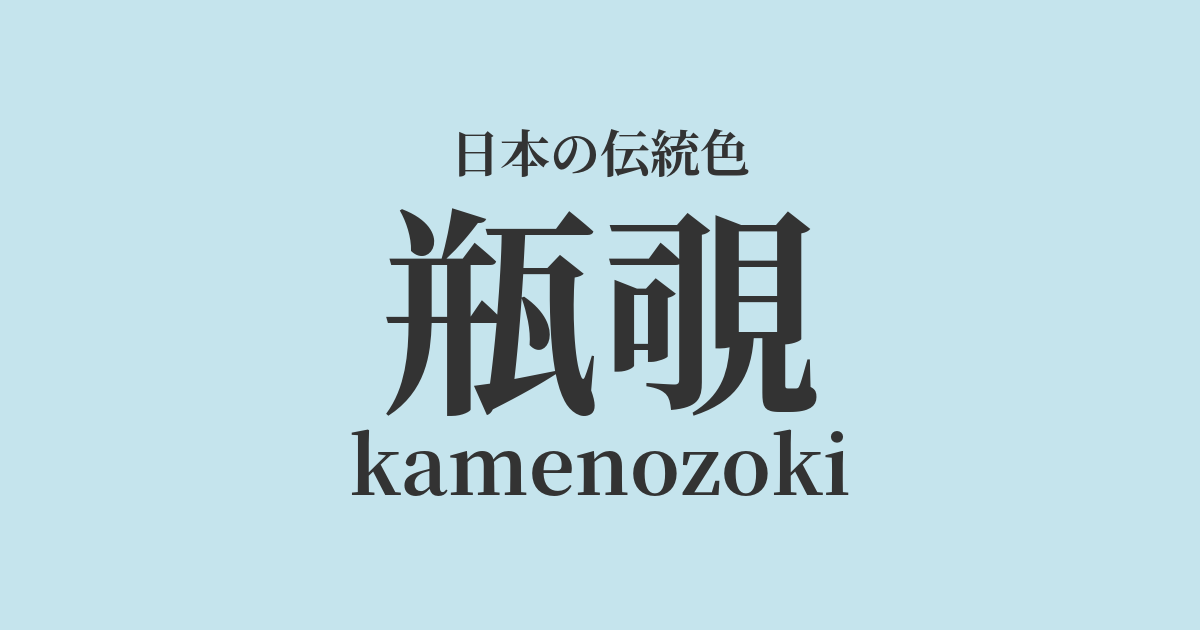
| Japanese color name | Looking into the bottle |
|---|---|
| reading | kamenozoki |
| HEX | #C5E4ED |
| RGB | 197, 228, 237 |
What is "Hinnozoki"? Origin and etymology
Bin-nozoki refers to the palest shade of blue that can be achieved with indigo dyeing. The most common explanation for its name is that it is the color seen when one peeks just a little into the mouth of a jar containing indigo dye. Indigo dyeing adjusts the shade by varying the time and number of times the fabric is immersed in the dye, but Bin-nozoki is a poetic expression of the extremely pale color obtained by immersing the fabric for only a very short time before removing it.
Another theory suggests the name was inspired by the color of the sky reflected on the surface of water when looking into a water-filled jar. Both theories share the commonality of capturing a transparency reminiscent of water and sky, and a delicate, slightly bluish hue. This elegant name can be said to symbolize the Japanese view of nature and their keen sensitivity to color.
Historical background of Binnozoki
The history of indigo dyeing is ancient, and it is believed to have been introduced to Japan before the Nara period. In the Edo period, with the spread of cotton, indigo dyeing became widely used for the clothing of ordinary people, and its color became known overseas as "Japan Blue." During this period, various color names were created based on the shades of indigo dye, and a wide range of gradations was enjoyed, so much so that it was called "48 shades of indigo."
Binnozoki is considered the lightest shade among the 48 shades of indigo dye. It was mainly used for summer kimonos, yukata, and tenugui (hand towels), and its cool appearance was popular. The fact that it was relatively inexpensive because it used only a small amount of expensive dye is also considered one of the reasons why it spread among ordinary people. There are records of it being used in samurai formal attire, but it has mainly been cherished as a color that is close to people's daily lives.
Related literature, waka poetry, and seasonal words
Unfortunately, no famous waka poems or classical literature have been found that directly mention the color name "Hin-nozoki." However, the culture of indigo dyeing itself frequently appears in Edo period literary works such as Ihara Saikaku's ukiyo-zoshi and Chikamatsu Monzaemon's joruri, depicting the lives of ordinary people. Through these works, we can glimpse how deeply indigo was rooted in the lives of people at that time.
Furthermore, the cool and clear image associated with the color "binnozoki" (瓶走) resonates with the summer seasonal words "indigo flower" and "indigo dye" in haiku poetry. Even without direct reference, the scenery evoked by this color is deeply connected to the atmosphere and aesthetics of Japanese summer. In modern literature and contemporary creative works, its poetic name and delicate hue have led to its effective use as a color symbolizing scenery or the emotions of characters.
Color scheme preview
This is to check the readability of the text when this color is used as the background.
Color scheme proposal for bottle viewing
White training (#F3F3F3)
The combination of the pale blue of the bottle and the near-pure white creates a sense of cleanliness and transparency to the fullest. The color scheme evokes clouds floating in a summer sky, giving an extremely refreshing and elegant impression. It's a basic combination that can be used in a wide range of styles, from traditional Japanese clothing to modern designs.
Haizakura (#E8D3D1)
Combining the cool-toned bottle shade with the warm, grayish ash cherry blossom creates a gentle and harmonious balance. This color scheme evokes a fleeting yet sophisticated impression, reminiscent of a hazy spring sky. It's suitable for fields requiring delicate expression, such as fashion and cosmetics.
Blue and white (#EBF4F7)
The combination with Aishiro, a very pale indigo color even closer to white than Binnozoki, creates a delicate gradation of similar colors. It has a sense of unity yet depth, making it ideal for expressing a quiet and calm atmosphere like the rippling surface of water or morning mist.
Practical Scenes
In the world of traditional Japanese clothing, the "binnozoki" pattern is often used for summer kimonos, yukatas, obiage (sash ties), and han-eri (collar ties). Its refreshing color scheme provides a visually cooling effect during Japan's hot and humid summers. It pairs particularly well with sheer summer fabrics such as linen, ro (a type of silk gauze), and sha (another type of silk gauze), creating an elegant look.
In interior design, incorporating these elements into textiles such as wallpaper, curtains, and cushions can bring brightness and a sense of openness to a space. When combined with white or natural wood-grain furniture, they contribute to creating a clean and calm atmosphere, such as Scandinavian or Japanese modern styles.
In the fields of website and graphic design, these colors are effective as background or accent colors. Their subtle, understated hues don't overpower other elements, bringing a sense of cleanliness and trustworthiness to the overall design. They are particularly well-suited to minimalist designs and themes related to healthcare and the environment.