
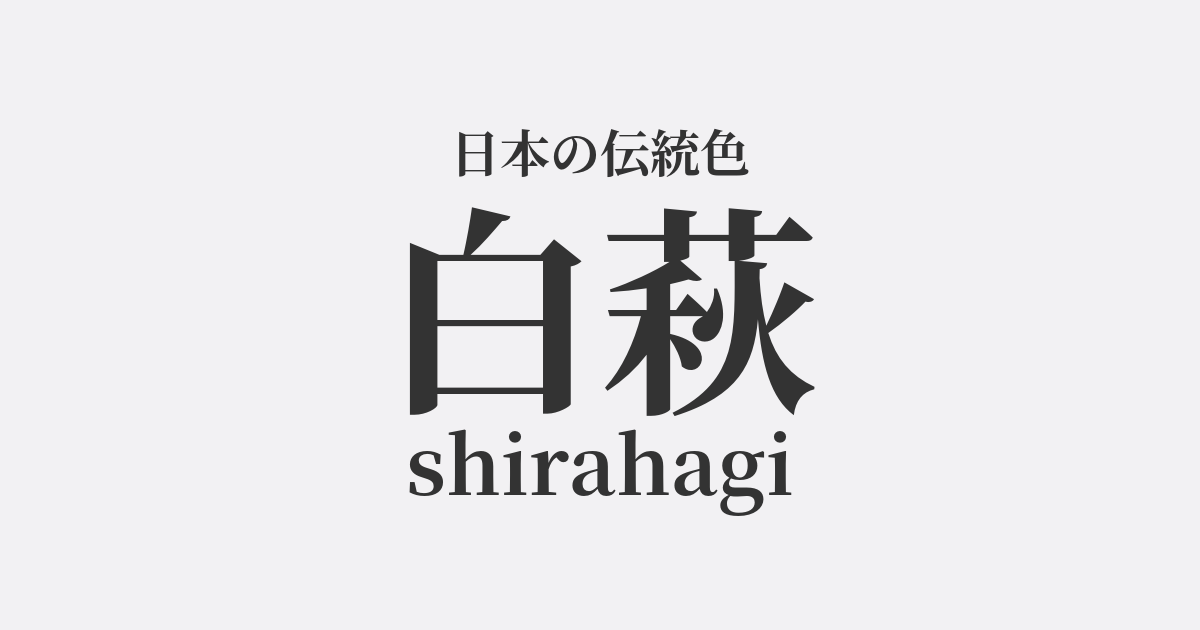
| Japanese color name | Shirahagi |
|---|---|
| reading | shirahagi |
| HEX | #F2F1F3 |
| RGB | 242, 241, 243 |
What is Shirahagi? Origin and etymology
Shirohagi is a color name derived from a variety of bush clover (hagi) that blooms with particularly white flowers, and is known as one of the seven autumn flowers. Bush clover is the plant most frequently mentioned in the Manyoshu, and its delicate appearance has been cherished by the Japanese people since ancient times. The color of shirohagi is not pure white, but rather a white with a slight purplish nuance. This delicate shade symbolizes the atmosphere that evokes the arrival of autumn and its ephemeral beauty.
In the world of dyeing, it can also be seen as an extremely pale shade of purple when dyeing with a light purple dye.
Historical background of Shirahagi
Bush clover (Hagi) is a plant that has been admired since ancient times, appearing frequently in poems in the Nara period's Manyoshu anthology. There are few clear records of when the color name "white bush clover" became established, but it is thought that during the Edo period, with the development of dyeing techniques, these subtle shades of white began to be dyed. In particular, "bush clover" is used as a color combination in layered garments, with a known combination of sappanwood (suo) on the outside and blue or light green (moegi) on the inside.
Pale colors like those of the white bush clover were used in the clothing of people of high social standing and in crafts such as tea ceremony utensils, and are said to have expressed a refined aesthetic sense.
Related literature, waka poetry, and seasonal words
Bush clover (hagi) is a plant representative of autumn and has played an important role in expressing autumn scenery and melancholy in literary works. It is featured in many waka poems, including those in the Manyoshu and Kokin Wakashu. White bush clover, in particular, has been associated with scenes that evoke a sense of mono no aware (a poignant beauty in the natural world) due to its purity and transience. In the world of haiku, "bush clover" is a seasonal word for autumn, and "white bush clover" is similarly used as a seasonal word that evokes the arrival of autumn and tranquility.
Its delicate beauty strongly reflects the view of nature and aesthetic sensibilities found in Japanese literature.
There are nights when the white bush clover falls in the moonlight.
Color scheme preview
This is to check the readability of the text when this color is used as the background.
Shirohagi color scheme proposal
Bellflower color (#5A4F9F)
This combination of white bush clover and the color of the bellflower, also one of the seven autumn flowers, creates a harmonious blend of purity from the white bush clover and deep purple from the bellflower, expressing the crisp autumn air and dignified scenery. It's a classic and calming color scheme.
Kariyasu (#F5E56B)
Kariyasu is a bright yellow reminiscent of autumn plants and trees. The warmth of Kariyasu, combined with the pale tones of Shirohagi, evokes the tranquil scenery of autumn fields and mountains. It gives a natural and approachable impression, and can express a Japanese aesthetic in a modern way.
Dull color (#727171)
The dull gray is a neutral, achromatic gray, like diluted ink. When combined with the delicate white of the white bush clover, it creates a serene, refined, and minimalist impression. It expresses a world reminiscent of ink painting, creating a modern and intellectual atmosphere.
Practical Scenes
In the world of kimono, white bush clover is often used as part of patterns on formal kimono such as visiting kimono, semi-formal kimono, and casual kimono, due to its elegant and understated color. It is especially favored as a base color or accent color for kimono worn in the autumn season, and is often combined with other autumn grass patterns to express a sense of the season. Its delicate color can be incorporated into accessories such as obi sashes and obiage sashes to give the entire outfit a refined impression.
In interior design, incorporating white hagi (a type of white pigment) into wallpaper, curtains, and fabrics brings brightness and tranquility to a space. Because it is a softer, warmer white than pure white, it blends well not only in Japanese-style rooms but also in minimalist, modern spaces. It also pairs well with natural materials such as wood and bamboo, creating a calm and relaxing atmosphere.
In web and graphic design, using it as a background color can enhance content while creating an elegant and clean impression. It can be applied to a variety of designs, including tone-on-tone color schemes with other lighter shades, and color schemes that create contrast with darker colors. It is particularly suitable for brand images that aim to convey a sense of luxury and sophistication.