
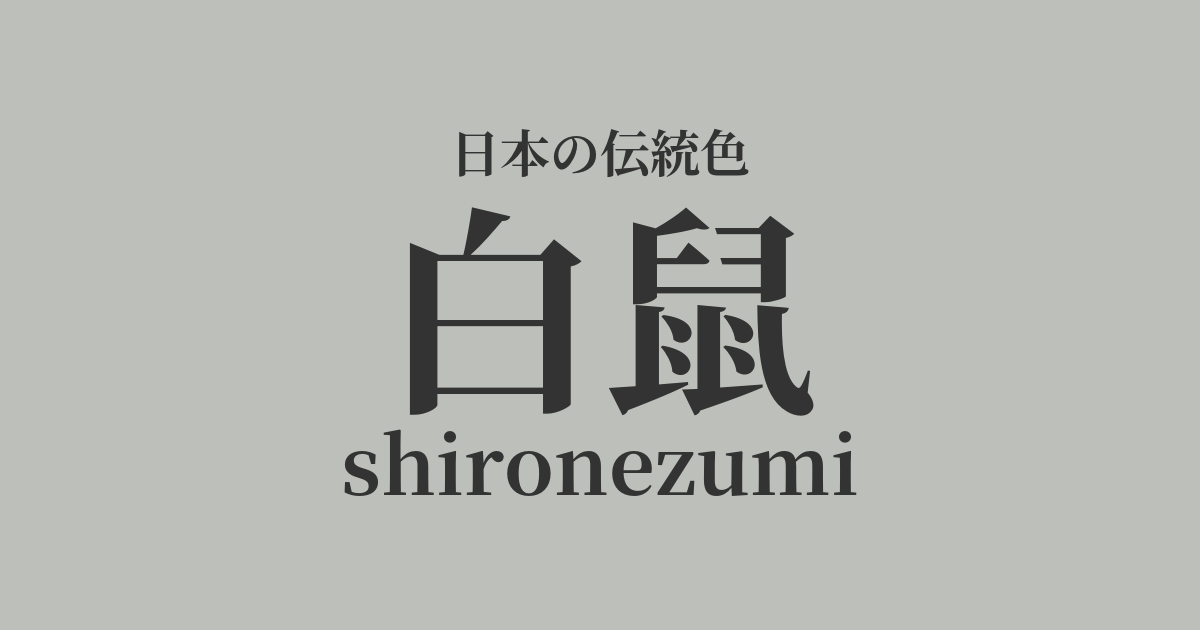
| Japanese color name | white rat |
|---|---|
| reading | shironezumi |
| HEX | #BDC0BA |
| RGB | 189, 192, 186 |
What is a white mouse? Origin and etymology
Shiro-nezumi, as the name suggests, is a color name derived from the fur color of a white mouse. It refers to a particularly light shade within the gray family, and is recognized as a pale gray that is close to white. From the mid-Edo period onward, with the prohibition of sumptuary laws restricting flashy colors, a culture of finding and enjoying subtle differences in subdued colors such as brown and gray flourished. Among these, a wide variety of shades emerged, so much so that it was called "forty-eight browns and one hundred grays," and shiro-nezumi was one of them, widely loved by ordinary people.
Historical background of the white rat
The color name "shiranezumi" (white mouse) first appears in literature during the Edo period. Particularly after the Genroku era, frequent sumptuary laws were issued, restricting the colors of clothing that commoners could wear, which boosted the popularity of mouse-gray. People enjoyed subtle differences in color as a sign of sophistication, and many shades of mouse-gray were created, such as Fukagawa-nezumi, Gin-nezumi, and Rikyu-nezumi. Among these trends, shiranezumi was considered a particularly bright and refined color, used in kimonos, obi sashes, and accessories, and was favored by those seeking elegance.
Related literature, waka poetry, and seasonal words
Because light gray was a fashionable color during the Edo period, it is rarely mentioned directly in classical Japanese poetry. However, shades of gray frequently appear in humorous books and ukiyo-e prints depicting Edo customs. Kabuki actors, who were fashion leaders of the time, are often depicted stylishly wearing gray kimonos, making them objects of admiration for ordinary people. Light shades like light gray were especially used for summer kimonos and linings, giving a cool and sophisticated impression.
Color scheme preview
This is to check the readability of the text when this color is used as the background.
White Mouse Color Scheme Proposal
Cherry blossom pink (#FEEAFA)
Combining a light gray color, known as "shironezumi," with a soft, gentle cherry blossom pink creates a calm and elegant impression reminiscent of spring. The colors complement each other, creating a soft and feminine atmosphere, making it suitable for traditional Japanese clothing and designs.
Indigo (#165E83)
The combination of a near-neutral white-gray and a deep indigo creates a strong contrast, giving a sophisticated and urban impression. This color scheme is a modern interpretation of Edo-period "chic" aesthetics and is effective in modern interiors and web designs.
Matcha green (#98A22A)
By adding a muted green, like matcha, to the inorganic impression of white-gray, a natural and calming harmony is created. The combination of earth tones is easy on the eyes and creates a relaxing space, making it suitable for interior design and fashion.
Practical Scenes
White-gray, with its elegant and understated hue, is still used in a variety of situations today. In the world of kimonos and obi sashes, it is highly valued as a background color that complements other colors, creating a refined look. When used in summer kimonos and yukata, it gives a particularly cool and refreshing impression.
In interior design, incorporating it into wallpaper and fabrics can create a minimalist and calming space. It pairs well with white, black, and wood-grain furniture, and is useful for creating a modern space that also evokes a Japanese aesthetic.
In web and graphic design, using it as a background color enhances content readability while creating a sophisticated impression. Its neutral nature, which doesn't clash with other colors, makes it versatile and suitable for various color schemes.