
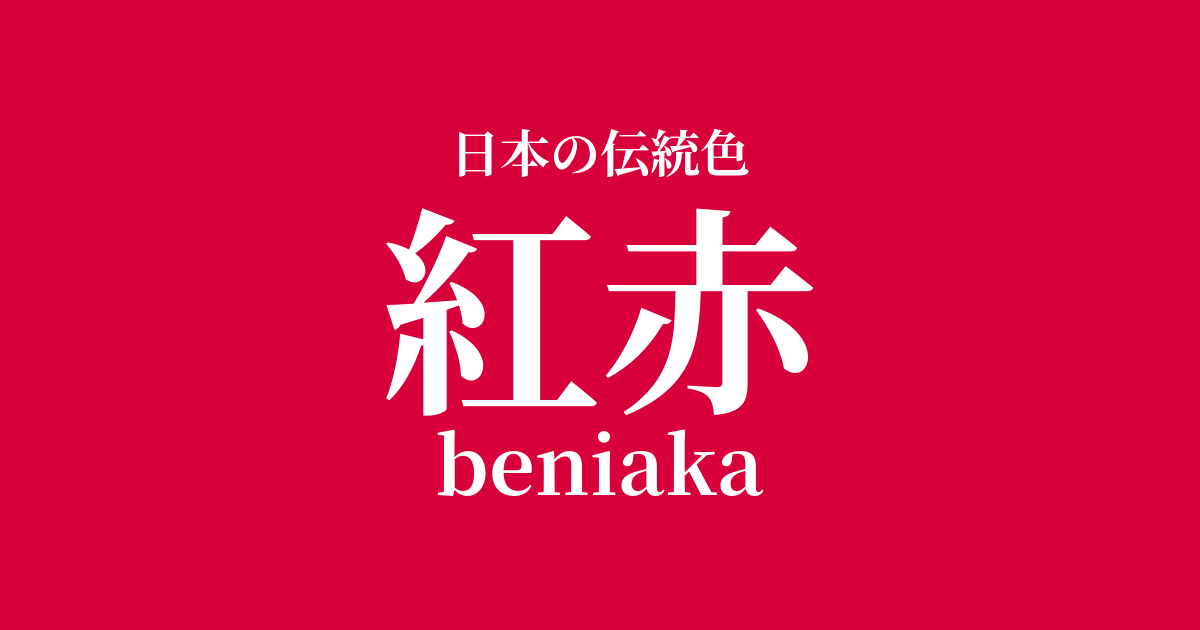
| Japanese color name | red red |
|---|---|
| reading | beniaka |
| HEX | #D7003A |
| RGB | 215, 0, 58 |
What is Beniaka? Origin and Etymology
Beniaka refers to a vivid, deep red color dyed with pigment extracted from the petals of the safflower. Safflower pigment contains a large amount of water-soluble yellow, with only a very small amount of carthamin, the red pigment. Therefore, it is produced through a very complex and time-consuming process: first, the yellow is washed away with water, then the red is dissolved with alkaline lye, and finally, the pigment is fixed by neutralizing it with an acidic liquid.
Due to its rarity and the difficulty of its production, red dyed with safflower was considered extremely expensive and precious. The character "紅" (beni) is used as a general term for vivid red, and by adding "赤" (aka) to it, the intensity and high value of the color are emphasized. This color is more than just a color; it has become deeply rooted in Japanese culture as a symbol of wealth, power, and beauty.
Historical background of crimson red
The technique of dyeing with safflower is believed to have been introduced to Japan via mainland China during the Asuka period. Initially, it was one of the forbidden colors, permitted only to high-ranking court ladies and nobles, and its value was said to be comparable to that of gold.
In the Heian period, regulations concerning the cultivation of safflower and the payment of dye were recorded in the Engishiki, indicating that its production was controlled by the state. During this time, crimson red was widely favored as a color for women's clothing (uchiki) and as a cosmetic color (beni), and it became a color that symbolized the splendor of aristocratic culture.
During the Edo period, safflower production flourished, mainly in the Mogami region of Dewa Province (present-day Yamagata Prefecture). It became popular not only as a dye but also as a cosmetic ingredient in lipstick and blush, spreading among the common people. Even so, high-quality rouge remained expensive and a color that women longed for.
Related literature, waka poetry, and seasonal words
Many literary works from the Heian period feature descriptions of colors reminiscent of crimson red. In works such as "The Tale of Genji" and "The Pillow Book," "crimson plum blossoms" and "crimson robes" frequently appear as colors of the characters' clothing, serving as important elements in expressing the characters' social status, beauty, and the sense of the season.
Furthermore, safflower itself has been used as a subject in literature. In the world of haiku in particular, safflower is known as a seasonal word for summer. Matsuo Basho's haiku "The image of her eyebrows brushed away reminds me of the safflower blossoms," composed during his journey on the Narrow Road to the Deep North, is famous as a masterpiece that combines the scene of a safflower field with the image of a woman applying makeup.
In Japanese poetry, the vivid yet easily fading nature of crimson was sometimes used as a metaphor for the fickleness of the human heart and the transience of love. In this way, crimson transcends mere color representation and has played an important role in literature as a color that reflects the delicate aesthetic sense and emotions of the Japanese people.
The eyebrows resemble the flowers of rosary.
Color scheme preview
This is to check the readability of the text when this color is used as the background.
Crimson Red Color Scheme Proposal
Light green (#ADDE79)
The vibrant crimson is enhanced by the fresh, light green of young leaves. These colors complement each other, creating a classic yet vibrant impression. This traditional combination is also seen in the "kasane no irome" (layered colors) of kimono.
Bellflower color (#585EAA)
The vibrant crimson of the crimson red harmonizes with the noble and calming purple of the bellflower color, creating an elegant and refined atmosphere. This color scheme evokes the aristocratic culture of the Heian period and is well-suited to dignified Japanese designs. It's a refined combination where each color enhances the others.
White training (#FCFAF2)
The pure white of the rouge perfectly highlights the vivid red of the crimson. The combination of red and white is a fundamental color scheme in Japanese tradition, symbolizing celebration and auspiciousness. It balances purity and splendor, creating an impression suitable for joyous occasions.
Practical Scenes
In the world of traditional Japanese clothing, crimson red is frequently used for formal attire worn at celebrations, such as furisode and uchikake. It is especially common in the clothing of young women and is cherished as a color that symbolizes vitality and splendor. When used as an accent color in accessories such as obi and obijime, it has the effect of making the entire outfit look more vibrant and striking.
In interior design, using crimson red as an accent color can give a space a passionate and dramatic feel. By incorporating it in limited areas, such as on a portion of the wallpaper, cushions, or decorative items, it can effectively create a Japanese modern atmosphere or a sense of luxury.
In the fields of website and graphic design, using crimson red for buttons and headings that you want to attract user attention is effective. In designs based on Japanese tradition and aesthetics, setting it as a key color can create a strong and memorable brand image.