
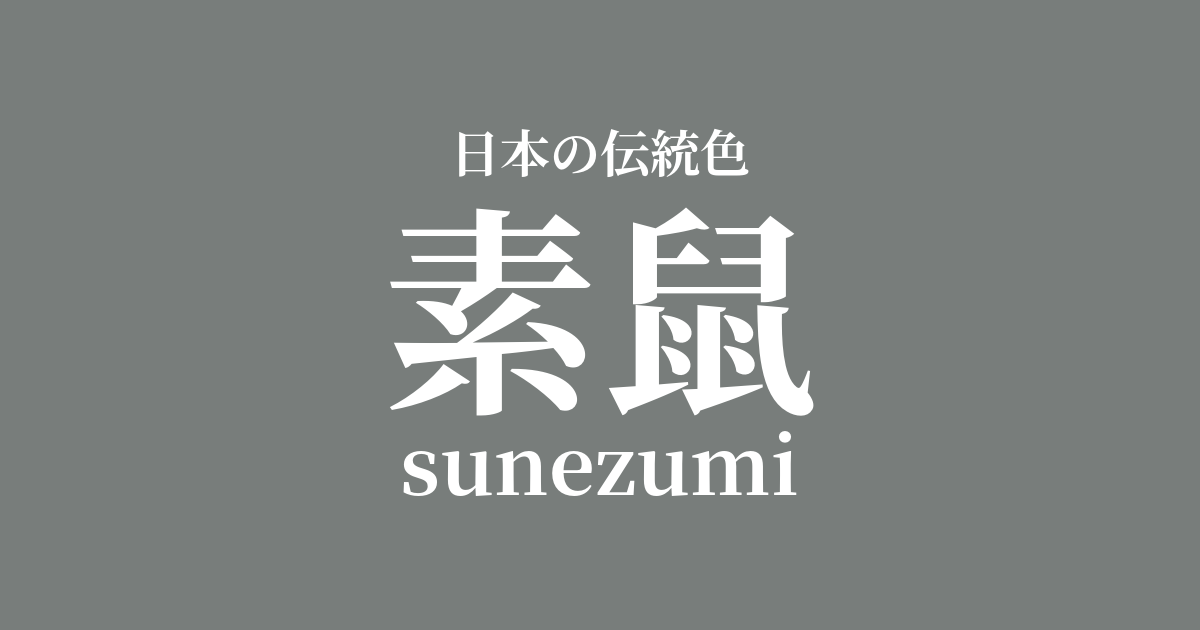
| Japanese color name | Plain mouse |
|---|---|
| reading | sunezumi |
| HEX | #787D7B |
| RGB | 120, 125, 123 |
What is a "Somo"? Origin and etymology
The character "素" in "素鼠" (sōnezumi) means "as is" or "without impurities." The character "鼠" has long been used to refer to shades of gray. Combining these two, "素鼠" means a pure gray color, without any other colors such as indigo or crimson added—in other words, achromatic gray. While various shades of gray were popular during the Edo period, it is believed that 素鼠 was recognized as the most basic shade among them.
Historical background of the plain mouse
Plain gray became widely known from the mid-Edo period onward. This is believed to be due to the shogunate's sumptuary laws that restricted commoners from wearing extravagant clothing. People found an aesthetic sense of "chic" in enjoying subtle differences in shades of muted colors such as brown and gray, which were not subject to these restrictions. This trend was expressed in the phrase "forty-eight shades of brown and one hundred shades of gray," and plain gray, as the pure gray that formed the basis of these diverse shades of gray, became one of the colors that symbolized Edo townspeople's culture.
Related literature, waka poetry, and seasonal words
The specific color name "somozumi" (plain gray) is not often found in classical literature or waka poetry. However, "nezumi-iro" (mouse gray), a related color, frequently appears in Edo period humorous books and ukiyo-zoshi as the color of the kimonos of stylish townspeople and geishas. This suggests that nezumi-iro was closely intertwined with the lives of people at the time and was widely recognized as a color that expressed a refined aesthetic. Although not a specific seasonal word, it evokes images of winter skies and tranquil scenes, resonating with the worldview of haiku and tanka poetry.
Color scheme preview
This is to check the readability of the text when this color is used as the background.
Color scheme proposal for plain gray
White training (#FEFDF9)
Combining a neutral gray with a pure, soft white creates a color scheme that emphasizes cleanliness and elegance. Its minimalist and refined impression makes it suitable for modern designs and simple spatial arrangements. It's a combination that evokes tranquility and purity.
Indigo (#165E83)
The combination with indigo, which was also popular during the Edo period, recreates the sophisticated aesthetic of that time. The calm gray complements the deep indigo, creating an effect where each color stands out. It gives an intelligent and refined impression and is suitable for expressing trustworthiness and sincerity.
Chestnut plum (#85403A)
By combining it with the reddish-brown color of chestnut plum, the inorganic gray gains warmth and depth. The harmony of earthy colors, reminiscent of nature, creates a space that is reassuring and calming. This color scheme blends well not only with Japanese-style interiors but also with modern interiors.
Practical Scenes
In the world of kimono, plain gray is used for uncolored kimonos, haori jackets, and hakama trousers. It is valued as a base color that complements other colored and patterned obi belts and accessories, creating a stylish and understated look. It is particularly popular in men's kimono as a color that gives a refined impression.
In interior design, incorporating a light gray color into wallpaper or fabrics creates a modern and calming space. It pairs well with various materials such as wood and metal, functioning as a background color that enhances other colors. It is suitable for minimalist designs and Japanese modern interiors.
In web design and graphic design, using this color as a background or text color enhances readability and creates a sophisticated impression. Using it as an accent color with other chromatic colors effectively highlights the content. It's also suitable for situations where you want to convey trustworthiness and integrity.