
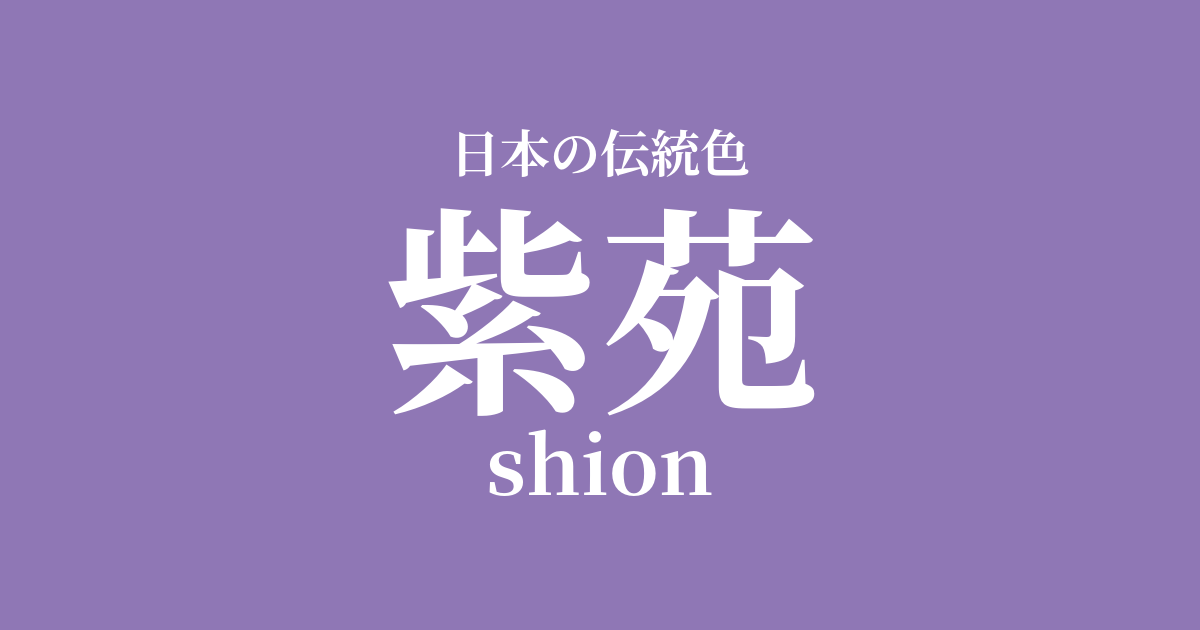
| Japanese color name | Shion |
|---|---|
| reading | shion |
| HEX | #8F77B5 |
| RGB | 143, 119, 181 |
What is Shion? Origin and etymology
Shion is a slightly bluish light purple color derived from the color of the Shion flower, a perennial plant belonging to the Asteraceae family. The color of this lovely flower, which adorns the fields and mountains in autumn, was adopted directly as the color name. The name "Shion" literally means "purple garden," and is said to represent the appearance of the beautiful purple flowers in bloom. It is a color of a plant that has been familiar to the Japanese people since ancient times, and its delicate and elegant hue was especially loved by the aristocracy during the Heian period.
This color not only imitates the color of plants, but has also been seen as a symbol of the autumn atmosphere and a somewhat ephemeral and tranquil aesthetic. Unlike the noble "purple" that uses the root of the gromwell plant (shikon) as a dye, it reflects a sense of color found in more familiar nature. As a result, it has become established as a uniquely Japanese, understated color that combines vibrancy with calmness and elegance.
Historical background of Shion
The color "shion-iro" (aster purple) is said to have originated in the Heian period, and its name can be found in literary works and textiles of that time. In particular, in classical literature such as "The Tale of Genji," it was effectively used as a color symbolizing noble women and autumn scenery. During this period, purple was a forbidden color indicating high social status, but it is said that pale purple like shion was more widely favored among the aristocracy.
The dyeing method is thought to have used gromwell root (shikon) as the main ingredient, but also achieved this subtle bluish-purple color through techniques such as adjusting the amount of lye mordant and layering other dyes. During the Edo period, the color shion became more widespread and was used in various crafts such as kimonos, obi sashes, and accessories, becoming one of the colors that enriched the lives of ordinary people.
Related literature, waka poetry, and seasonal words
The color aster has been used in many literary works to depict the lyrical scenery of autumn. In "The Tale of Genji," it is depicted as the color of the characters' clothing, playing a role in hinting at their dignity and feelings. In particular, in the scene where Hikaru Genji catches a glimpse of the young Murasaki no Ue, aster is effectively used as a color associated with purple, adding depth to the story.
Furthermore, the aster flower itself has become established as a seasonal word for autumn and has been the subject of many waka and haiku poems. Its ephemeral appearance has been associated with the passing seasons and the transience of life, capturing people's hearts. The Konjaku Monogatari-shu (Tales of Times Now Past) contains a tale in which a filial son, remembering his mother who had turned into a demon, planted aster flowers on her grave, and these flowers grew into aster flowers. It also has the alternative name of "the grass that makes you forget demons." For this reason, it is also considered a symbol of remembrance and the feeling of thinking of someone far away.
How many times has dew fallen on the apricot blossoms?
Color scheme preview
This is to check the readability of the text when this color is used as the background.
Shion's color scheme proposal
White training (#FEFEFE)
This color scheme features the elegant purple of the aster flower, beautifully complemented by the pure white. It exudes a sense of cleanliness and nobility, creating an elegant impression reminiscent of the attire of Heian-era nobles. The beautiful contrast highlights the best qualities of each color.
Silver mouse (#AFB1B4)
The bluish-purple of the aster flower and the achromatic silver-gray are a sophisticated combination. They harmonize without clashing with each other, creating a chic and intellectual impression. It's ideal for creating a cool and calm atmosphere.
Dead leaves color (#95452A)
The autumnal charm of the aster flower harmonizes with the melancholic feel of withered leaves, creating a color scheme reminiscent of a calm late autumn scene. The combination of earth tones feels natural and stable, giving an elegant, deep, and classical impression.
Practical Scenes
In the world of kimono, the color aster purple is often used for formal kimono such as visiting kimono, casual kimono, and accessories like obiage (kimono sashes). Wearing it especially in autumn adds a sense of the season to an outfit. Its elegant and understated splendor enhances the wearer's dignity and gives a graceful impression.
In interior design, incorporating this color into fabrics such as wallpaper, curtains, and cushions brings a sense of calm and sophistication to a space. By combining it with white, gray, or light wood-grain furniture, it's possible to create a relaxing space with a modern Japanese aesthetic.
In web and graphic design, using it as a main color creates a calm impression, while using it as an accent color adds an elegant touch. It is particularly well-suited to themes related to traditional culture, beauty, and wellness, and is effective in conveying trustworthiness and grace.