
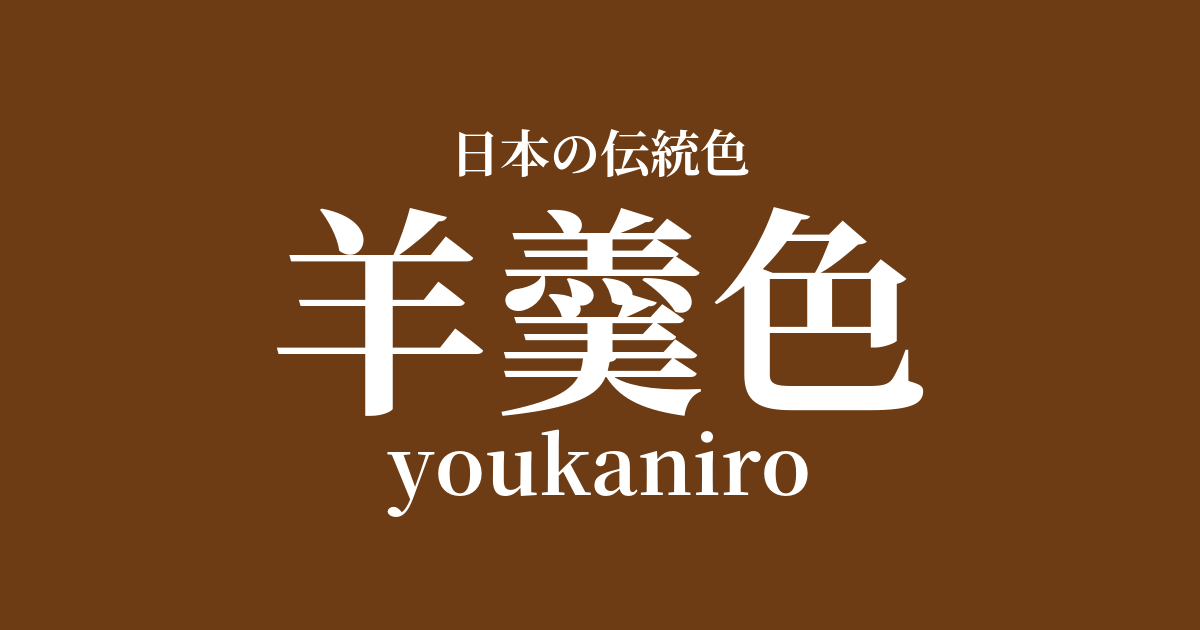
| Japanese color name | Yokan color |
|---|---|
| reading | youkaniro |
| HEX | #6D3C14 |
| RGB | 109, 60, 20 |
- What is the color of yokan (sweet bean jelly)? Origin and etymology.
- The historical background of the color of yokan (sweet bean jelly)
- Related literature, waka poetry, and seasonal words
- Color scheme preview
- A color scheme suggestion in the color of yokan (sweet bean jelly).
- Practical Scenes
- FAQ
- Japanese colors similar to the color of yokan (sweet bean jelly)
What is the color of yokan (sweet bean jelly)? Origin and etymology.
Yokan color, as the name suggests, is a reddish-dark brown color derived from the Japanese confection "yokan." Yokan was originally a Chinese dish, a soup (kan) made with lamb. It was introduced to Japan by Zen monks during the Kamakura and Muromachi periods, but because eating meat was forbidden by Buddhist precepts, it came to be made using substitutes such as red beans, kudzu starch, and wheat flour. This is considered the prototype of Japanese yokan.
The solid, kneaded yokan we know today was perfected during the Edo period. The glossy, deep color of yokan, made by kneading agar, sugar, and red bean paste, became established as "yokan color." The redness of the red bean skins and the brown color produced when the sugar is heated combine to create a unique, rich hue. This color is one of the most representative examples of a food name becoming a color name.
The historical background of the color of yokan (sweet bean jelly)
It is believed that the color of yokan (sweet bean jelly) became widely known to the general public from the mid-Edo period onward. During this time, with the development of tea ceremony culture, the making of Japanese sweets became more refined, and sweet treats began to spread among the common people. In particular, kneaded yokan, which was inexpensive and had a long shelf life, became popular, and its color also became familiar to people.
Furthermore, the Edo shogunate's sumptuary laws imposed restrictions on the colors of clothing worn by commoners. With bright colors forbidden, subdued shades such as brown and gray, known as "Shijūhachichahyakunezumi" (forty-eight shades of brown and one hundred shades of gray), became popular. It is believed that yokan (sweet bean jelly) color was one of these, and was used in kimonos and accessories as a stylish color.
Related literature, waka poetry, and seasonal words
The color "yokan-iro" (sweet bean jelly color) is a relatively new color name that originated in the Edo period, so it does not appear directly in classical literature or waka poetry from the Heian or Kamakura periods. However, in Edo period works such as Ihara Saikaku's ukiyo-zoshi (popular fiction of the Edo period) and senryu (short humorous poems) depicting the lives of ordinary people, people wearing brown clothing are depicted, and a color close to yokan-iro can be found within them.
In modern literature, the scene in Natsume Soseki's novel "Kusamakura" where yokan (sweet bean jelly) is beautifully described is famous. Following the line, "All sweets must be beautiful," the smooth, jade-like texture and the way it shines through light are artistically depicted, and the beauty of the yokan's colors is expressed in a literary way. As a seasonal word, "yokan" is sometimes treated as a seasonal word for New Year's or winter.
Color scheme preview
This is to check the readability of the text when this color is used as the background.
A color scheme suggestion in the color of yokan (sweet bean jelly).
Matcha green (#98A22A)
Yokan (sweet bean jelly) and matcha (green tea) are a classic combination in Japanese confectionery. The deep color of the yokan and the calming green of the matcha complement each other, creating an elegant and traditional Japanese atmosphere. The harmonious color scheme gives a sense of comfort.
Generated color (#FBF9F4)
The deep, rich color of the yokan (sweet bean jelly) is softened by the gentle, natural off-white of the cream color. While creating a strong contrast, it also gives a warm impression, making it suitable for modern Japanese-style designs and interiors.
Mustard color (#D1A553)
Combining a deep brown, reminiscent of yokan (sweet bean jelly), with a bright, slightly muted mustard yellow creates a retro-modern impression. This color scheme is well-suited to expressing the feeling of autumn and functions effectively as an accent color.
Practical Scenes
In the world of traditional Japanese clothing, the color of yokan (sweet bean jelly) is used in kimonos, obi sashes, and haori jackets as a color that conveys calmness and elegance. It is particularly suitable for expressing the seasonal feel of autumn and winter, and can be styled in a chic or subdued way depending on how it is combined with other colors. It is also one of the colors favored in men's kimonos.
In interior design, incorporating yokan (sweet bean jelly) color into wallpaper, furniture, and fabrics brings a sense of depth and warmth to a space. It pairs exceptionally well with wooden furniture and natural materials, contributing to the creation of rooms in styles such as Japanese modern, classic, and vintage.
In web and graphic design, using this color as a background or accent color can create a sense of luxury and trustworthiness. It is particularly effective when you want to convey calmness and dignity, such as on the websites of traditional crafts, long-established food brands, or historical companies.