
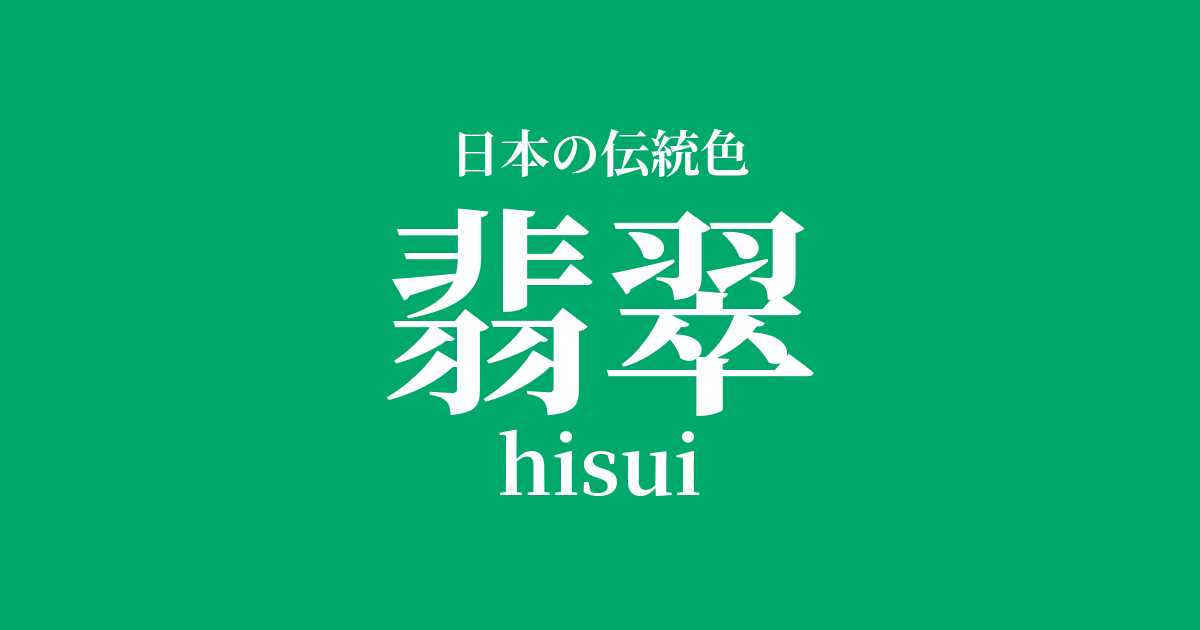
| Japanese color name | jade |
|---|---|
| reading | his |
| HEX | #00A86B |
| RGB | 0, 168, 107 |
What is jade? Origin and etymology
The color "jade green" is derived from the beautiful green color of the gemstone "jade." The name "jade" is said to originate from the old name for the kingfisher, a bird with vibrant feathers. The male kingfisher was called "hi" and the female "sui," and thus the beautiful gemstone that resembles the color of the bird's feathers came to be called "jade gem." The deep, clear blue-green of this color is reminiscent of clear streams and deep forests, and is also considered a symbol of vitality and regeneration.
As a color that combines elegance and mystery, it has captivated people's hearts since ancient times.
As a color name, "jade green" specifically refers to the vibrant hue of jadeite, a type of hard jadeite. This gemstone has been highly valued in Eastern cultures since ancient times, and has been considered a symbol of wealth, power, and immortality. Its hue is not simply green, but has a unique depth with a hint of blue, and it displays various expressions depending on how the light hits it. As a traditional Japanese color, it is a prime example of a color name that was born from a sensibility that cherishes the beauty of the natural world and incorporates the noble image of a gemstone.
Historical background of jade
The history of jade in Japan is ancient, dating back to the Jomon period. The Itoigawa River basin in Niigata Prefecture is considered the birthplace of the world's oldest jade culture. The jade produced there was processed into beads such as magatama and large beads, and spread throughout Japan as tools for rituals and ornaments. During this period, jade is believed to have played an extremely important role as a symbol of authority and spiritual power. However, after the Kofun period, the use of jade ceased, and its existence was long forgotten.
The color name "jade green" only became widely known relatively recently, after the Meiji era. As cultural exchange with China flourished again, the value of jade, which was treated as the most precious gem in China, was re-recognized in Japan. This led to a surge in efforts to reproduce the beautiful green color of jade in textiles and crafts, and the color name "jade green" became established.
Since the modern era, its vibrant and elegant colors have been cherished and used in various fields, including kimonos, obi sashes, and ceramics.
Related literature, waka poetry, and seasonal words
Jade has appeared in literature and Japanese poetry since ancient times, both as a gemstone and as the kingfisher bird. However, the color "jade green" itself was rarely used directly in poetry before the modern era. In most cases, the kingfisher bird was depicted in poetry, along with its beautiful appearance and the scenery of watersides. The kingfisher, with its vividly colored feathers, is also called the "jewel of the mountain stream" and is a popular subject for many haiku poems as a summer seasonal word.
For example, in Masaoka Shiki's haiku, "The shadow of a kingfisher rises steadily upstream," one can almost picture a kingfisher flying over the river, and the vividness of its color gives the scene a sense of life. In this way, in the world of literature, the color image associated with the word "jade" has been effectively used for poetic imagery and symbolism. In modern literature, the mystique and nobility of the gemstone jade are sometimes depicted as important elements of the story.
The shadow of jade drifts steadily upstream.
Color scheme preview
This is to check the readability of the text when this color is used as the background.
Jade color scheme proposal
White training (#FCFAF2)
The pure and soft white of the white base color highlights the vividness of the jade green, creating a harmonious combination. The two colors complement each other, giving an impression of cleanliness and elegance. This color scheme is ideal for creating a dignified atmosphere in traditional Japanese clothing and sophisticated designs.
Golden (#E6B422)
The green of jade and the shimmer of gold are a traditional and luxurious combination found in jewelry and arts and crafts since ancient times. Each color enhances the elegance of the other, creating a sense of richness and splendor. It is ideal for celebratory occasions and designs that aim to convey a sense of luxury.
Black (#1C1C1C)
The deep ink black powerfully contrasts with the vibrant jade green, creating a modern and sophisticated impression. The strong contrast provides visual impact while bringing a sense of calm and depth to the overall design. This color scheme is effective in contemporary interiors and web design.
Practical Scenes
In the world of traditional Japanese clothing, jade green is used in formal kimonos such as visiting kimonos and furisode (long-sleeved kimonos), as well as accessories like obi sashes and obi ties, creating an elegant and華やかな (gorgeous) look. Especially in summer kimonos, its cool hue provides a refreshing feeling and is highly valued for expressing the season. As a color named after a gemstone, it adds a touch of sophistication to outfits for special occasions.
In interior design, using it as an accent color brings freshness and a sense of luxury to a space. Incorporating it into cushions, curtains, or parts of the wallpaper tightens the overall look of the room and creates a sophisticated atmosphere. It pairs well with white, beige, and dark wood-grain furniture, and harmonizes with a wide range of styles, from modern to Japanese.
In web and graphic design, jade green is suitable for expressing themes such as trustworthiness, nature, and health. Using it in brand logos, corporate colors, or buttons you want to draw attention to can give users a sophisticated and reassuring impression.