
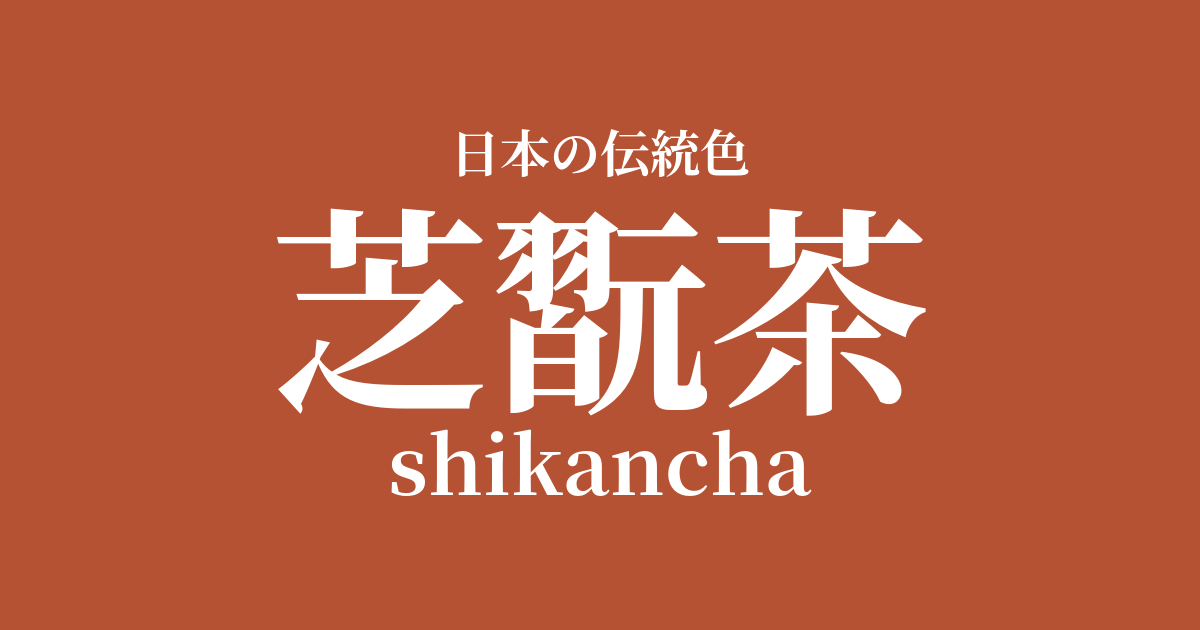
| Japanese color name | Shikan Tea |
|---|---|
| reading | shikancha |
| HEX | #B55233 |
| RGB | 181, 82, 51 |
What is Shikan Tea? Origin and Etymology
Shikan-cha is a color that was favored by Nakamura Utaemon III, a Kabuki actor who was active in the late Edo period. It is said that the name was given because his haiku name (a refined alternative name other than his stage name) was "Shikan." In Edo at that time, there was a culture in which the colors and patterns worn by popular actors became very popular among the common people as "actor colors," and Shikan-cha was one of the most representative of these.
In terms of color, it is a reddish, muted brown, sometimes considered a type of chestnut bark tea (kurikawacha) dyed with chestnut bark. This unique shade, which conveys a sense of elegance within its understated beauty, resonated with the Edo people's aesthetic sense of "chic" and was widely accepted. The fact that this fashionable color was named after an actor illustrates the close relationship between popular culture and color culture at the time.
Historical background of Shikan Tea
Shikan tea became popular in Edo during the Bunka-Bunsei period (1804-1830), when the Kasei culture flourished. During this era, townspeople culture matured, and Kabuki was the greatest form of entertainment for the common people. The third Nakamura Utaemon was a star actor who enjoyed immense popularity for his good looks and skill, and his tastes were considered cutting-edge fashion.
When he wore this color in his stage costumes or everyday clothes, people all over Edo imitated him, and it became a huge trend. Other colors named after actors include "Baikocha" (梅幸茶) for the first Onoe Kikugoro and "Rokocha" (路考茶) for the second Segawa Kikunojo, which shows just how influential Kabuki actors were at the time.
Related literature, waka poetry, and seasonal words
Shikan-cha was a popular color in the late Edo period, so its name does not appear in classical literature such as the Manyoshu or Kokin Wakashu. However, its popularity can be seen in humorous books and ukiyo-e prints depicting the customs of the time. In particular, many actor portraits by Utagawa Kunisada (Toyokuni III) depict figures wearing costumes that appear to be Shikan-cha.
These works are valuable resources for understanding how Shikan-cha tea ceremonies were enjoyed in terms of attire. Although not a specific seasonal word, its colors evoke images of withered leaves and twilight, and it is sometimes used to describe autumn scenes.
Color scheme preview
This is to check the readability of the text when this color is used as the background.
Color scheme proposal for Shikan Tea
Indigo tea (#555647)
The reddish-brown Shikancha and the greenish-dark gray Aibichicha are almost complementary colors that enhance each other. This color scheme evokes the refined elegance of Edo while also giving a modern and sophisticated impression. It is suitable as an accent in interior design and fashion.
Generated color (#FBF9F4)
The warmth and depth of Shikan tea beautifully harmonize with the natural, undyed off-white color. It adds a sense of cleanliness and elegance, softening the overall impression. It's ideal for web design backgrounds and textiles with a natural feel.
Aphrodisiac tea (#6B4A2B)
By combining Shikancha with Kobicha, a tea from the same family, a harmonious and calming gradation is created. The deep yellowish-brown of Kobicha enhances the reddish hue of Shikancha, creating depth and dimension. This color scheme provides a stable and harmonious look for Japanese clothing and traditional designs.
Practical Scenes
In the world of traditional Japanese clothing, Shikancha is widely used in everything from kimonos and haori jackets to obi sashes and obi ties. It is particularly popular as a color that expresses the feeling of autumn, and its subdued yet elegant hue enhances the wearer's refined charm. Its versatility, being suitable for both men and women, is also a notable feature.
In interior design, incorporating it into fabrics such as wallpaper, curtains, and cushions brings warmth and tranquility to a space. It pairs exceptionally well with wooden furniture and tatami mats, and is an effective accent color that adds depth to Japanese modern and retro-styleコーディネートs.
In contemporary fashion and graphic design, Zhiguan tea is used as an attractive color. As one of the earth tones, it can be incorporated into clothing such as coats and knitwear, and when used as a key color for websites and printed materials, it can be expected to convey a sense of tradition, reliability, and luxury.