
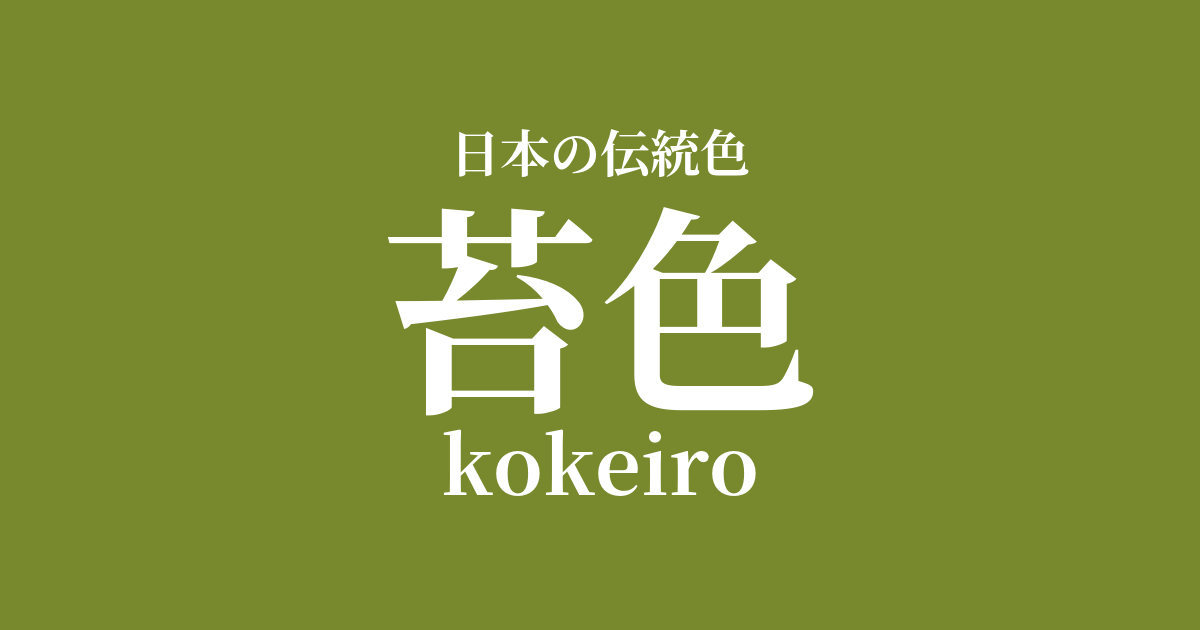
| Japanese color name | moss-colored |
|---|---|
| reading | kokeiro |
| HEX | #78882D |
| RGB | 120, 136, 45 |
What is moss green? Origin and etymology
The direct origin of the color "moss green" is, as the name suggests, the color of moss that grows covering rocks, tree bark, and the ground. Moss, which can be commonly seen in Japan's humid climate, is characterized by its deep green and yellowish-green colors. The color name is said to have originated from an attempt to reproduce this natural color as a dye, or from a culture that appreciates these hues.
In particular, the serene and timeless atmosphere of moss resonates with the Japanese aesthetic of "wabi-sabi," and has been cherished by many people.
Moss-colored historical background
Moss itself has been closely intertwined with the lives of the Japanese people since ancient times, and has existed as a literary motif, even appearing in the Manyoshu anthology. It is said that during the Heian period, the beauty of moss was appreciated and enjoyed in the gardens of the nobility. The exact time when "moss green" became established as a color name is unknown, but it is thought to have gradually become established within a culture that valued the colors of nature.
Especially from the Middle Ages onward, as the aesthetic of "wabi-sabi," influenced by Zen Buddhism, spread, the tranquility and aged charm of moss came to be highly valued. As seen in dry landscape gardens, moss was treated as a symbol of the passage of time and the laws of nature. During the Edo period, moss became popular in popular culture as an accent for bonsai and garden stones, and its subdued colors were also used in various crafts such as kimonos and pottery.
Related literature, waka poetry, and seasonal words
In Japanese literature, moss has often been depicted as a symbol of the passage of time, tranquility, and the concept of "wabi-sabi." In classical literature such as "The Tale of Genji" and "The Tale of the Heike," moss is sometimes used to depict scenes that express the rise and fall of fortunes and the impermanence of human life. Moss covering dilapidated gardens or weathered stone steps contrasts past glory with present stillness, imbuing the stories with profound emotion.
In the world of haiku, "moss" and "moss flowers" are treated as seasonal words for summer. The sight of moss glistening with moisture during the rainy season evokes a sense of summer's vitality. In Matsuo Basho's famous haiku, "Silence—the cicada's cry seeps into the rocks," the presence of moss covering the rocks seems to deepen the sense of tranquility. In this way, the color of moss has played a role in richly expressing scenes and emotions in literary works.
If a person from the capital asks where I draw the mossy spring water, I will answer the pine wind on the peak.
Color scheme preview
This is to check the readability of the text when this color is used as the background.
Moss green color scheme proposal
Kutsuha color (#917345)
The combination of moss and fallen leaves, colors found in nature, creates a sense of calm and profound harmony reminiscent of an autumn forest. This color scheme emphasizes a Japanese aesthetic, giving a gentle and elegant impression.
Yamabuki (#F8B500)
By combining a dark yellowish-green moss color with a vibrant golden yellow, the two colors complement each other. It creates a bright and hopeful impression, like light shining through a dark forest. The resulting color scheme has a traditional yet modern feel.
Indigo (#274A78)
The combination of deep green and deep blue creates an intelligent and sophisticated impression. It's a calming color scheme, reminiscent of the tranquility of nature and the stillness of night. It's suitable for designs that aim to convey trustworthiness and stability.
Practical Scenes
In the world of traditional Japanese clothing, the subdued and calming shade of moss green is highly valued. It is used in formal kimonos such as visiting kimonos, casual kimonos, and obi sashes, and is considered particularly suitable for autumn attire and quiet occasions such as tea ceremonies. It also pairs well with other nature-derived colors, creating a refined and sophisticated look.
Incorporating moss green into your interior design brings a sense of calm and tranquility to the space. It is particularly effective when used as an accent color for wallpaper, curtains, cushions, and other elements. It pairs exceptionally well with wooden furniture and houseplants, and blends seamlessly into Japanese modern and natural-style spaces.
In web and graphic design, moss green is suitable for expressing themes such as trust, tradition, and nature. When used as a background color or accent on environmental websites, historical content, or high-end Japanese brand sites, it can effectively convey the desired worldview.