
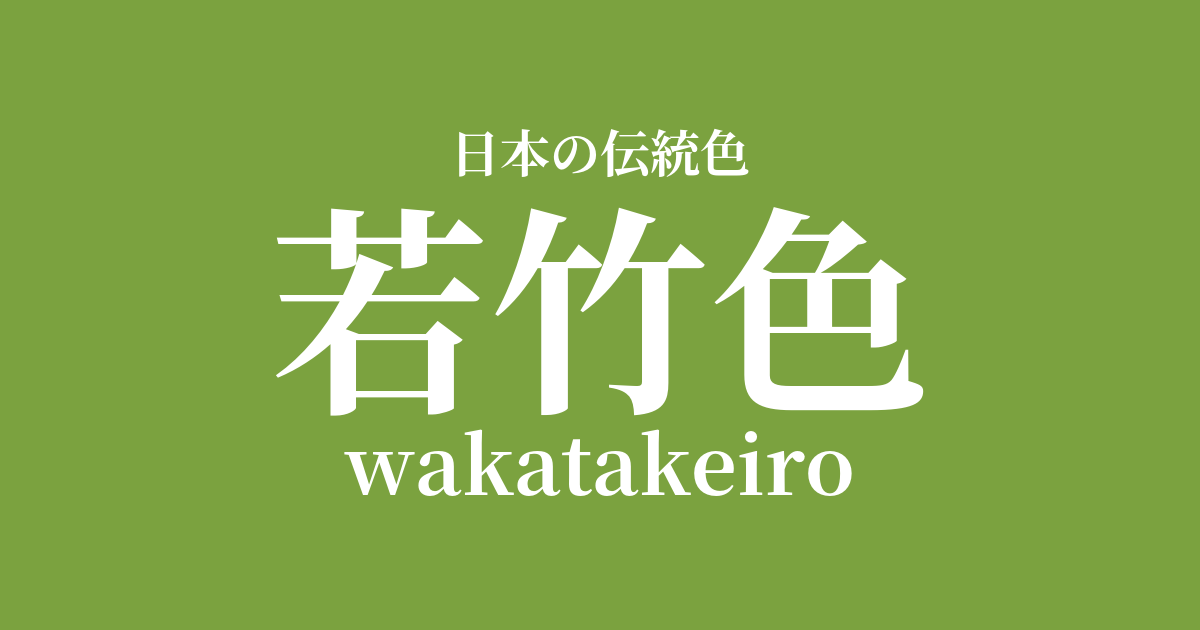
| Japanese color name | Young bamboo green |
|---|---|
| reading | wakatakeiro |
| HEX | #7BA23F |
| RGB | 123, 162, 63 |
What is "young bamboo green"? Origin and etymology.
Wakatake-iro (young bamboo green), as its name suggests, derives from the vibrant, bright yellowish-green color seen on the surface of the bark of young bamboo stalks that have just begun to grow. Bamboo has long been deeply rooted in the lives and culture of the Japanese people, and its astonishing growth and the way it retains its lush green leaves even in winter have made it a symbol of vitality, longevity, and purity. The color name "Wakatake-iro" incorporates these positive images of bamboo, particularly nuances of youthfulness and hope for the future.
The historical background of the young bamboo green color
Bamboo has been widely used since ancient times for weapons, building materials, and everyday items, but the specific color name "wakadake-iro" (young bamboo color) is only found in historical documents relatively recently, from the Edo period onward. Prior to that, expressions such as "aotake-iro" (green bamboo color) or simply "take-iro" (bamboo color) were likely more common. This color name probably arose against the backdrop of the Edo period's culture, which saw a greater diversity of colors.
From the mid-Edo period onward, as popular culture flourished, the variety of colors used in kimonos and accessories also increased. Young bamboo green, with its refreshing and vibrant hue, was particularly favored as a color to express the feeling of early summer. Examples of this shade of green being effectively used can be seen in Kabuki costumes and Ukiyo-e prints.
Related literature, waka poetry, and seasonal words
In the world of literature, the color young bamboo green is strongly associated with the image of bamboo itself. In "The Tale of the Bamboo Cutter," considered the oldest Japanese story, bamboo is depicted as a mystical being, and its lush green appearance symbolizes the source of life. In the world of haiku, "young bamboo" and "bamboo shoots" are seasonal words for spring, used to convey the powerful vitality of the sprouting season.
In Japanese poetry, bamboo has been depicted in various ways, such as the sound of it swaying in the wind or its resilience against snow. While the color name "young bamboo green" is rarely used directly, the refreshing feeling and vibrant green image of bamboo have long been deeply ingrained in the Japanese aesthetic sensibilities.
Are there any young bamboo shoots or courtesans in Hashimoto?
Color scheme preview
This is to check the readability of the text when this color is used as the background.
Proposed color scheme in young bamboo green
Soot bamboo color (#6E5B4A)
A color combination derived from the same bamboo. The vitality of young bamboo and the subdued hues of smoked bamboo are contrasting yet harmonious, creating a calm and profound Japanese space. Suitable for traditional themes.
Egg color (#FDE8A8)
The combination of fresh, young bamboo green and soft, bright eggshell yellow creates a hopeful color scheme that evokes the arrival of spring and new beginnings. It gives a friendly and positive impression.
White wisteria color (#DBDAEA)
By combining a vibrant young bamboo green with a pale, purplish wisteria color, the two colors complement each other, creating an elegant and sophisticated impression. It evokes the refreshing atmosphere of early summer and is suitable for both traditional Japanese clothing and modern designs.
Practical Scenes
In traditional Japanese clothing, the color of young bamboo green is often used for kimonos, obi sashes, and accessories, especially from early summer to summer. Its refreshing hue evokes a sense of coolness, making it a popular pattern for yukata (summer kimonos). As it symbolizes vitality and growth, it is also suitable for children's kimonos and celebratory attire.
Incorporating a light bamboo green color into your interior design can bring brightness and vitality to a space. Using it in accent walls, cushions, or curtains will give the entire room a refreshed feel. It pairs particularly well with natural colors such as wood, white, and beige.
In web and graphic design, bamboo green is an ideal color for representing themes such as nature, ecology, and health. Using it as a corporate color can convey a company's growth potential and youthful energy. For readability, it's commonly paired with a white or light gray background.