
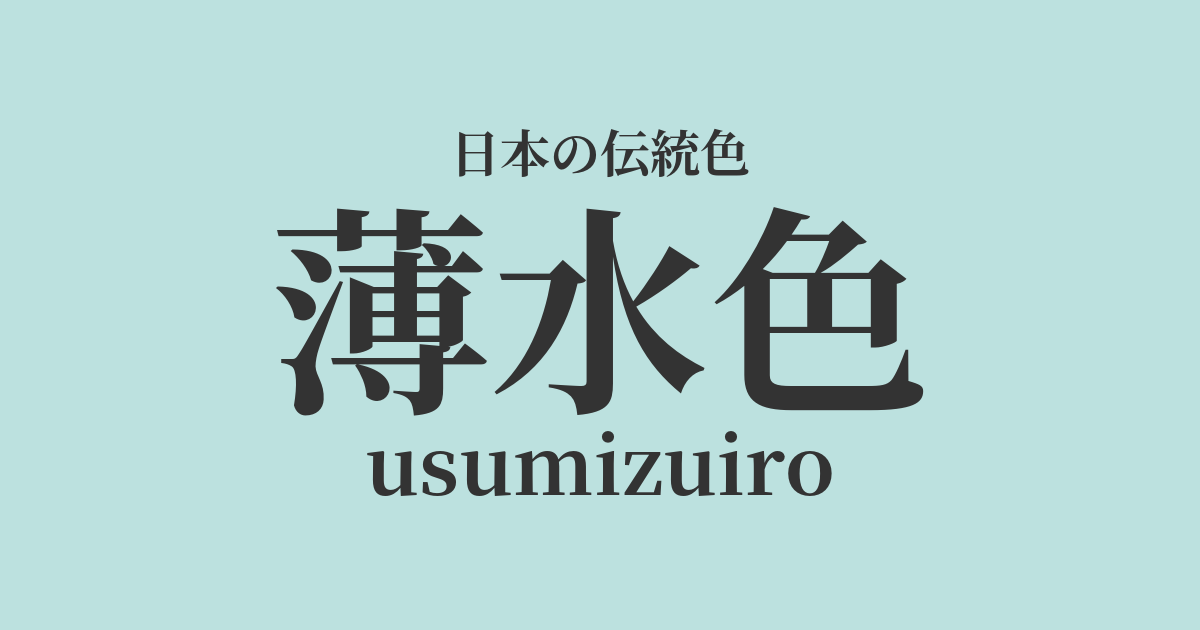
| Japanese color name | Light blue |
|---|---|
| reading | usumizuiro |
| HEX | #BCE1DF |
| RGB | 188, 225, 223 |
What is light blue? Origin and etymology
As its name suggests, light blue is derived from the fact that it is an even lighter shade of "light blue." Light blue represents the color of clear water and has long been considered a symbol of purity and innocence. Light blue is a color that is even lighter and less saturated than light blue, giving it a more delicate and ephemeral impression. It is thought to be one of the colors that emerged and became popular during the Edo period when dyeing techniques developed and a wide variety of intermediate and pale colors were enjoyed.
Light blue historical background
The color name "mizuiro" (light blue) can be found in Heian period literature, but it is believed that more delicate shades, such as "usu-mizuiro" (pale light blue), became common only after the mid-Edo period. With the spread of cotton and improvements in dyeing techniques, dyed goods, which had previously been expensive, became accessible to ordinary people, and a wide variety of kimono colors came into enjoyment. Pale light blue, in particular, was favored for dyeing summer yukata, tenugui (hand towels), and noren (curtains) due to its cool appearance.
You can also see this color palette being used effectively in the summer scenes depicted by ukiyo-e artists.
Related literature, waka poetry, and seasonal words
The color name "pale blue" does not appear directly in classical literature such as waka poetry or tales. However, expressions such as "water," which evokes this color, and "asagi," a similar shade, can be found from the time of the Manyoshu and The Tale of Genji. These colors were used to describe the clarity of flowing rivers, the appearance of the sky, or the colors of characters' clothing, playing a role in giving the scenes a sense of transparency and coolness.
In modern literature, it is sometimes associated with summer as a seasonal word and used to symbolize a refreshing atmosphere or the delicate emotions of the characters.
Color scheme preview
This is to check the readability of the text when this color is used as the background.
Light blue color scheme proposal
Shirafuji (#DBDAEA)
The refreshing feel of light blue, combined with the gentle and elegant wisteria color of white wisteria, creates a delicate and graceful impression. The resulting color scheme evokes the moist and calming atmosphere of hydrangeas in early summer or the rainy season.
Lemon color (#F2D53A)
By combining a cool-toned light blue with a warm-toned bright lemon yellow, the colors complement each other, creating a lively and refreshing impression. This color scheme evokes images of bright summer sunshine and juicy fruit.
Silver mouse (#AFB1B4)
By combining it with a near-neutral silver-gray, the delicate hues of light blue stand out, creating a refined and calm impression. This color scheme is well-suited to modern Japanese spaces and stylish kimonoコーディネートs.
Practical Scenes
In the world of traditional Japanese clothing, light blue is frequently used, especially in summer kimonos, yukata, and accessories such as obiage (sash ties) and obijime (sash cords). It is often dyed onto sheer fabrics such as ro and sha, giving the viewer a cool and refreshing impression. Due to its refreshing quality, it is also a popular color for summer tea ceremony utensils and other Japanese goods.
In interior design, incorporating it into fabrics such as wallpaper, curtains, and cushions brings a sense of cleanliness and openness to the entire room. It pairs well with natural spaces based on white, beige, and light wood tones, and is effective in creating a relaxing and calm atmosphere.
In web and graphic design, it is used to convey a clean and trustworthy image. Its honest and reassuring color palette is particularly favored in websites and print materials dealing with healthcare, education, and environmental themes.