
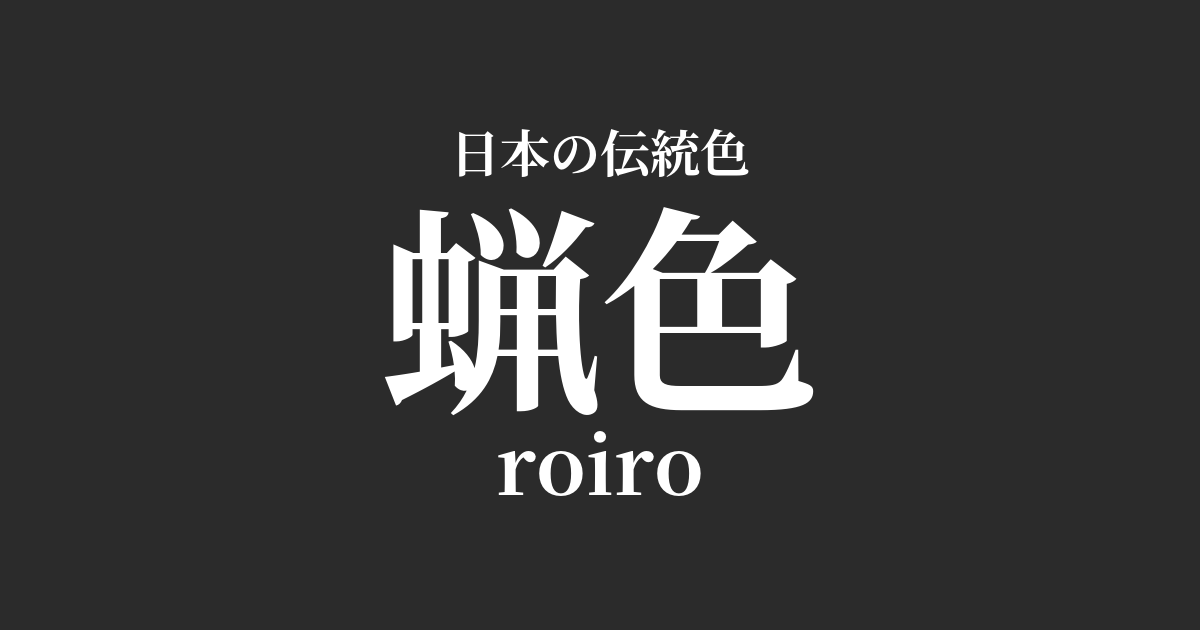
| Japanese color name | Wax color |
|---|---|
| reading | roiro |
| HEX | #2B2B2B |
| RGB | 43, 43, 43 |
What is "wax color"? Origin and etymology
Roiro is a color name derived from the "roiro-nuri" technique in lacquerware. This technique involves applying multiple layers of lacquer, then polishing it with charcoal, and finally buffing the surface with oil or deer antler powder to produce a deep, lustrous black color.
There are several theories about the origin of the name "roiro," including one that it comes from "nureiro" (wet color) due to its mirror-like luster and deep black color, which makes it appear as if it were wet, and another that it is related to the Chinese word "rou" (wax). However, the exact etymology remains uncertain. Known as the highest quality finish for lacquerware, its color is not simply black, but is recognized as a color that symbolizes dignity and gravitas.
Historical background of wax
The technique of applying black lacquer is believed to have been perfected during the Muromachi period. While lacquerware techniques existed before then, polishing techniques advanced during this time, resulting in the deep luster of the black lacquer finish known today. During the Azuchi-Momoyama period, it was widely used for tea ceremony utensils, armor, and furnishings, and its beauty was particularly striking as the black lacquer base for the lavish and ornate maki-e (gold lacquer) decorations favored by Toyotomi Hideyoshi.
During the Edo period, the roiro lacquer technique became even more refined, spreading to the possessions of feudal lords and high-end furnishings for commoners, and establishing itself as a representative color of Japanese lacquerware.
Related literature, waka poetry, and seasonal words
Due to its luxurious feel and the beauty of its deep black, the color "roiro" (a type of blackish-brown) is sometimes depicted in literary works as a symbol of wealth, authority, or even tranquility and mystery. For example, in early modern literature, it appeared as the color of luxurious furnishings owned by samurai and wealthy merchants, functioning as a prop to indicate the high status of the household. Even if the word "roiro" is not used directly, expressions such as "pitch black darkness" or "hair the color of raven feathers" often describe a deep, lustrous black that is similar to roiro.
Although it doesn't directly exist as a seasonal word, it's a color that evokes the stillness of a winter night or when describing elegant furnishings.
Color scheme preview
This is to check the readability of the text when this color is used as the background.
Color scheme proposal for wax
Gold (#E6B422)
The deep black of the wax and the sheen of gold are a combination that symbolizes traditional Japanese aesthetics. As seen in maki-e (lacquerware with gold or silver inlay), the colors complement each other, creating a luxurious, resplendent, and dignified impression. It is considered an ideal color scheme for celebratory occasions and formal events.
Scarlet (#D3381C)
The combination of lustrous black (rouge) and vibrant, powerful crimson creates a dramatic and passionate impression. This color scheme, often seen in armor and lacquerware designs, balances strength and splendor. It's a combination with a strong visual impact.
Shironeri (#FFFFFF)
The combination of the deep black of the waxy finish and the pure white creates the most contrasting and modern impression. While monochrome, the lustrous sheen of the waxy finish prevents monotony, creating a sophisticated and luxurious feel. It is ideal for expressing simple and clean beauty.
Practical Scenes
Due to its luxurious and substantial feel, the rouge finish is still used in a variety of applications today. In interior design, using it for painting high-end furniture or as an accent wall can add depth and tranquility to a space. It is particularly well-suited to Japanese modern spaces.
In the world of fashion, deep black, like that of wax, is used not only in kimonos and obi sashes, but also in leather goods and accessories. When combined with glossy materials, it creates an elegant and sophisticated impression, and has the effect of elevating formal attire.
In web and graphic design, using it as a background color has the effect of making other colors and content stand out. It is an effective color for visually conveying trustworthiness and expertise, especially on luxury brand websites or in content dealing with serious themes.