
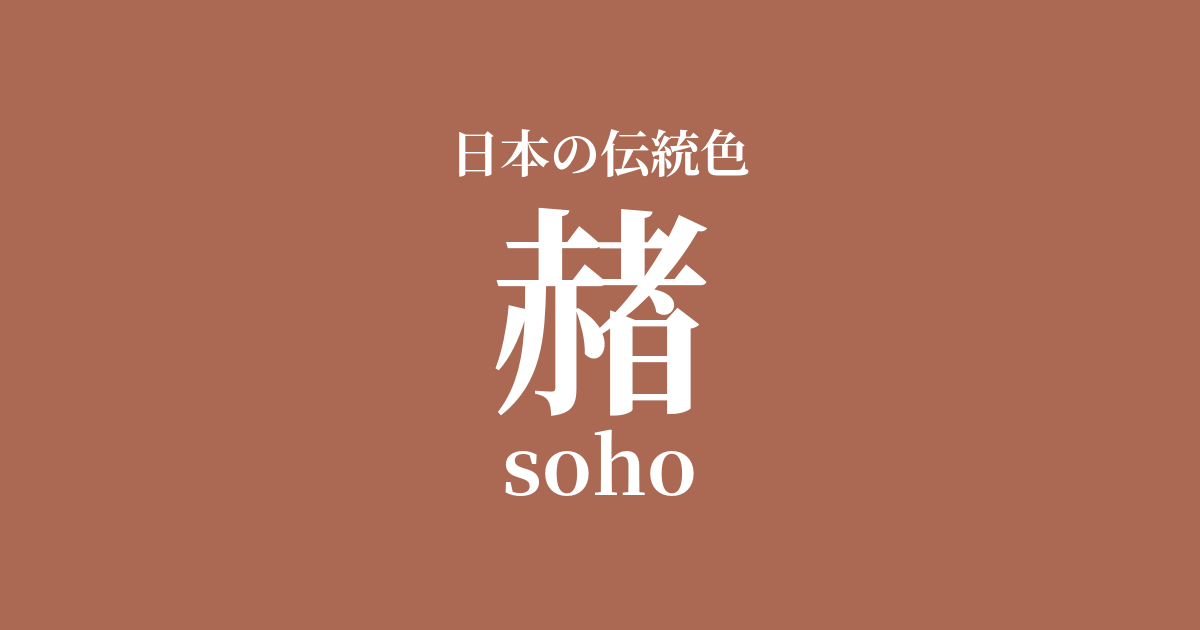
| Japanese color name | 赭 |
|---|---|
| reading | SOHO |
| HEX | #AB6953 |
| RGB | 171, 105, 83 |
What does "Ocha" mean? Origin and etymology
The character 赭 (soho) or 赭 (soo) refers to red clay itself, or the red pigment made from it. Its main component is natural ferric oxide, and in ancient times it was also called "shado" or "hani." The color of the pigment made by refining this red clay is the origin of the traditional color 赭. It is a color of earth that is universally found in nature, and is considered one of the pigments that humankind has used since ancient times, characterized by its warm reddish-brown hue.
Historical background of ochre
The history of ochre in Japan is very old, with traces of it found in the coloring of Jomon period pottery and clay figurines. Chro has also been confirmed to have been used as a red pigment in murals from the Kofun period, such as those in the Takamatsuzuka and Kitora tombs. It is believed that for ancient people, ochre also held meaning as a symbol of protection against evil and vitality.
From the Nara period onward, ochre was widely used in the painting of buildings. In particular, much of the vermilion used on the torii gates and shrine buildings of Shinto shrines is derived from pigments such as ochre and cinnabar. It is also said to have been used on the Suzaku Gate and the Daigokuden Hall of Heian-kyo, and it has been passed down to this day as one of the colors that symbolize the Japanese landscape.
Related literature, waka poetry, and seasonal words
The color ochre can be found in ancient texts. The Nihon Shoki (Chronicles of Japan) describes a ritual performed with "red clay" during Emperor Jimmu's eastern expedition, and this is believed to refer to ochre. Furthermore, the Manyoshu (Collection of Ten Thousand Leaves), the oldest collection of Japanese poetry, contains a poem about a ship painted ochre, suggesting that this color was familiar to people's lives even back then.
As I sent my beloved to Yamato late into the night, I stood drenched in the morning dew on my crimson ship.
Color scheme preview
This is to check the readability of the text when this color is used as the background.
Red color scheme proposal
Kutsuha color (#917347)
The combination of ochre and withered leaf color, both naturally derived earth tones, evokes images of autumn foliage and ripe earth. It creates a deep harmony full of calmness and warmth, giving a gentle and nostalgic impression.
Indigo (#243A6C)
The reddish-brown ochre and the deep blue indigo are almost complementary colors that vividly enhance each other. This color scheme, which evokes the strength of the earth and the grandeur of the sea, creates a sense of gravitas and reliability, giving a traditional yet modern impression.
White green (#D6E9D6)
The warm reddish-brown of ochre combined with the pale, soft green of white-green creates a natural contrast reminiscent of young leaves and the earth. This color scheme evokes vitality and tranquility, making it ideal for creating a natural and comfortable space.
Practical Scenes
Ochre, with its warmth and calming properties, is used in a variety of fields. In traditional Japanese clothing, it is used for obi sashes, obi ties, and the lining of haori jackets, adding depth and elegance to the attire. It is a color that is particularly often incorporated into autumn fashion.
In interior design, using it as an accent color for wallpaper, curtains, and cushions brings warmth and tranquility to a space. It pairs very well with natural materials such as earthen walls and wood, and harmonizes well with Japanese modern and natural-style spaces.
In the fields of web design and graphic design, the strength and stability of ochre are noteworthy. When used as a main color, it creates a dignified impression, and when used as an accent color, it attracts attention without disrupting the overall harmony. It is an effective color when you want to express reliability or tradition.