
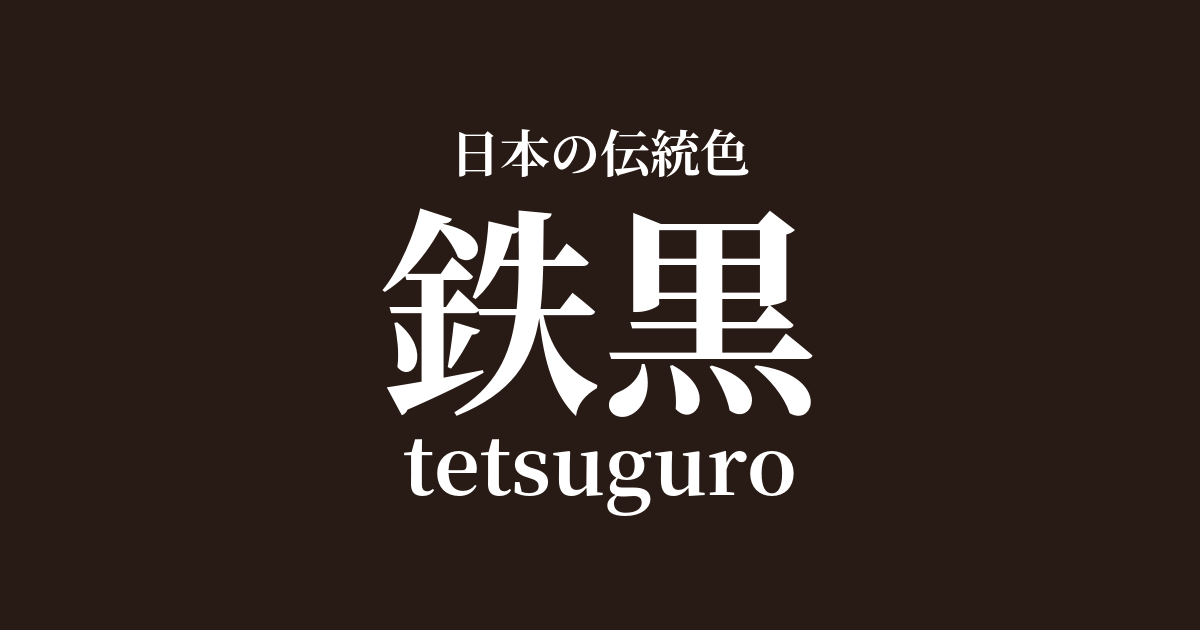
| Japanese color name | Iron Black |
|---|---|
| reading | tetsuguro |
| HEX | #281A14 |
| RGB | 40, 26, 20 |
What is "Tetsukuro"? Origin and etymology
Tetsukuro, as the name suggests, is a color name derived from "iron." Specifically, it is said to be derived from the color of the oxide film (black rust) that forms on the surface of heated iron, or the color dyed with ohaguro. Ohaguro is a black dye made by reacting a solution of rusted iron with the juice of plants containing tannins, and it has been used since ancient times for blackening teeth as a cosmetic and for dyeing cloth.
The deep black color produced by this iron plaster dyeing process, which differs from pure black and has a slight reddish or brownish tint, was called "iron black," and its unique texture was highly valued.
The historical background of Tetsukuro
The color name "Tetsukuro" (iron black) is believed to have become commonly used from the mid-Edo period onward. Particularly during the Kasei period, when townspeople's culture flourished, subdued colors such as brown, gray, and black became extremely popular as symbols of "chic" due to the sumptuary laws imposed by the shogunate. Tetsukuro was one of these colors, and as a nuanced color that was more than just black, it was favored by the townspeople of Edo and widely used in kimonos, haori jackets, and obi sashes.
It is also said that this color was seen as representing the simple, robust spirit of the samurai, and was used in the painting of weapons and armor.
Related literature, waka poetry, and seasonal words
Iron black appears in literary works primarily in Edo period humorous novels and sentimental novels, which depict the lives of townspeople at the time. In these works, it is often described as the color of a character's clothing, such as "iron black haori," and it functions as an important element in expressing the character's refined temperament or calm, mature demeanor.
While it's rare for "iron black" itself to be mentioned in specific waka or haiku poems, it's sometimes used to describe winter scenes, as it evokes the darkness of a winter night or the coldness of freezing iron.
Color scheme preview
This is to check the readability of the text when this color is used as the background.
Iron Black Color Scheme Proposal
White training (#F3F3F3)
The combination of deep iron black and pure white creates a strong contrast, giving an impression of purity and sophistication. Suitable for modern and minimalist designs, the two colors complement each other, creating a powerful yet elegant space.
Benigara color (#8F2E14)
The slight reddish tint of iron black and the reddish-brown color of vermilion, which is made from iron oxide, are a highly compatible color combination. It gives off a sense of warmth and strength within a dignified and calm atmosphere, and is often seen in traditional crafts and Japanese-style designs.
Indigo tea (#555647)
Indigo-colored tea is a dark, greenish-brown, and when combined with iron black, it emphasizes a refined and understated impression that embodies the "chic" of Edo. The combination of these muted colors creates a modest and sophisticated atmosphere that appeals to connoisseurs.
Practical Scenes
In the world of traditional Japanese clothing, iron black has been a staple color for men's haori jackets and hakama trousers, and for women's obi sashes and kimonos, from the Edo period to the present day. It is especially chosen for formal occasions or when one wants to create a stylish look, and it also works well as a background color that enhances other colors and patterns.
In interior design, iron black has the effect of tightening the overall space. When used on furniture, fixtures, or a wall, it creates a modern and substantial atmosphere. It also goes well with natural materials such as wood, metal, and Japanese paper, making it one of the essential colors for creating a Japanese modern space.
In web and graphic design, using it as a background color enhances the visibility of text and images, creating a sense of sophistication and reliability. Combining it with brighter colors as an accent color can result in a powerful and refined design.