
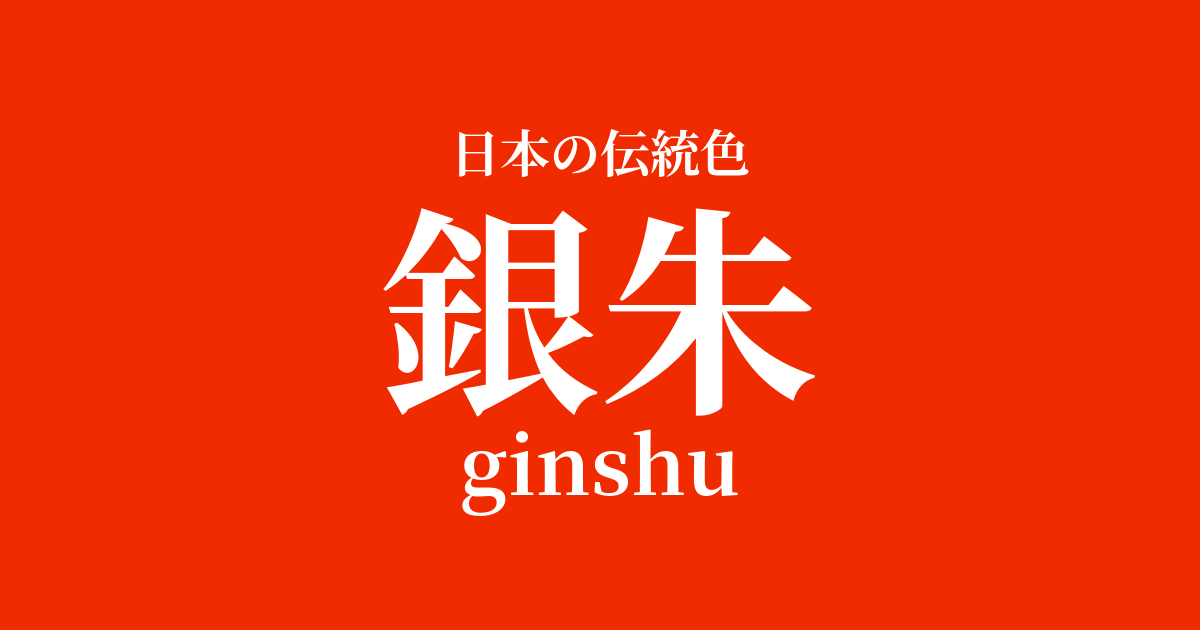
| Japanese color name | Vermilion |
|---|---|
| reading | ginshu |
| HEX | #F12B00 |
| RGB | 241, 43, 0 |
What is vermilion? Origin and etymology
Vermilion is a type of artificial pigment called "vermilion," made by refining cinnabar, a naturally occurring mercury sulfide mineral. Its name is said to come from the fact that mercury (which was also called "silver" in the past) is used in the refining process, or from the fact that the refined vermilion has a luster as beautiful as silver. In particular, it is used to refer to high-quality vermilion, and is characterized by its vivid and bright color tone compared to ordinary vermilion.
It has long been believed to possess the power to ward off evil and grant eternal youth and longevity, and has been treated as a precious pigment.
Historical background of cinnabar
Cinnabar, the raw material for vermilion, has been recorded as being mined and used in Japan since the Jomon period. Vermilion was also used in murals and excavated artifacts from the Kofun period, indicating its importance. During the Heian period, it was widely used in the architectural decoration of shrines and temples, as well as in Buddhist statues and paintings, and was considered a symbol of authority and sanctity. In particular, "Ise vermilion," produced at Ise Grand Shrine and Kasuga Grand Shrine, was considered to be of the highest quality and was highly prized.
During the Edo period, it came to be widely used in lacquerware, ink pads, and even cosmetics.
Related literature, waka poetry, and seasonal words
Vermilion, or its raw material, cinnabar (or red vermilion), has appeared in literary works since ancient times. In the Manyoshu, poetic epithets such as "akanesasu" and "ni tsurau" can be found, expressing the beauty and sacredness of vermilion. In classical literature such as The Tale of Genji, vermilion is also depicted as the color of the clothing and furnishings of noble figures. However, its appearance under the specific name "vermilion" is limited; it is more often referred to as "vermilion" or "red vermilion."
Although it's not directly related as a seasonal word, the color of the torii gates at Shinto shrines is sometimes contrasted with autumn foliage.
Color scheme preview
This is to check the readability of the text when this color is used as the background.
Silver vermilion color scheme proposal
Black (#333333)
The vibrant vermilion and deep ink black colors complement each other beautifully. This color scheme, often seen in traditional lacquerware and Japanese design, conveys a powerful and dignified impression. It is a universal combination that can also be applied to modern spaces.
Golden (#E6B422)
Vermilion and gold are a color combination frequently used in traditional Japanese art, such as in shrines, temples, and folding screen paintings. This combination is considered to symbolize the sun and fertility, creating a very luxurious and festive atmosphere. It is suitable for special occasions and eye-catching designs.
Tokiwa (#007B43)
The warm tones of vermilion and the cool tones of evergreen leaves create a beautiful contrast. This color scheme, inspired by the colors of nature, evokes both vitality and tranquility. It is often seen in Japanese gardens and kimono patterns, giving a harmonious impression.
Practical Scenes
Due to its vibrant color and sacred image, vermilion has long been used to paint the torii gates and shrine buildings of Shinto shrines. It is also an essential pigment for the "vermilion lacquer" of high-quality lacquerware, giving the pieces depth and splendor. In modern times, its eye-catching color makes it an effective accent color in graphic design and websites.
In interior design, incorporating vermilion into cushions or wallpaper can add vibrancy and a Japanese aesthetic to a space. In fashion, it's not only used as a color in kimonos and obi sashes, but also as an accent color in accessories such as scarves and jewelry, making a strong statement in any outfit. Given its historical background, it's a color well-suited to designs that blend tradition and modernity.