
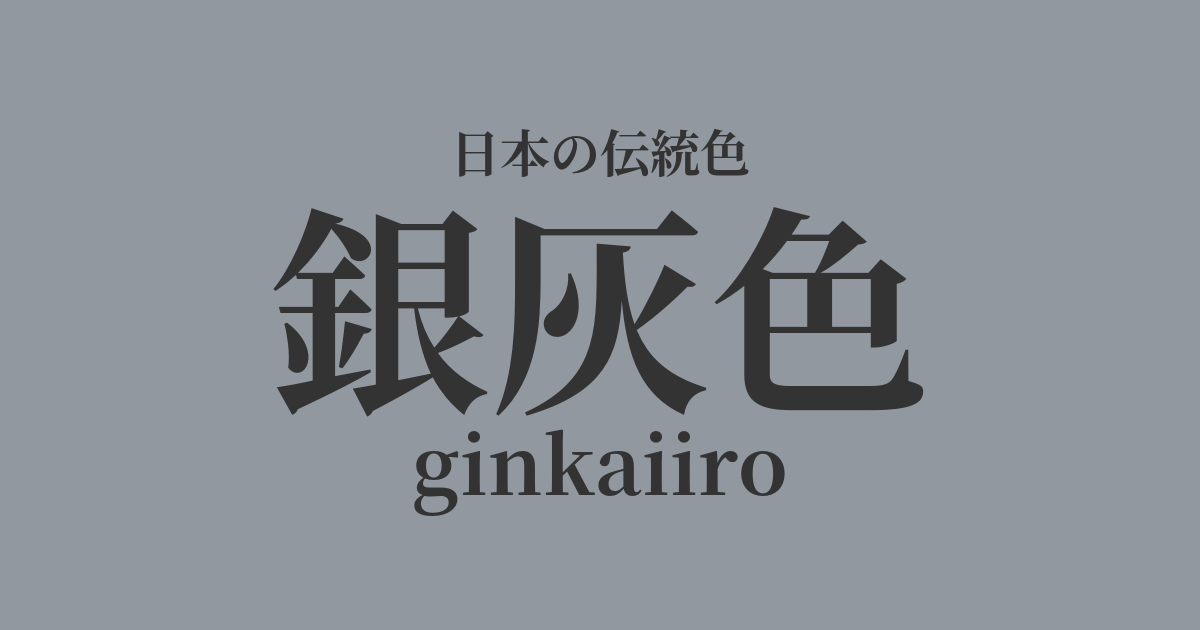
| Japanese color name | silver gray |
|---|---|
| reading | ginkaiiro |
| HEX | #91989F |
| RGB | 145, 152, 159 |
What is silver-gray? Origin and etymology.
Silver-gray is a color name referring to a light gray color that has the unique luster and hue of metallic silver. Its etymology is a very direct and easy-to-understand combination of "silver" and "gray." Rather than being a color name derived from traditional plant dyes, it is considered a relatively new color that was named in the modern era under the influence of Western culture to represent the color of metal.
A similar term is "silver-gray," but silver-gray has a stronger metallic sheen and has become established as a color that gives a modern and sophisticated impression.
Silver-gray historical background
During the Edo period, a wide variety of gray shades were popular, so much so that it was called "forty-eight shades of brown and one hundred shades of gray," but the term "silver gray" does not appear in any documents from that time. A similar color, "silver gray," existed and was popular among people under sumptuary laws. In the Meiji era, with the introduction of Western color concepts, it is believed that "silver gray" came to be used as a term to refer to the color of metal.
It is believed that as metal products became widespread with modernization, this color name became established to express their inorganic and sophisticated texture.
Related literature, waka poetry, and seasonal words
The color name "silver-gray" is relatively new, and there are no confirmed examples of it directly appearing in classical literature or waka poetry from the Heian or Edo periods. However, scenes reminiscent of silver, such as winter snowscapes or moonlight reflecting on water, have been depicted in poetry since ancient times. In modern literature, it is sometimes used to symbolize the inorganic landscapes of cities or the cool, detached state of mind of characters.
While "silver-gray" is not a recognized seasonal word, winter seasonal words such as "winter moon" and "frost pillars" evoke a cold, clear image associated with this color.
Color scheme preview
This is to check the readability of the text when this color is used as the background.
Silver-gray color scheme proposal
Indigo (#274A78)
The modern and cool impression of silver-gray harmonizes with the deep intelligence and calmness of indigo. Suitable for business settings and formal designs, it conveys a sense of reliability and sophistication. It is a dignified color scheme in which each color enhances the others.
Mauve (#BBADC8)
The addition of the gentle, elegant purple of wisteria to the otherwise sterile, silvery-gray creates a soft, feminine atmosphere. This color scheme, which evokes warmth within its coolness, can be used to express elegance in traditional Japanese clothing or interior design.
Black (#1C1C1C)
Despite being a combination of achromatic colors, the bright silver-gray and deep black of the ink create a strong contrast. This color scheme gives a minimalist, sharp, and urban impression. It's effective in web design and product design when you want to achieve both strength and sophistication.
Practical Scenes
In traditional Japanese clothing, silver-gray obi sashes, obi ties, and han-eri collars are easy to match with kimonos of various colors, giving the overall outfit an elegant and sophisticated impression. In particular, when paired with kimonos of darker colors, the silver-gray acts as a modern accent, helping to create a contemporary look.
In interior design, using silver-gray on large areas such as wallpaper, curtains, and sofas brings brightness and spaciousness to a space, creating a sophisticated and stylish urban atmosphere. It pairs exceptionally well with materials such as stainless steel, glass, and concrete, and is widely adopted as a base color for minimalist modern spaces.
In web and graphic design, using silver-gray for background colors and UI elements can create a clean and trustworthy impression. It's particularly suitable for technology companies and business-related websites, as it visually conveys intelligence and innovation.