
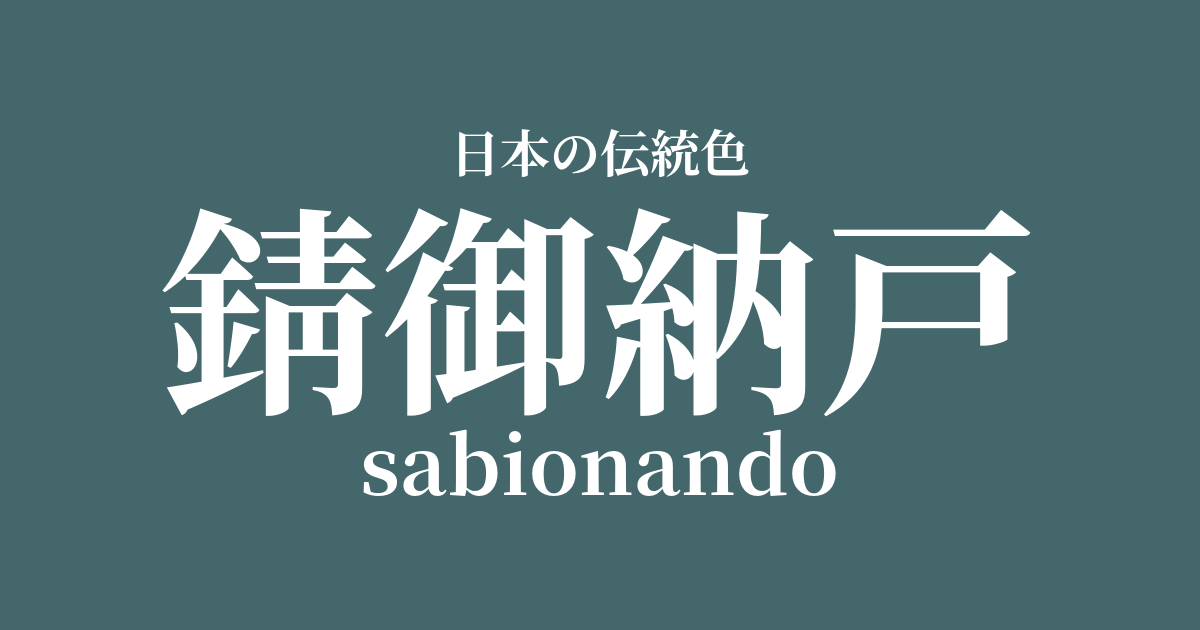
| Japanese color name | Rusty storage room |
|---|---|
| reading | sabionando |
| HEX | #43676B |
| RGB | 67, 103, 107 |
What is a rusty storage room? Origin and etymology
Sabi-Onando is a traditional Japanese color that originated in the Edo period. Its name comes from combining "Onando-iro," a color considered noble, with "sabi," which means a dull, subdued hue. "Onando" refers to a storage room in a castle where clothes and tools were kept, and the color of the curtains that hung there is said to be the origin of the name Onando-iro. By adding the tones of "sabi," which are associated with the aesthetics of wabi-sabi, to this bluish-green color, a unique hue with calmness and depth was created.
The prefix "sabi" (rust) in the color name does not directly refer to metal rust, but rather is used as a prefix to indicate a dull, muted tone with reduced saturation. This reflects the Edo period aesthetic of "iki," which valued sophistication and composure over splendor. Sabi Onando, distinct from the vibrant Onando color, has a grayish or slightly brownish nuance, making it a refined, mature color favored by people of the time.
Historical background of the rusty storage room
Rust-colored nando (a type of brown) is believed to have been popular from the mid to late Edo period. Particularly during the Bunka and Bunsei periods, townspeople culture flourished, and countless subtle intermediate colors such as brown and gray became popular, as exemplified by the phrase "forty-eight shades of brown and one hundred shades of gray." Rust-colored nando was one of the colors that emerged during this trend, and it was widely accepted as a color that perfectly matched the "chic" temperament of Edoites, who disliked ostentation and valued understated sophistication.
In this era, Kabuki actors were fashion leaders, and the colors they favored became extremely popular among the common people as "actor colors." It is said that subdued colors like rusty navy blue were particularly popular for men's kimonos and haori jackets. Figures wearing kimonos in this color scheme are depicted in ukiyo-e prints, suggesting that it was deeply rooted in the lives of people at the time.
Related literature, waka poetry, and seasonal words
While the color name "Sabi-Onando" (rusted navy) doesn't appear directly in many waka poems or classical literary works, the subdued and calm atmosphere this color evokes is deeply connected to the worldview of Edo period literature. For example, one can find this sense of color in the lives and aesthetics of Edo townspeople depicted in Ihara Saikaku's ukiyo-zoshi, sharebon, and ninjobon.
It can be said that the value system that discourages ostentation and finds sophistication in subdued colors is the background behind the creation of colors like rusty navy blue.
Color scheme preview
This is to check the readability of the text when this color is used as the background.
Color scheme proposal for the rusty storage room
White tea (#B59775)
The calm blue-green of the rust-colored lacquerware combined with the bright, soft brown of the white-brown creates an elegant and sophisticated impression. The colors complement each other, creating a calm and intellectual atmosphere, making this color scheme suitable for traditional Japanese clothing and interior design.
Persimmon color (#9F563A)
The cool, subdued tones of the rust-colored navy blue and the warm, deep tones of the persimmon brown are contrasting yet harmoniously blended. This classic combination evokes the refined elegance of Edo, adding depth and gravitas to each other's colors, creating a sense of both calmness and splendor.
Iron closet (#324347)
Combining it with the iron-toned blue-green, which is even darker than the rust-toned color, creates a unified gradient. The varying shades of color create depth and three-dimensionality, resulting in a very chic and modern color scheme.
Practical Scenes
Rust-colored indigo, with its subdued and calm hue, was particularly favored for men's kimonos, haori jackets, and obi sashes. Even today, it remains a popular and sophisticated color in the world of traditional Japanese clothing. Incorporating it into women's kimonos, obi sashes, and accessories such as obi ties can create an elegant look with a touch of understated sweetness. It also pairs well with simple materials such as cotton and pongee silk.
In interior design, using it in fabrics such as wallpaper, curtains, and sofas brings a sense of calm and depth to the space. It's versatile enough to blend well with Japanese modern styles, as well as Scandinavian and industrial aesthetics. In web design and graphics, using it as an accent color can create an impression of trustworthiness and intelligence.