
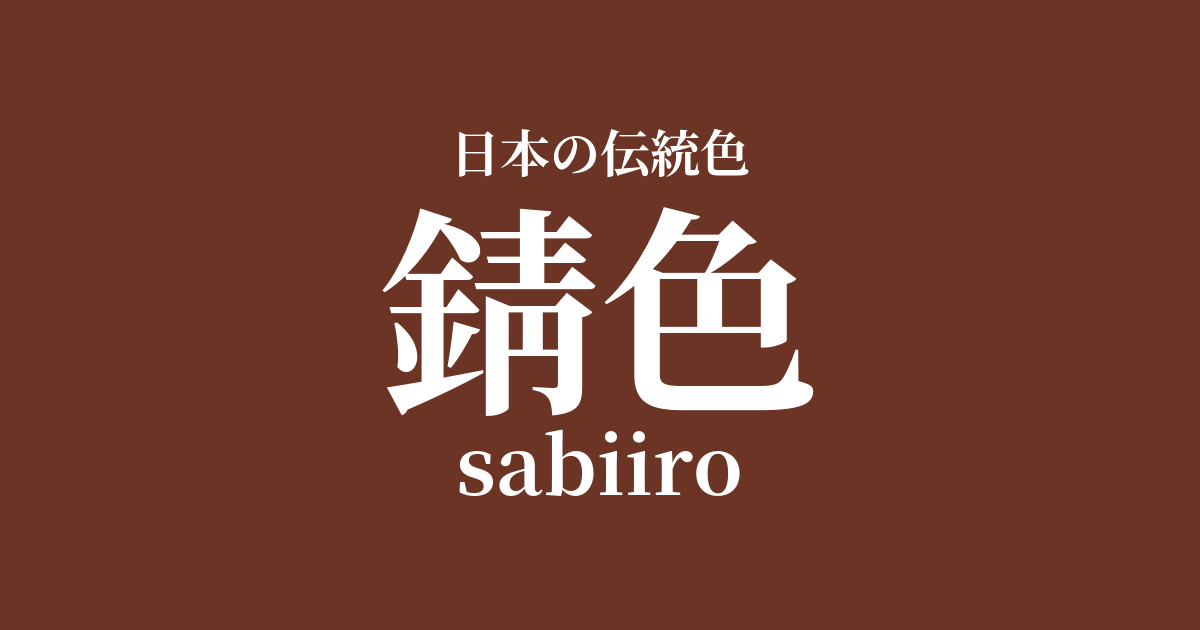
| Japanese color name | rust color |
|---|---|
| reading | sabiiro |
| HEX | #6C3424 |
| RGB | 108, 52, 36 |
What is rust color? Origin and etymology
Rust color, as the name suggests, is derived from "rust," which is produced when iron oxidizes. It is a reddish-brown color, said to be inspired by the natural aging process. This color is deeply connected to the Japanese aesthetic of "wabi-sabi," which finds beauty in the unique texture that develops over time and weathering. It is said that the dye used was either made from soil rich in iron or dyed using a technique called "iron mordanting," in which plant dyes were mordanted with iron.
The historical background of rust-colored
The name "rust color" is believed to first appear in literature during the Edo period. Particularly in the mid-Edo period, due to the shogunate's sumptuary laws, muted colors such as brown and gray became popular among commoners. These were collectively known as "forty-eight browns and one hundred grays," and people found "chic" in the subtle differences in shades, with rust color becoming one of the popular fashion colors.
It is said to be closely related to the "Danjuro-cha" color, which was favored by the Kabuki actor Ichikawa Danjuro, and is one of the colors that symbolizes the townspeople's culture of Edo.
Related literature, waka poetry, and seasonal words
Rust color, with its subdued and calm hue, is sometimes used in literature to express loneliness, the passage of time, and withered beauty. While there are few famous waka poems that directly use the word "rust color," the image of this color can be found in descriptions of decaying or aged things. For example, it has played a role in adding depth and historical weight to stories by being depicted as the color of the bells of old temples or discarded weapons.
Although not established as a seasonal word, this color supports the worldview of poetry as a color that evokes the sense of desolation in autumn.
Autumn wind blows, and a rusty, broken sword lies there.
Color scheme preview
This is to check the readability of the text when this color is used as the background.
Rust-colored color scheme proposal
Indigo (#274A78)
The reddish-brown of rust and the deep blue of indigo are almost complementary colors, and they enhance each other. This color scheme creates a dignified, calm, and traditional Japanese atmosphere, and it is a classic combination often seen in kimono obi pairings.
Moss color (#69821B)
A combination of natural earth tones reminiscent of rusted iron and moss growing on rocks. The warmth of the rust and the tranquility of the moss harmonize to create a calm and profound impression. Suitable for interiors that aim to create a peaceful space.
Color produced (#FBFBF4)
The rich, heavy impression of the rust color is softened by the bright, soft off-white color, creating a sophisticated contrast. Suitable for modern designs that make good use of negative space, as well as minimalist Japanese-style spaces, it can achieve both a sense of cleanliness and warmth.
Practical Scenes
In the world of traditional Japanese clothing, rust-colored kimono is incorporated into obi sashes, haori jackets, and accessories, creating a sophisticated and refined adult look. It is a color often seen in men's kimonos and autumn attire. When combined with other shades of brown or indigo, it creates a deep and nuanced coordination.
In interior design, using it in wallpaper, furniture, and fabrics adds a sense of depth and warmth to a space. It pairs exceptionally well with natural materials such as wood and earthen walls, bringing depth and tranquility to Japanese modern and traditional Japanese house styles. When used as an accent color, it also has the effect of tightening up a space.
In web and graphic design, using this color as a background or accent color can convey a sense of luxury and tradition. It is particularly suitable for websites dealing with themes such as historical brands, crafts, and Japanese cuisine. Combining it with white or off-white allows for a sophisticated impression while maintaining readability.