
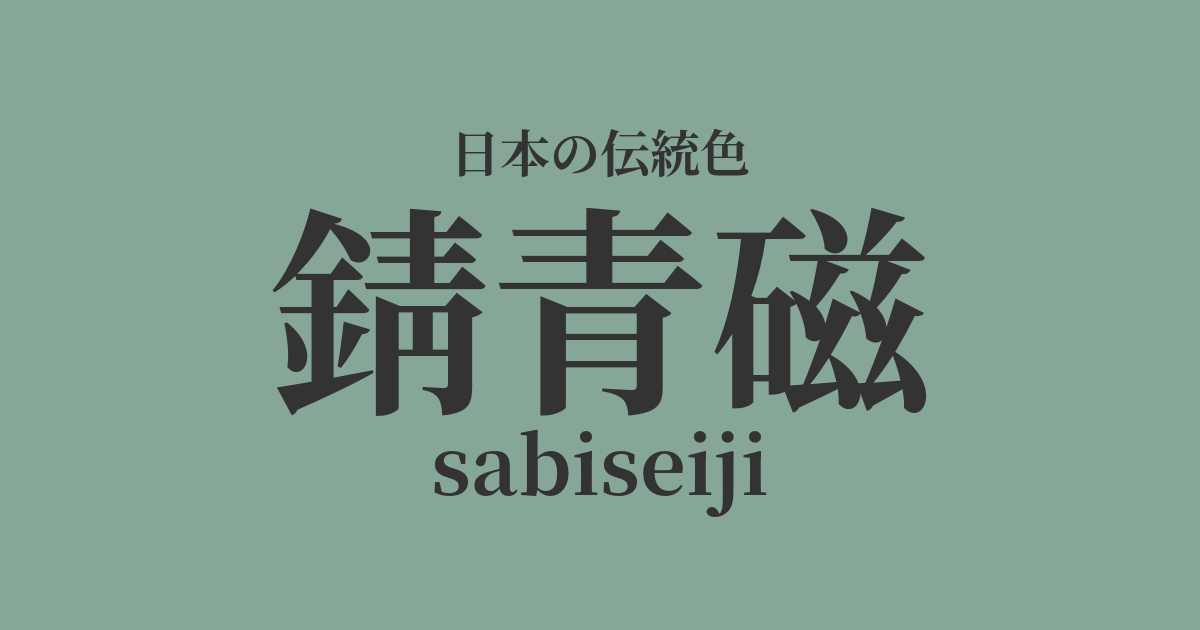
| Japanese color name | Rust-colored celadon |
|---|---|
| reading | sabiseiji |
| HEX | #86A697 |
| RGB | 134, 166, 151 |
What is rust-colored celadon? Origin and etymology
Rust celadon is a color name derived from the beautiful blue-green color of "celadon," a high-quality porcelain imported from China. The "rust" in the name does not refer to the reddish-black or reddish-brown color of metal rust, but rather is used as a prefix to indicate a dull, low-saturation color. In other words, rust celadon means "dull celadon color," and it represents a quiet and profound hue that combines the vibrant color of celadon with the Japanese aesthetic of "wabi-sabi."
The use of "rust" in color names is one of the characteristic color naming conventions that was popular during the Edo period.
While the word "sabi" (rust) inherently carries negative connotations, in Japanese aesthetics, it encompasses a value system that positively embraces the changes that occur over time and the weathered, aged appearance. The name "sabi-seiji" (rust celadon) does not simply indicate low saturation, but rather originates from a culture that finds beauty in this "sabi" aesthetic.
Similarly, this prefix is often used for subdued and calm color tones that were considered "chic" in Edo townspeople's culture, such as "sabi-asagi" (rusty light blue) and "sabi-onando" (rusty dark blue).
Historical background of rusted celadon
Celadon, the origin of this color, was highly valued among the aristocracy from the Heian period, but the name "rust celadon" is said to have become widely established only after the mid-Edo period. During this time, as symbolized by the phrase "forty-eight shades of brown and one hundred shades of gray," muted and subdued colors such as brown and gray became extremely popular among the common people. Rust celadon can be considered one of the trendy colors that emerged during this period.
The frequent sumptuary laws issued by the Edo shogunate, which restricted commoners from wearing brightly colored clothing, are considered one reason why these subdued, intermediate colors were favored. Within this limited color palette, people focused on subtle differences in hue and texture, finding their own unique values such as "chic" and "sophistication." Rust celadon can be said to be a color that strongly reflects this refined townspeople culture of Edo.
Related literature, waka poetry, and seasonal words
It is difficult to pinpoint any waka poems or classical literary works in which the color name "rusty celadon" directly appears. However, the quiet and tranquil atmosphere of this color is deeply connected to the aesthetic sensibilities of "wabi-sabi" and "mono no aware" that permeate Japanese literature. For example, it resonates with the serene scenes found in Matsuo Basho's haiku and the sense of impermanence depicted in Kamo no Chōmei's "Hōjōki," reflecting a spirituality that values introspective beauty over ostentation.
Although not designated as a specific seasonal word, the color of rusted celadon evokes images of quiet trees in late autumn or landscapes under the cloudy skies of winter. It can be seen as a color that expresses the crisp air and tranquility of seasons when colors are scarce. Imagining this color as a background image in literary works may allow one to better grasp the characters' emotions and the profound atmosphere of the story.
Color scheme preview
This is to check the readability of the text when this color is used as the background.
Color scheme proposal for rusted celadon
White green (#D6E9D6)
The calm green of the rusted celadon porcelain harmonizes with the bright, soft green of the white-green, creating a gentle and elegant impression. The gradation of similar colors makes it a suitable color scheme for creating a natural and tranquil space or design.
Persimmon color (#9F563A)
The tranquil, cool-toned celadon and the warm, inviting persimmon brown complement each other beautifully. This color scheme, often seen in traditional Japanese houses and crafts, evokes a sense of nostalgia while maintaining a refined feel. It's a combination that brings to mind autumnal scenes.
Black (#333333)
The delicate hues of the rusted celadon are tightened by the rich, deep ink color, creating a modern and dignified impression. The clear contrast brings a sense of calm and luxury to the overall design. It is well suited to minimalist expression.
Practical Scenes
In the world of traditional Japanese clothing, rust-colored celadon is used in solid-colored kimonos, patterned kimonos, and obi sashes, giving an elegant and intellectual impression. Its deep, understated hue blends well with quiet occasions such as tea ceremonies, and it's a versatile color that can be worn by people of all ages. It's also easy to combine with other colors, and there's the added pleasure of adding accents with obi ties and obiage (sash scarves).
In interior design, incorporating it into wallpaper, curtains, sofas, and other fabrics creates a calm and modern Japanese space. It pairs exceptionally well with natural materials such as wood, bamboo, and washi paper, creating a relaxing and soothing atmosphere. Even using it as an accent can add depth and elegance to a space.
In the fields of web and graphic design, rusted celadon is effective in conveying an image of trustworthiness, tradition, and sophistication. When used as a background color, it elegantly enhances content and improves readability. It is particularly suitable as a key color for brands dealing with history, culture, or luxury goods.