
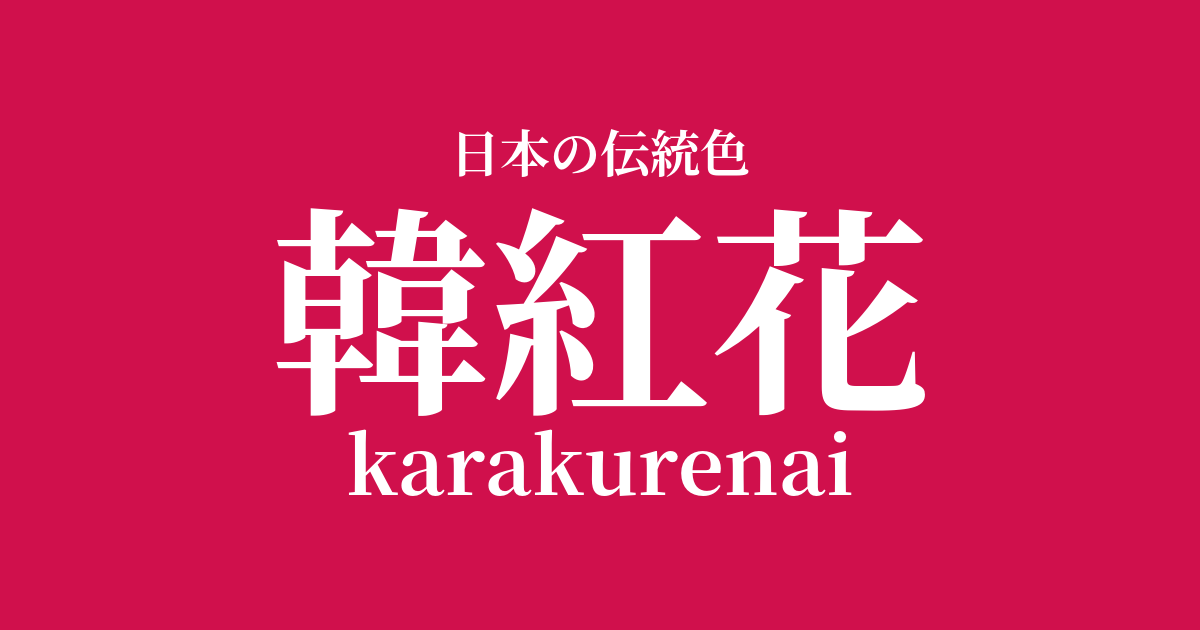
| Japanese color name | Korean safflower |
|---|---|
| reading | karakurenai |
| HEX | #D0104C |
| RGB | 208, 16, 76 |
What is Korean safflower? Origin and etymology
As its name suggests, "Korean safflower" (韓紅花) means "Korean," referring to the color "crimson" (紅) which originated from "Korean," or foreign countries, particularly ancient China. Here, "crimson" refers to the color dyed using a dye extracted from the petals of the safflower (荔花), a plant belonging to the daisy family. It is believed that this special name was given due to a longing for imported goods and its striking beauty. It's not simply the color red, but a color name imbued with respect for foreign culture and technology.
Safflower dyeing required highly advanced techniques and a large quantity of raw materials. The red pigment contained in safflower petals amounted to only about 11 TP3 T of the total, and obtaining a deep, vibrant red required picking a large number of petals and going through a complex process of fermentation and extraction. For this reason, cloth dyed with Korean safflower was extremely expensive and not something everyone could afford. This rarity made Korean safflower an even more special color.
Historical background of Korean safflower
Korean safflower was particularly prized in aristocratic society during the Heian period. It was considered one of the "forbidden colors" that only people of high status were allowed to wear, and only the emperor, members of the imperial family, and some high-ranking nobles were permitted to wear its color. It was frequently depicted as the color of the clothing of characters in classical literature such as Sei Shonagon's "The Pillow Book" and Murasaki Shikibu's "The Tale of Genji," playing an important role in symbolizing beauty and high status.
From the Heian period onward, safflower dye maintained its status as a special color. In samurai society, it was used to decorate armor and celebratory attire, and its strength and splendor were highly valued. In the Edo period, it gained popularity among the wealthy townspeople, but it remained a luxury dye and a color that ordinary people longed for. Across the ages, it has continued to exude a special presence in Japanese aesthetics.
Related literature, waka poetry, and seasonal words
The Korean safflower has been used in many Japanese poems and stories to express beauty, passion, or natural scenery. Particularly famous is a poem in the Kokin Wakashū, attributed to Ariwara no Narihira: "Even in the age of the gods, I have never heard of the Tatsuta River being dyed crimson." This poem expresses surprise and emotion at how vividly beautiful the autumn leaves floating on the surface of the Tatsuta River are, as if they had been tie-dyed with Korean safflower.
Influenced by this waka poem, the word "karakurenai" (crimson) became widely established not only as a term referring to the color of safflower dye, but also as a symbol of the fiery red of autumn foliage. This poem beautifully linked the beauty of artificial dyeing with the beauty of colors produced by nature, further enriching the cultural background of the color safflower. For this reason, it is deeply associated with autumn as a seasonal word.
Even in the age of the gods, such a thing has never been heard: the Tatsuta River is dyed crimson.
Color scheme preview
This is to check the readability of the text when this color is used as the background.
Color scheme proposal for Korean safflower
Pine green (#3A532D)
The vibrant red of the Korean safflower and the deep green of the pine needles are complementary colors, powerfully enhancing each other. This creates a balance of vibrancy and tranquility, giving a classic yet modern impression. It is a traditional color scheme also seen in the "layered color combinations" of Heian period attire.
Golden (#E6B422)
The radiant gold further enhances the noble impression of the Korean safflower, creating a magnificent and opulent atmosphere. This combination is perfect for special occasions such as celebrations and festivals. It is a color scheme that symbolizes traditional Japanese beauty, as seen in screen paintings and crafts from the Azuchi-Momoyama period.
White training (#FCFAF2)
When paired with pure white, the vibrancy of the Korean safflower stands out, creating a sense of purity and elegance. The contrast between red and white has long been considered an auspicious color combination in Japan, resulting in a bright and striking pairing. It is simple yet possesses a strong presence and high visibility.
Practical Scenes
In the world of kimono, Korean safflower is used in wedding attire and formal wear such as furisode and uchikake, symbolizing vibrancy and youthfulness. It can also be used as an accent color in accessories such as obi, obi-jime, and han-eri, adding a stylish touch to the overall outfit. It pairs particularly well with classic patterns.
In interior design, it is effective to use it as an accent color for cushion covers, tapestries, and small accessories. It brings a Japanese aesthetic and elegance to the space, instantly creating a sophisticated atmosphere. However, using it over a large area may create a feeling of oppression, so it is best to use it sparingly as an accent color.
In web and graphic design, its strong appeal makes it ideal for headlines, buttons, and icons that you want to attract attention. By using a neutral color such as white, black, or dark blue as the background, the vibrancy of the Korean safflower is further enhanced, creating a modern and sophisticated impression.