
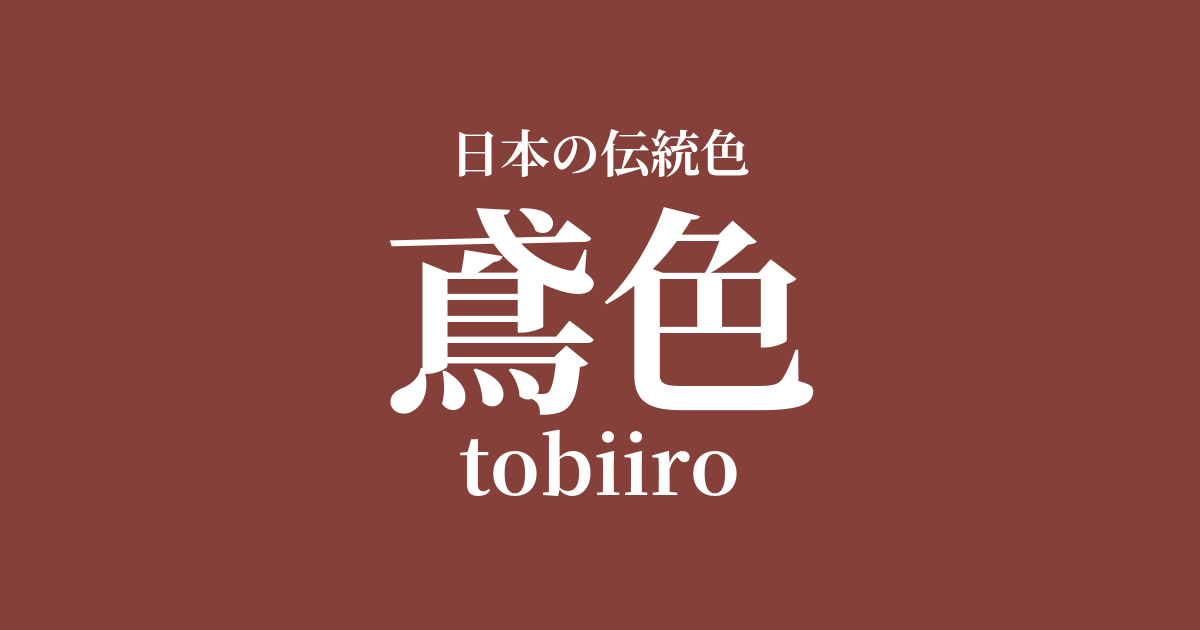
| Japanese color name | dark brown |
|---|---|
| reading | tobiiro |
| HEX | #85403A |
| RGB | 133, 64, 58 |
What is "tobiiro" (dark brown)? Origin and etymology.
Tobiiro refers to a reddish-dark brown color, derived from the feather color of the kite, a bird of prey. Kites are common birds found throughout Japan, inhabiting both rural areas and urban areas, and their majestic flight and feather color have been recognized by people since ancient times. Tobiiro became widely known from the mid-Edo period onward, as brown tones became fashionable.
Other colors named after birds include "uguisu-iro" (nightingale color) and "suzume-iro" (sparrow color), but among them, kite-iro (dark brown) has become particularly established as a color deeply associated with the common people's culture of Edo.
The historical background of the brown color
The popularity of the brownish-yellow color dates back to the mid-Edo period. At that time, the shogunate frequently prohibited commoners from wearing extravagant clothing through sumptuary laws. As a result, people outwardly used subdued browns and grays, but developed a culture of finding subtle differences in shades within them, known as "Forty-Eight Browns and One Hundred Grays." Brownish-yellow was one of these fashionable colors, and it is said to have become particularly popular as a "chic" color symbolizing bravery and integrity, especially since it was adopted as the color of the uniforms and jackets of Edo's town firefighters.
Related literature, waka poetry, and seasonal words
The color "tobiiro" (dark brown) frequently appears in Edo period literature and ukiyo-e prints. In particular, in humorous and satirical novels, tobiiro was used as the color of the characters' clothing, serving to suggest their stylish character and spirit. For example, in Shikitei Sanba's "Ukiyo-buro," tobiiro is described as the color of everyday clothing worn by common people. While "tobiiro" itself is not a direct seasonal word, the "tobi" (kite), a seasonal word for winter, evokes the wabi-sabi aesthetic and strength associated with this color.
The first winter rain has even polished the wings of the kites.
Color scheme preview
This is to check the readability of the text when this color is used as the background.
A proposed color scheme in a dark brown color.
Indigo (#274A78)
The combination of dark brown and indigo, both beloved by common people during the Edo period, symbolizes the sophisticated culture of that era. The calm brown and deep blue complement each other, creating a powerful yet refined impression. It is well-suited to traditional Japanese clothing and designs.
Mustard color (#D8A32A)
The reddish-brown and mustard yellow harmonize to create a warm, autumnal color scheme. Both are naturally derived colors and have high affinity with each other. They add a touch of vibrancy to a calming atmosphere, making them effective as accent colors in interior design and fashion.
White training (#FCFAF2)
The deep, rich brown color is combined with a clean, soft white, creating a strong contrast and a modern, sophisticated impression. The white softens the heaviness of the brown, giving it a clean and elegant feel. It is also suitable for modern applications such as web design.
Practical Scenes
The brownish-yellow color is widely used in the world of traditional Japanese clothing due to its subdued hue. It is especially used in men's kimonos, haori jackets, and obi sashes, giving an impression of sophistication and refinement. It is also an indispensable color in items that symbolize the common people's culture of Edo, such as hanten jackets, tenugui towels, and tabi socks.
In interior design, incorporating a dark brown color into wallpaper, furniture, and curtains brings a sense of depth and warmth to the space. It pairs well with natural materials such as wood and earthen walls, adding richness to Japanese modern and traditional Japanese house styles. Using it as an accent in cushions and small accessories is also effective.
In contemporary fashion and design, russet brown remains a popular earth tone. When used in coats, jackets, and leather goods, it creates a classic and elegant atmosphere. In web design, using it as a background or accent color can convey a sense of reliability and tradition.