
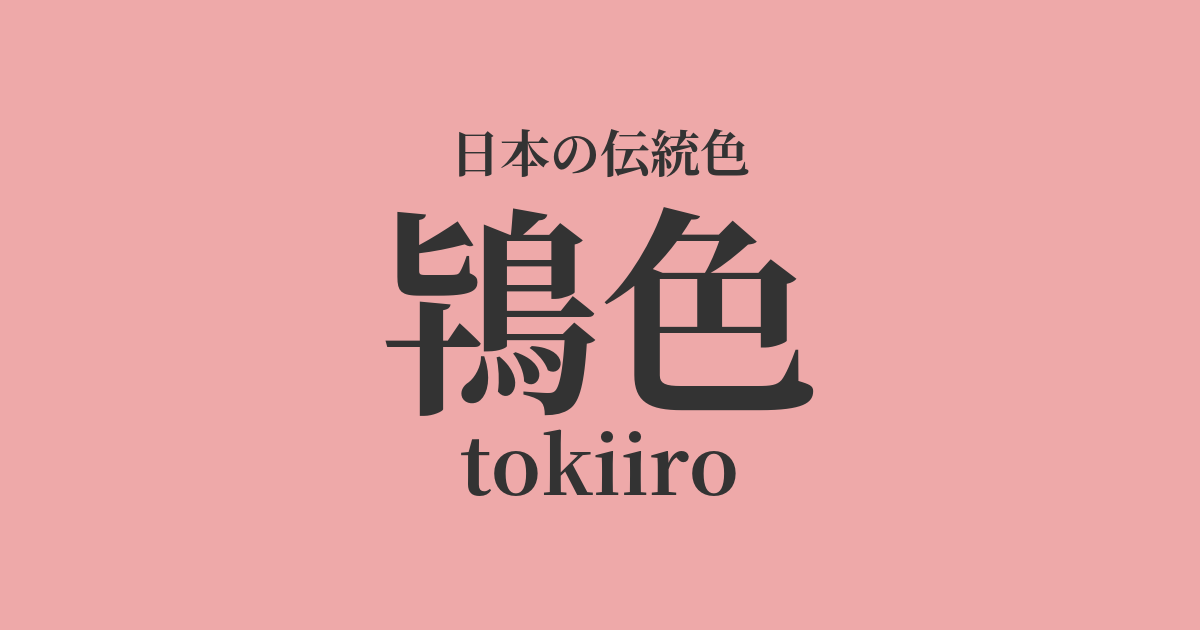
| Japanese color name | dark brown |
|---|---|
| reading | tokiiro |
| HEX | #EEA9A9 |
| RGB | 238, 169, 169 |
What is the color "Toki-iro"? Origin and etymology
Toki-iro refers to a yellowish-pink color derived from the feather color of the Japanese crested ibis (Toki), a bird designated as a special natural monument of Japan. It is sometimes written as "Toki-iro" (朱鷺色). The ibis's body is normally white, but the term refers to the pale reddish color that appears on the underside of its wings and flight feathers when it is flying. This distinctive color is thought to be caused by astaxanthin, a pigment found in crustaceans such as freshwater crabs that the ibis eats, which is transformed in the body and accumulates in the feathers.
These are delicate and beautiful colors created by the workings of nature.
The historical background of the pinkish-brown color
Toki-iro (pinkish-pink) is known as one of the colors that was popular during the Edo period. It was particularly popular among young women and was widely used in kimonos, obi sashes, and other Japanese clothing accessories. Ukiyo-e prints from that time also depict women wearing toki-iro kimonos, giving an idea of its popularity. Expensive safflower and sappanwood were used in the dyeing process, and a high level of skill was required to produce its delicate and pale hue.
Even into the Meiji era, the popularity of the pinkish-brown color did not wane, and it continued to be loved by many people. Its elegant and refined hue became deeply rooted in kimono culture as a color that enhances the beauty of women. Even today, it is cherished not only in the world of traditional Japanese clothing, but also in the fields of cosmetics, interiors, and design as one of the colors that symbolize Japanese aesthetics.
Related literature, waka poetry, and seasonal words
In the world of literature, the color toki-iro (a shade of pink) has been effectively used to symbolize the youth, beauty, or transience of women. Especially in modern literature, it is often depicted as the color of a character's clothing, playing a role in hinting at their personality and feelings. For example, in the works of Izumi Kyoka and Higuchi Ichiyo, toki-iro kimonos are an important element that colors the delicate emotions and destinies of the characters.
While the color "toki-iro" itself doesn't exist as a seasonal word, the crested ibis, from which the color is derived, is considered an autumn seasonal word. Therefore, toki-iro is often associated with the clear autumn sky and the scenery of twilight. The image of the migratory crested ibis flying in the autumn sky, combined with this elegant pink color, evokes a poetic image that suggests the changing of the seasons.
The wind blows with feathers the color of crimson, and the autumn sky
Color scheme preview
This is to check the readability of the text when this color is used as the background.
A proposed color scheme in pink.
White Rat (#DCDEE0)
The soft warmth of the pinkish-brown is enhanced by the bright, neutral gray of the light gray. The two colors harmonize without clashing, creating an elegant and refined impression. This quiet and calming color scheme is popular in kimono and interior design.
Light green (#A8D8B9)
This color scheme harmonizes the impression of a pinkish-pink flower with the vibrant life force of fresh green leaves. It gives a bright and fresh impression reminiscent of the arrival of spring. Evoking the colors of nature, it is suitable for the design of Japanese sweets and accessories, as well as spring attire.
Dark color (#640125)
The bright, pale pink and the deep, rich purple hues complement each other beautifully. A strong contrast is created, giving an impression that is both vibrant and noble, with a sense of calm. This is a classic and dignified color scheme, reminiscent of the "layered color combinations" of the Heian period.
Practical Scenes
In the world of traditional Japanese clothing, the pinkish-brown color is widely used in women's kimonos, obi sashes, and accessories such as obiage (sash ties). In particular, incorporating this color into formal kimonos like houmongi and komon (casual kimonos) creates a gentle and elegant impression and is said to brighten the complexion. It is one of the colors especially favored for spring attire.
In interior design, using the pinkish-brown color in wallpaper, curtains, cushions, and other fabrics can bring a soft and warm atmosphere to the entire space. Because it's a subtle, understated shade, it harmonizes easily with other colors, contributing to the creation of a relaxing environment.
In web and graphic design, using it as a background or accent color can create an elegant and feminine impression. It is particularly well-suited to themes related to beauty, fashion, traditional culture, or bridal, and helps to express a sophisticated worldview.