
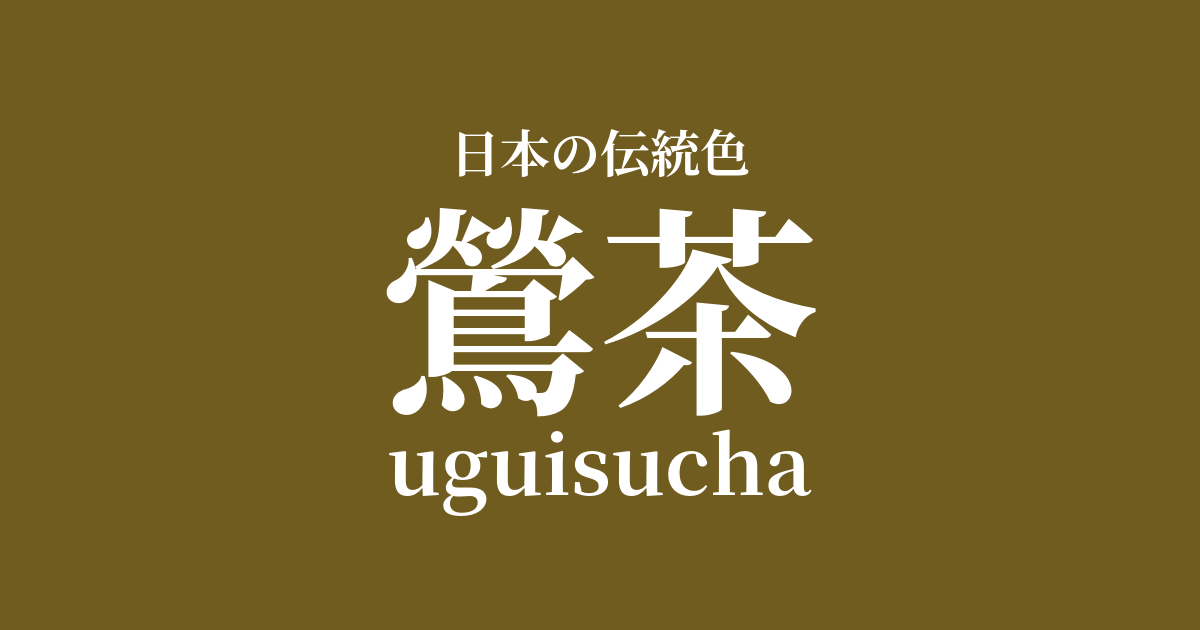
| Japanese color name | Japanese nightingale tea |
|---|---|
| reading | uguisucha |
| HEX | #715C1F |
| RGB | 113, 92, 31 |
What is Uguisu-cha? Origin and etymology
Uguisu-cha is a color name derived from the color of the feathers of the uguisu (Japanese bush warbler), a bird known to herald the arrival of spring. However, the actual color of the uguisu's feathers is closer to olive green, known as "uguisu-iro," while uguisu-cha is a more brownish, duller shade. This is thought to be because, during the Edo period, when brown was fashionable, there was a trend to create new color names by adding "cha" (brown) to various colors. In other words, it is believed that the color was named with the meaning of a color that is like uguisu-iro mixed with brown.
This color reflects the Edo period aesthetic sensibility, which sought to capture the subtle hues of nature and express them in a refined way. Rather than simply imitating the color of the nightingale, the fact that it was transformed into a sophisticated hue through the filter of "brown" reveals the richness of the color sense of the people of that time. Combining calmness and understated elegance, this color possesses a profound charm that is different from mere ostentation.
Historical background of Ougui tea
The popularity of uguisu-cha (a type of brown) is said to have begun in the mid-Edo period, particularly after the Genroku era (1688-1704). At that time, the shogunate frequently issued sumptuary laws, restricting commoners from wearing brightly colored clothing. As a result, people found endless variations in brown and gray, which were exempt from these restrictions, and began to enjoy these as "chic" colors. This trend was so widespread that it was expressed in the phrase "forty-eight shades of brown and one hundred shades of gray."
Nightingale tea is one of the colors that emerged during this trend. In particular, the first Nakamura Utaemon, a kabuki actor from the mid-Edo period, favored this color, and it was also known by the nickname "Utaemon tea." Kabuki actors at the time were fashion leaders, and it is said that the colors they favored quickly became popular among the common people.
Related literature, waka poetry, and seasonal words
While there aren't many waka or haiku that directly mention the color name "uguisu-cha" (nightingale tea), the "uguisu" (nightingale), from which the color is named, has long been a symbol of spring and has appeared in numerous literary works. In the Manyoshu and Kokin Wakashu, the nightingale's beautiful song is celebrated as a bird that heralds the arrival of spring, soothing people's hearts. Furthermore, in the world of haiku, the "uguisu" is an indispensable seasonal word for spring.
This color evokes the scenery of a mountain village in early spring, when the harsh winter has ended and plants are beginning to sprout. There is a depth and tranquility in nature, which is still muted in color, that makes you feel the breath of life. Nightingale tea can be said to be a color that connects to such quintessential Japanese landscapes and to the "wabi-sabi" aesthetic, which values inner richness over ostentation.
A nightingale defecates on a rice cake at the edge of the veranda.
Color scheme preview
This is to check the readability of the text when this color is used as the background.
A proposed color scheme for olive green tea.
Kareshcha (#876633)
The combination of uguisu tea and karecha, both naturally derived teas, brings a sense of unity and calmness to the overall look. The earth tones create a gentle and reassuring impression, further enhancing the Japanese aesthetic.
Rapeseed yellow (#FFC408)
By combining a deep, muted olive green with the bright rapeseed yellow that symbolizes spring, a vibrant and lively impression is created. The contrast between the dark and light colors enhances each other, resulting in a color scheme that expresses the joy of spring's arrival.
Suou (#9E3D3F)
The yellowish-green tones of uguisu-cha (nightingale tea) and the reddish-purple tones of safflower are close to complementary colors, and they have the effect of making each other's colors appear more vibrant. This combination has a classic and elegant atmosphere, while also giving a modern and sophisticated impression.
Practical Scenes
In the world of traditional Japanese clothing, uguisu-cha (a shade of greenish-brown) is considered a sophisticated and calming color, and is used in kimonos, obi sashes, and haori jackets. It is particularly suitable for autumn, winter, and early spring attire, creating a refined and mature atmosphere. Combining it with other shades of brown or green allows for a more nuanced and sophisticated look.
In interior design, using it on large areas such as wallpaper, sliding doors, and curtains can create a calm, modern Japanese-style space. It pairs exceptionally well with wooden furniture and tatami mats, creating a relaxing atmosphere that evokes a sense of natural warmth. It is also effective as an accent color for cushions and small accessories.
In web and graphic design, it is suitable for Japanese-style themes and natural-themed websites. When used as a background color, it enhances the content while conveying a sense of trust and traditional imagery. It is also easy to incorporate as part of a color scheme based on earth tones.