
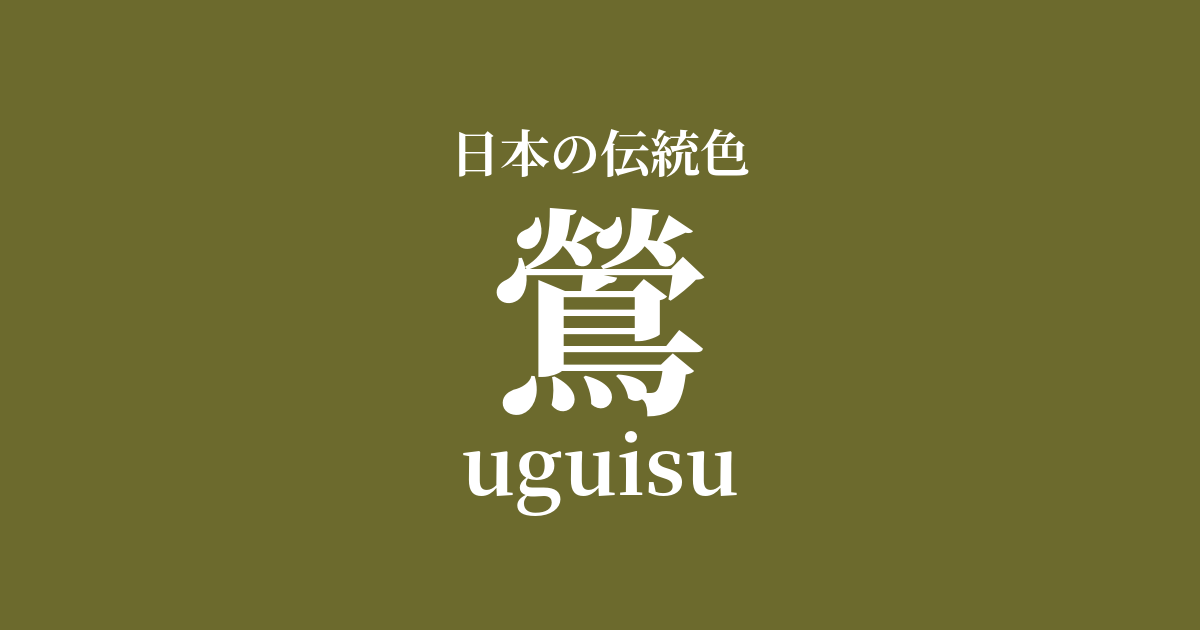
| Japanese color name | 鶯 |
|---|---|
| reading | uguisu |
| HEX | #6C6A2D |
| RGB | 108, 106, 45 |
What is a nightingale? Origin and etymology
The term "uguisu-iro" (uguisu green) refers to a muted yellowish-green color derived from the feathers of the Japanese bush warbler, known as the "spring-announcing bird." In reality, the bush warbler's feathers are olive-brown on the back and whitish on the underside, not the vibrant green commonly imagined. This subdued, calm color has become associated with traditional Japanese aesthetics and has been cherished for centuries.
Often confused with the bright green of the Japanese white-eye, the true olive green is a darker shade, characterized by grayish or brownish tones.
Historical background of the Japanese bush warbler
The name "uguisu-iro" (nightingale green) is said to have appeared in literature since the Heian period, but it was only in the Edo period that it became widely popular. Particularly from the mid to late Edo period, amidst frequent sumptuary laws prohibiting extravagance, a trend called "shijūhacchahyakunezumi" (forty-eight browns and one hundred grays) emerged, where people found fashion in subdued colors such as brown and gray. Uguisu-iro was one of these colors, and it was favored by the common people and cultural figures of Edo as a sophisticated color that avoided ostentation.
Teas favored by Kabuki actors, such as "Baikocha" and "Rokocha," also fall within this range of olive green colors.
Related literature, waka poetry, and seasonal words
The Japanese bush warbler has long been a symbol of spring in the world of Japanese poetry, and has been celebrated in numerous poems. Its appearance and song are mentioned in the Manyoshu and Kokin Wakashu anthologies, but the color name "uguisu-iro" (bush warbler color) rarely directly became the subject of poetry. However, there are poems that indirectly evoke this color, such as those that link the bush warbler to the green of newly budding willows in descriptions of spring scenes.
In the world of haikai poetry, the nightingale is a seasonal word for spring, and its first song of the year is revered as "hatsune" (first song), becoming the subject of many haiku poems.
A willow tree sewn onto a nightingale's hat.
Color scheme preview
This is to check the readability of the text when this color is used as the background.
Nightingale color scheme proposal
Cherry blossom pink (#FEEAFA)
The combination of the nightingale and cherry blossoms, symbols of spring, is a color scheme that evokes a sense of classic Japanese beauty. The calm green of the nightingale and the soft, gentle pink of the cherry blossoms complement each other, creating an elegant and vibrant impression. It is considered the perfect combination to express the arrival of spring.
Soot bamboo color (#6E5B46)
The combination of uguisu-iro (nightingale green) and sooty bamboo green, a brownish color that was popular during the Edo period, creates a sophisticated and refined impression. Because both colors exist in nature, they harmonize easily and are suitable for creating a calm, Japanese atmosphere.
White tea (#B3967D)
By combining it with a bright, soft white-brown, the somberness of the olive green is softened, resulting in a calm and natural color scheme. The combination of earth tones gives a sense of security and warmth, creating a relaxed impression on the viewer, making it suitable for interior design as well.
Practical Scenes
In the world of traditional Japanese clothing, the olive green color is used for kimonos, obi sashes, and accessories such as obiage (sash ties). It is especially often incorporated into spring outfits, making it suitable for expressing a sense of the season. Its calm hue makes it easy to wear regardless of age and gives an elegant impression.
In interior design, incorporating olive green (uguisu-iro) into wallpaper, curtains, cushions, and other fabrics can create a calm and modern Japanese atmosphere. It pairs very well with natural materials such as wood, bamboo, and Japanese paper, and is effective in creating a peaceful and relaxing ambiance.
In web design and graphic design, it is effective when you want to create an elegant impression that evokes Japanese tradition and nature. Using it as the main color can sometimes result in a too-somber look, so using it as an accent color or subtly as a background color will create a more refined design.