
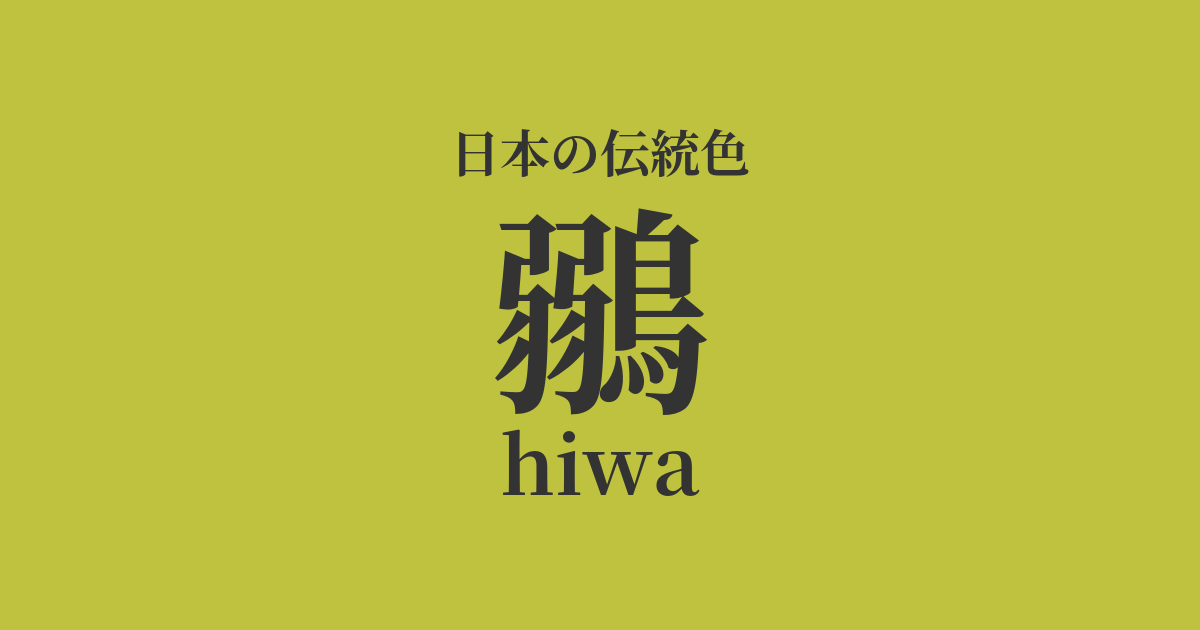
| Japanese color name | 鶸 |
|---|---|
| reading | hiwa |
| HEX | #BEC23F |
| RGB | 190, 194, 63 |
What is a swan? Origin and etymology
The origin of the color "hiwa-iro" (雸色) comes from the "mahiwa" (麻雸), a small bird belonging to the finch family in the order Passeriformes. The bright, vivid yellowish-green color of the male bird's feathers came to be called "hiwa-iro." Incorporating the colors of natural plants and animals directly into color names is one of the characteristic naming conventions of traditional Japanese colors, and hiwa-iro is a prime example. This color, with its vibrant, youthful appearance reminiscent of young leaves, has long been recognized by people as a color that evokes the arrival of spring and youthfulness.
Historical background of the swan
The history of the yellow-green color is long, and its name can be found in the Engishiki, a collection of laws from the Heian period. Records show that at that time, the main dye used was the Japanese yew (kariyasu), a type of grass, and lye was used as a mordant to produce this vibrant yellow-green color. It was a favorite color among the Heian aristocracy, symbolizing youthfulness and spring.
During the Edo period, the yellow-green color became widely popular among common people. It was particularly popular as a color for kimonos and obi sashes worn by young people, and was also used in Kabuki stage costumes, becoming one of the colors that adorned the vibrant culture. During this era, dyeing techniques to produce even more vivid colors also advanced, and it is said that a variety of shades of yellow-green were enjoyed.
Related literature, waka poetry, and seasonal words
The yellow-green color also appears in literary works from the Heian period. In "The Tale of Genji," it is described as the color of the clothing of young ladies-in-waiting, and was used as a color symbolizing youth and loveliness. It is also mentioned in "The Pillow Book" as one of the beautiful color combinations, conveying the rich sense of color in the aristocratic society of the time.
In the world of haiku poetry, the bird "hiwa" (Japanese rhinoceros beak) is known as a seasonal word for spring. The sight of flocks of hiwa, which are winter birds, flying in early spring was a symbol of the arrival of spring. For this reason, the color name "hiwa-iro" (hiwa color) itself has the power to strongly evoke in people the warm breath of spring and the vibrant green of the new leaves.
A swan's nest, a moonlit night with deutzia blossoms, clearly visible.
Color scheme preview
This is to check the readability of the text when this color is used as the background.
Suggested color scheme for the swan
Soot bamboo color (#6E5B4A)
The vibrant yellow-green is balanced by the subdued, calming brown of the sooty bamboo. This color scheme evokes the fresh leaves and ancient trees of nature, deepening the sense of Japanese aesthetics. The colors complement each other, creating an elegant and refined impression, making it suitable for kimonos and Japanese-style interiors.
Azalea (#E03A8A)
The combination of vibrant yellow-green (yellowish-green) and bright purplish-pink (azalea) creates a cheerful and vibrant impression reminiscent of spring flowers in full bloom. The strong contrast makes it suitable for festive occasions and modern designs.
White training (#FCFAF2)
The youthful impression of the yellow-green is further enhanced by the pure and innocent white. This color scheme exudes cleanliness and freshness, creating a light and bright space. It is simple yet elegant, a combination that evokes the warmth of spring sunshine.
Practical Scenes
In the world of traditional Japanese clothing, yellow-green is especially valued for spring attire. When used in young women's furisode (long-sleeved kimono) or houmongi (formal visiting kimono), or in accessories such as obiage (sash tie) and obijime (sash cord), it can create a youthful and vibrant impression. Its appeal lies in its versatility; depending on how it is combined with other colors, it can express a wide range of styles, from classical to modern.
In interior design, using it as an accent color brings vitality and brightness to a space. Simply incorporating it into cushions or wallpaper will give the entire room a lively atmosphere. It pairs particularly well with natural materials such as wood, and harmonizes well with Japanese modern and natural-style spaces.
In web design and graphic design, its high visibility makes it effective as an accent color for areas that need attention. It is also suitable as a key color when expressing themes such as youthfulness, nature, and the environment. However, because it can strain the eyes when used over a large area, it is generally used sparingly.