
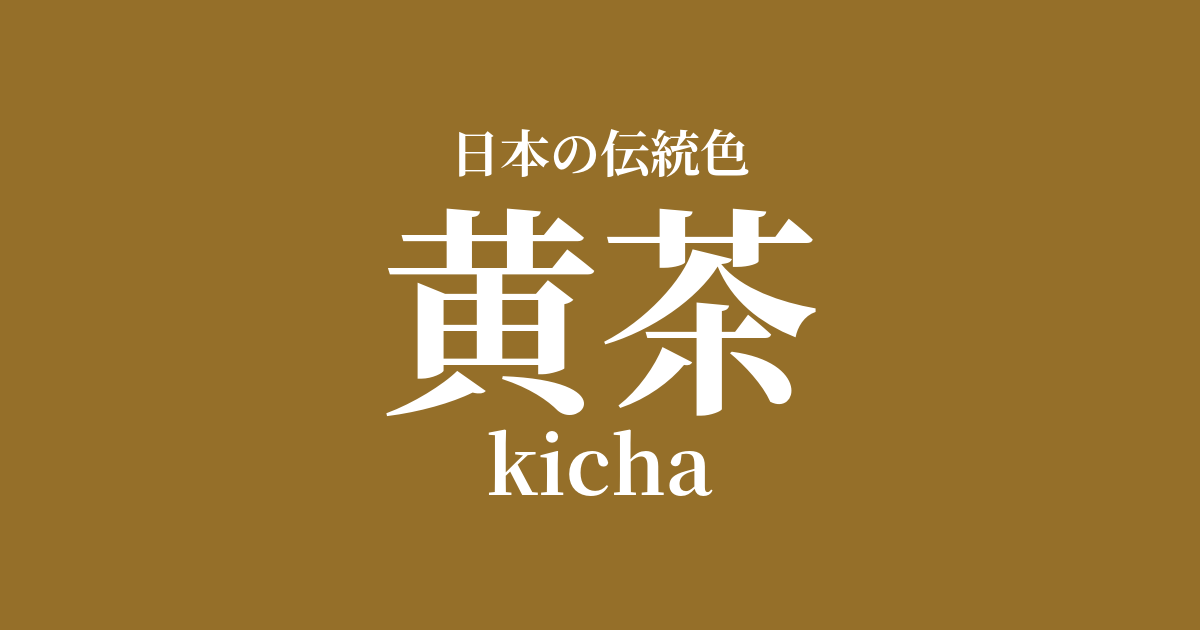
| Japanese color name | yellow tea |
|---|---|
| reading | kicha |
| HEX | #956F29 |
| RGB | 149, 111, 41 |
What is yellow tea? Origin and etymology
Kicha, as its name suggests, refers to a yellowish-brown color and is a traditional Japanese color. During the Edo period, a wide variety of browns and grays were popular, so much so that it was called "forty-eight shades of brown and one hundred shades of gray," and kicha was one of them. Specifically, the dyes used were mainly yellow dyes derived from plants such as kariyasu and kihada, and it is said that this unique muted yellowish-brown color was created by adding a small amount of red dye or by using different mordants.
These color names are simple and easy to understand, as they directly reflect how the colors are formed.
Historical background of yellow tea
Yellow-brown only became widely known from the mid-Edo period onward. Amidst the shogunate's sumptuary laws that restricted flashy colors, common people developed a culture of finding and enjoying subtle differences in shades of muted colors such as brown and gray. Yellow-brown is said to be one of the colors that emerged during this trend known as "48 shades of brown and 100 shades of gray."
In particular, it was used in everyday situations, such as in the costumes of Kabuki actors and the kimonos of townspeople. Its subdued yet warm colors resonated with the Edo aesthetic of "iki" (sophistication/elegance), and it was widely accepted.
Related literature, waka poetry, and seasonal words
While it is difficult to pinpoint specific classical Japanese poems that directly mention the color "yellowish-brown," its hue is deeply intertwined with literary imagery in Japan. For example, "kuchiba-iro" (decaying leaf color), which describes the way leaves change color and eventually decay as autumn deepens, has been celebrated in Japanese poetry since ancient times. Yellowish-brown is a color reminiscent of withered leaves and the bountiful earth, and it embodies the sense of desolation and abundance associated with "ochira" (falling yellow leaves), a seasonal word for late autumn.
In Edo period literature and ukiyo-e prints, this color was depicted as the stylish color of the kimonos worn by townspeople, conveying the lifestyle of the time.
Color scheme preview
This is to check the readability of the text when this color is used as the background.
Yellow-brown color scheme proposal
Dark brown (#6F4B2D)
Yellow-brown and dark brown belong to the same brown family, and their difference in brightness creates a natural gradation. This results in a calm, deep, traditional, and stable color scheme, suitable for Japanese-style designs and interiors.
Indigo (#274A78)
The yellow of yellow-brown and the blue of indigo are close to complementary colors, enhancing each other's beauty. The deep blue of indigo accentuates the warmth of yellow-brown, creating an intelligent and sophisticated impression. This combination is effective when you want to convey both trustworthiness and composure.
Generation color (#FBF6E5)
The natural, soft white of the ecru color harmonizes with the earthy warmth of the yellowish-brown, creating a calm and natural atmosphere. This color scheme gives the space brightness and a sense of openness, resulting in a comfortable and relaxed impression.
Practical Scenes
Yellow-brown was a color commonly used in kimonos and obi sashes during the Edo period, and it remains a highly valued color in the world of traditional Japanese clothing today. Its subdued hue is easy to match with people of all genders and ages, and it is particularly well-suited for expressing the feeling of autumn. Combining it with other shades of brown or green creates a stylish and sophisticated look.
In interior design, yellow-brown can bring warmth and tranquility to a space when incorporated into wallpaper, curtains, and furniture. It pairs exceptionally well with natural materials such as wood and earthen walls, contributing to the creation of Japanese modern and natural-style spaces. Adding indigo or dark green as accent colors creates a more refined impression.
In web and graphic design, yellow-brown can be used as a background or accent color. As an earth tone, it is suitable for brands that want to express nature, tradition, and reliability. When combined with white or off-white, it can create a warm, minimalist design while maintaining readability.