
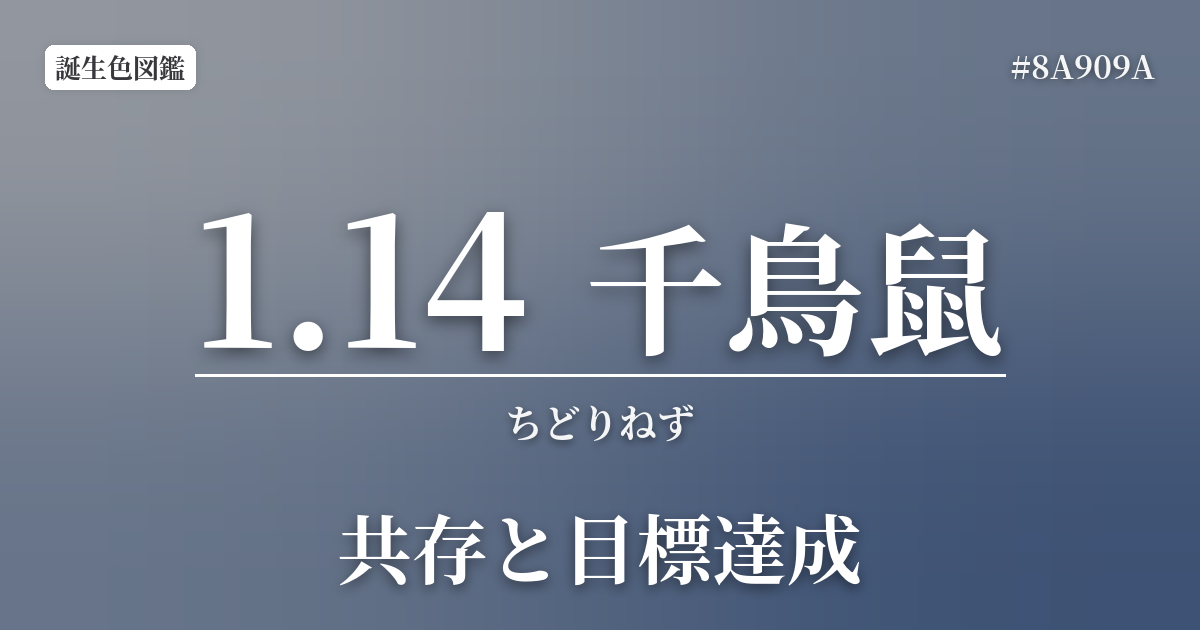
| birthday | January 14 |
|---|---|
| Color name | Chidorinezu (a type of rat) |
| HEX | #8A909A |
| RGB | 138, 144, 154 |
| Color meanings | Coexistence and goal achievement |
What is the birth color for January 14th, "Chidori-nezumi" (plover gray)?
The birth color for January 14th is "Chidori-nezumi" (plover gray). It is a gentle gray with a slight bluish tint, reminiscent of the colors of a cloudy winter sky or a cold body of water. Its name comes from the "Chidori," a small bird that flies in flocks during the winter season.
This color evokes tranquility, calmness, and intelligence. While it gives a modern and sophisticated impression, it also possesses a somewhat poetic atmosphere, reminiscent of the stillness and crisp air of winter nature. It's not flashy, but it symbolizes a deep composure that allows one to see the essence of things, and an unwavering sense of stability.
The color symbolizes "coexistence and goal achievement" and personality.
People who prefer this color tend to be calm and have a good sense of balance. In color psychology, gray is associated with neutrality, restraint, and an objective perspective. The subtle bluish tint of "Chidori-nezumi" adds calmness and intellectual curiosity to these qualities.
As the color's symbolism of "coexistence and goal achievement" suggests, this person values harmony with those around them while steadily moving towards their goals without being swayed by emotions. They possess calm judgment and planning ability, and harbor a strong will within. With their gentle demeanor, they are often relied upon as a trustworthy confidant.
Connection to the seasons — Winter plovers
The term "Chidori" (千鳥) does not refer to a specific bird species, but has long been used as a general term for birds of the plover family, or small birds that gather in flocks on coastlines and riverbanks during winter. Their swift movements along the shoreline or their simultaneous soaring into the sky in the cold, crisp winter air are a beloved symbol of winter in Japan.
The sight of them flying in flocks has been a motif in many forms of art and culture, including waka poetry, paintings, and kimono patterns. In particular, patterns depicting flocks flying in formation, such as "Chidori-goshi" (plover lattice) and "Nami ni Chidori" (plovers on waves), are known as auspicious patterns that symbolize marital harmony and family safety, as they represent the birds overcoming rough waves together, and also represent the achievement of goals, due to the pun in Japanese ("Chidori" sounds like "sen-tori," meaning "thousand catches").
Color scheme preview
This is to check the readability of the text when this color is used as the background.
Chidori-nezumi (plover gray) color scheme proposal
Powder Blue (#B0E0E6)
The calm gray of the Chidori-nezumi color, combined with the pale, clear blue of powder blue, creates a quiet, crisp winter atmosphere. It's an intelligent, refined, and serene combination.
Tan (#D2B48C)
By adding tan, reminiscent of sandy beaches and winter grass, to a cool houndstooth gray, a natural warmth is created. This color scheme gives a friendly and reassuring impression while maintaining an urban and modern feel.
Indian Red (#CD5C5C)
The sophisticated houndstooth color, accented with a calm Indian red, expresses inner passion and strength of will. It's a refined yet memorable and powerful combination.